


Business Sectors
Business Sectors
Events
Contents
Register to read more articles.
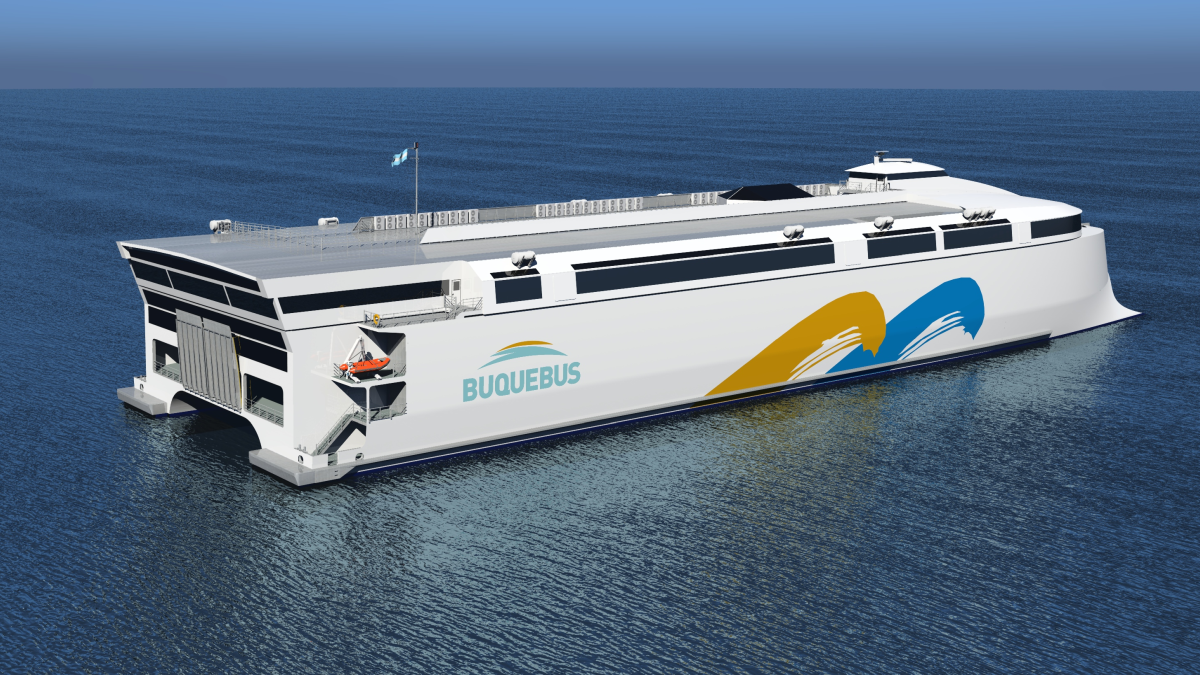
Details revealed of largest fully electric ship to date
Buquebús orders 2,100-passenger and 225-vehicle catamaran ferry for South American operations


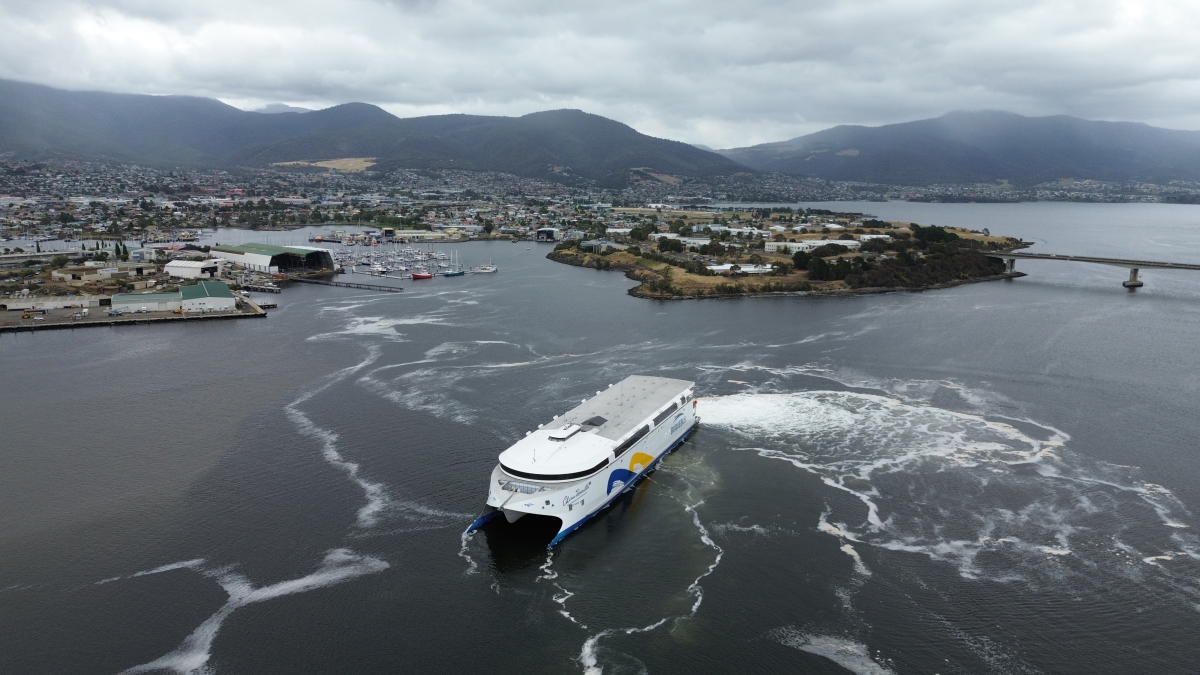
South American operator Buquebús has ordered what will be the largest all-electric ship to date from Australia’s aluminium catamaran specialist, Incat Tasmania.
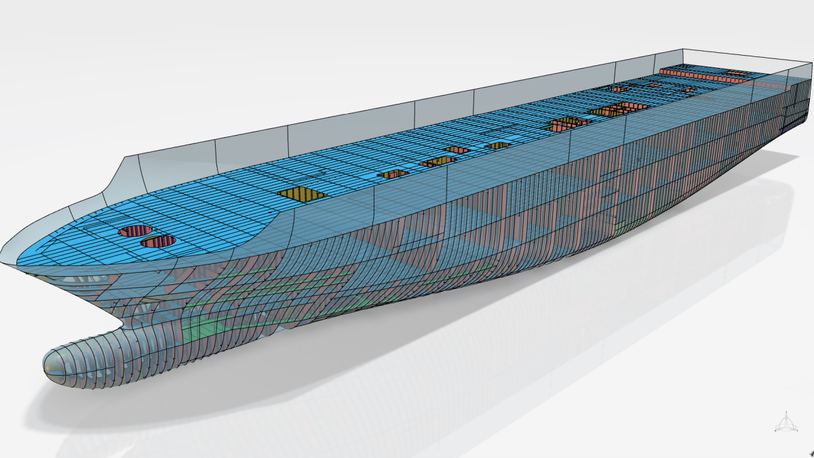
According to Incat, the new all-aluminium 130 m, 2,100-passenger, 225-vehicle ferry, currently under construction, Incat Hull 096, is an evolution of a project that was briefly mothballed due to the pandemic. The first iteration of the vessel’s design had been for fossil fuel power, but as pandemic restrictions receded and business began to resume, Buquebús management saw an opportunity. A tourism and river transport company, Buquebús has been a pioneer in the use of alternative fuels and power to reduce CO2 and greenhouse gas emissions from its operations. Ten years ago, Buquebús added the high-speed gas-powered catamaran ferry Francisco from Incat Tasmania.
“The new ferry began its life some three years ago as a gas-powered vessel”
“[This newest ferry] began its life some three years ago as a gas-powered vessel,” says Incat founder and chairman Robert Clifford. “But because of Covid, that was put on hold for a year or so, which gave us the opportunity to go along with the customer’s wishes, and he wanted to be particularly environmentally friendly. At his instigation, we changed the specification to electric,” he adds.
Buquebús plans to operate the vessel along a 72 km route on the River Plate, between Argentina and Uruguay.
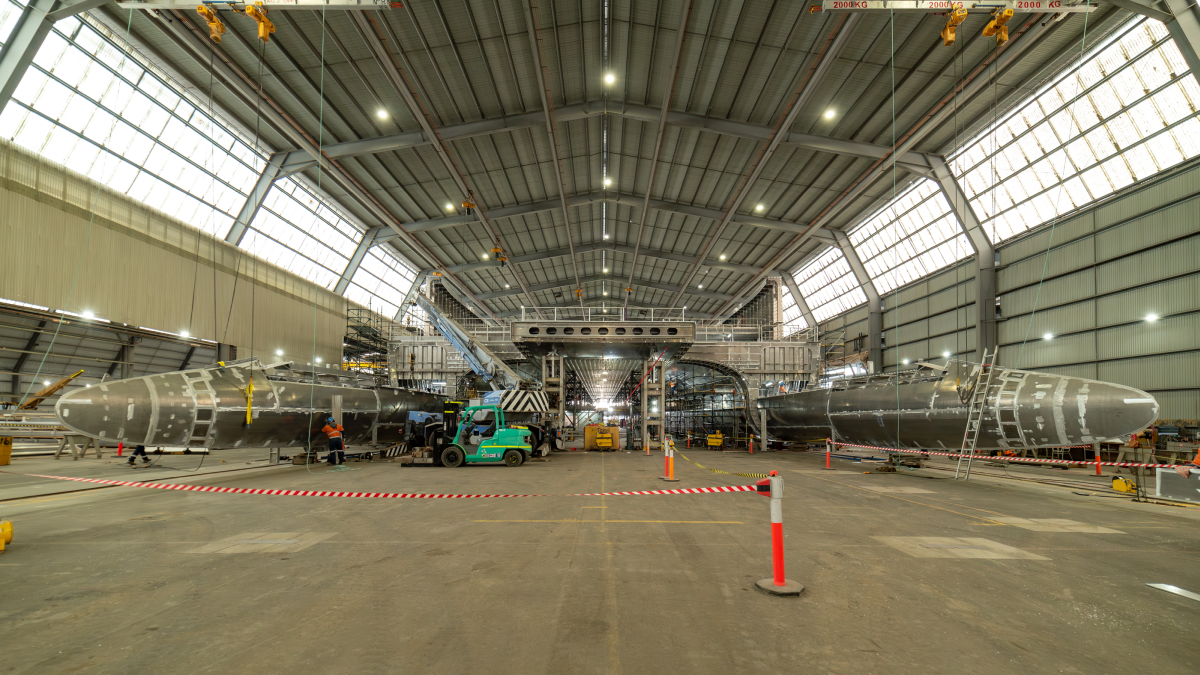
Battery system and technology
The energy storage system (ESS) on board – with more than 40 MWh of available power when charged – quadruples the current largest battery storage system on board a maritime vessel and offers a marker for how far battery storage has come in a relatively short period.
As battery system developer Corvus Energy’s commercial director, Halvard Hauso, says: "This ESS is 40 times the size of the first car ferry vessel Corvus supplied." The company was founded less than 15 years ago and Mr Hauso notes: "This [ESS] equates to what Corvus produced in the first eight years of our operations."
The onboard ESS is, according to Corvus, only possible through the company’s newest battery, marketed under the name Dolphin NextGen. The battery’s design fits within a rackless, room-based ESS the company developed under the Blue Whale ESS initiative, a four-year, multi-million-dollar investment in redesigning and reconfiguring battery chemistry, mechanics, electrics and software to increase power while decreasing weight.
The ESS, says Mr Hauso, "opens up new markets, including crossing the English Channel [on] zero emissions."
The battery systems for the vessel are, according to Corvus, scheduled for delivery at the end of 2024, with the Buquebús vessel set to enter operation in 2025.
"This ESS is 40 times the size of the first car ferry vessel Corvus supplied"
"The ship is about the 50% mark in terms of construction," Mr Clifford says. "The machinery and batteries will be fairly late in the project, which is a little unusual, but they are all individually small parts that can be put in at a late stage in the build."
In terms of the delivery of the vessel, Mr Clifford says the date "depends on a whole heap of other questions, but the reality is it’ll be sometime in 2025.”
Despite all the superlatives that describe the newbuild vessel project, building a vessel of this size and providing it with enough power is just a matter of scale, he says.
"You’ll find this ship is not unusual in [its design]. It looks somewhat like our other ships. The novelty is the fact that it’s operating in shallow water and operating with electric propulsion," says Mr Clifford.
The most significant technological breakthrough, according to Wärtsilä Marine Power vice president, Paul Kohle, is in the system that distributes the power.
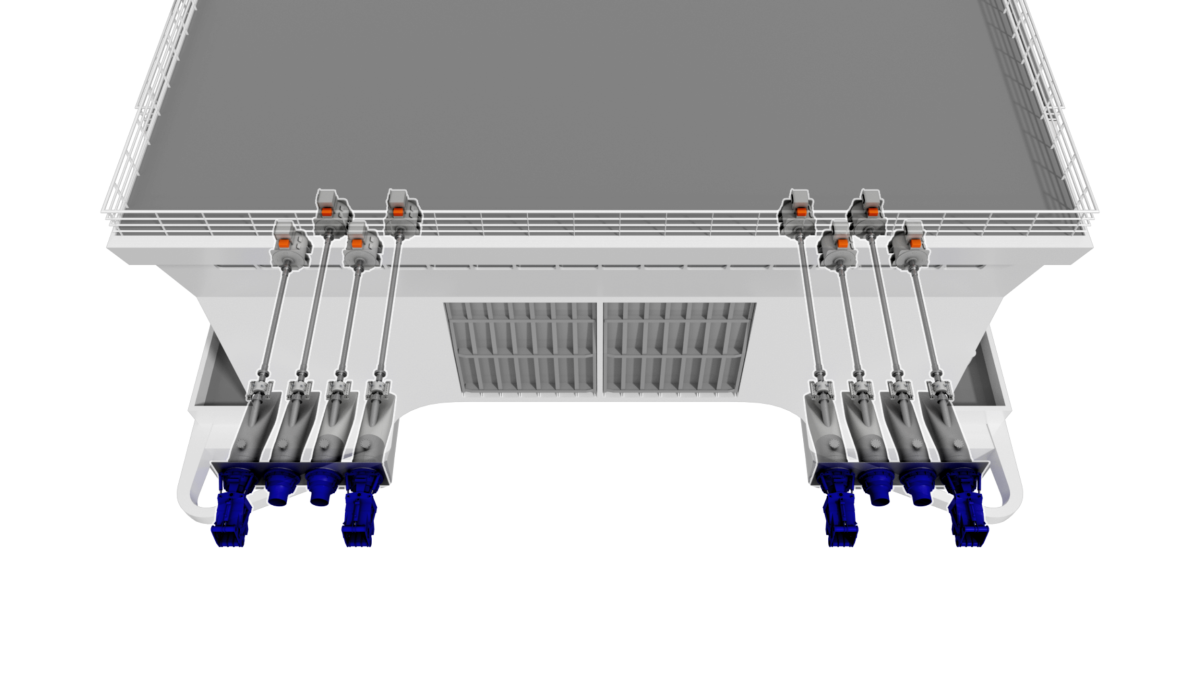
The battery system will power electric-motor driven Wärtsilä waterjets as the vessel’s main propulsors.
"There are four individual power trains,” says Mr Kohle. “All of them the same, where we have the battery pack feeding the DC hub. In turn, each DC hub powers two electric motors, and each electric motor, in turn, powers a waterjet. Some waterjets are booster jets, some are steerable ones. There are eight waterjets in total," he says.
"What puts all this together is the energy management system, which is the brains of the system. That has software that optimises the overall operation and operating profile of the vessel and supports the vessel’s crew in terms of the displays," he says.
The total cost of building the vessel remains undisclosed, but, according to Mr Clifford: "It’s the customer’s decision that the capex was worth the effort for the overall saving involved. Over time, it will be less expensive than running the vessel on fossil fuels."
Mr Clifford notes the importance of the aluminium hull in the project’s feasibility, saying a steel-hulled vessel could easily be twice the weight, requiring twice the power.
"We’re very confident the aluminium vessel and electric technology go together," he adds.
Related to this Story
Events

Maritime Regulations Webinar Week
 16 Dec 2025
 GMT - ONLINE
Floating energy: successfully unlocking stranded gas using FLNGs and FSRUs
24 Feb 2026GMT - ONLINE
© 2026 Riviera Maritime Media Ltd.


