


Business Sectors
Business Sectors
Events
Contents
Register to read more articles.
Feasibility study outcome for ferry green shipping corridor
Consortium completes project exploring scaleable green methanol and carbon capture loop technology


The Maritime Power-to-X project led by Larne-based B9 Energy Storage together with Teesside University’s Net Zero Industry Innovation Centre, DFDS Seaways, DFDS Logistics, JG Maritime Solutions, Larne Harbour and Mutual Energy, has successfully explored how scaleable green methanol and carbon capture loop technology can be used as a zero-emissions fuel in ships and ports.
This Clean Maritime Demonstration Competition (CMDC R4) project, funded by the UK Department for Transport and facilitated by Innovate UK, has carried out a feasibility study and predeployment trials to meet the requirements of a green shipping corridor. The criteria to plan to use a zero-emissions vessel, operating from carbon-neutral ports and feeding carbon-neutral logistics operating from those ports have been met.
The project outputs and reports take account of the UK Department for Transport Maritime Decarbonisation Strategy issued on 25 March 2025, but not the outputs from the 83rd meeting of IMO’s Marine Environment Protection Committee which concluded 11 April 2025. As such, the report considers the status of IMO and UK regulations in force at the conclusion of the project on 31 March 2025.
The project has investigated the feasibility of establishing a green shipping corridor between Northern Ireland and the northwest of England using a roro freight ferry, powered by hydrogen reformed on board from green methanol delivered in road mobile ISO tank containers. The green methanol would be synthesised in the Port of Larne from green hydrogen and carbon dioxide.
The project includes the feasibility of capturing CO2 from an onboard reformer and returning it to the methanol synthesis plant in the same tank containers that delivered the methanol, thereby setting up a circular CO2 economy, known as a carbon loop that avoids future supply constraint of green CO2. The port-based flexible green methanol plant will use otherwise curtailed wind power to drive a 150-MWe electrolyser.
The domestic green shipping corridor would have ‘true-zero’ emissions; would not be reliant upon limited supplies of bioderived CO2 or direct air-captured CO2; and would not need any carbon offsetting to meet net-zero objectives.
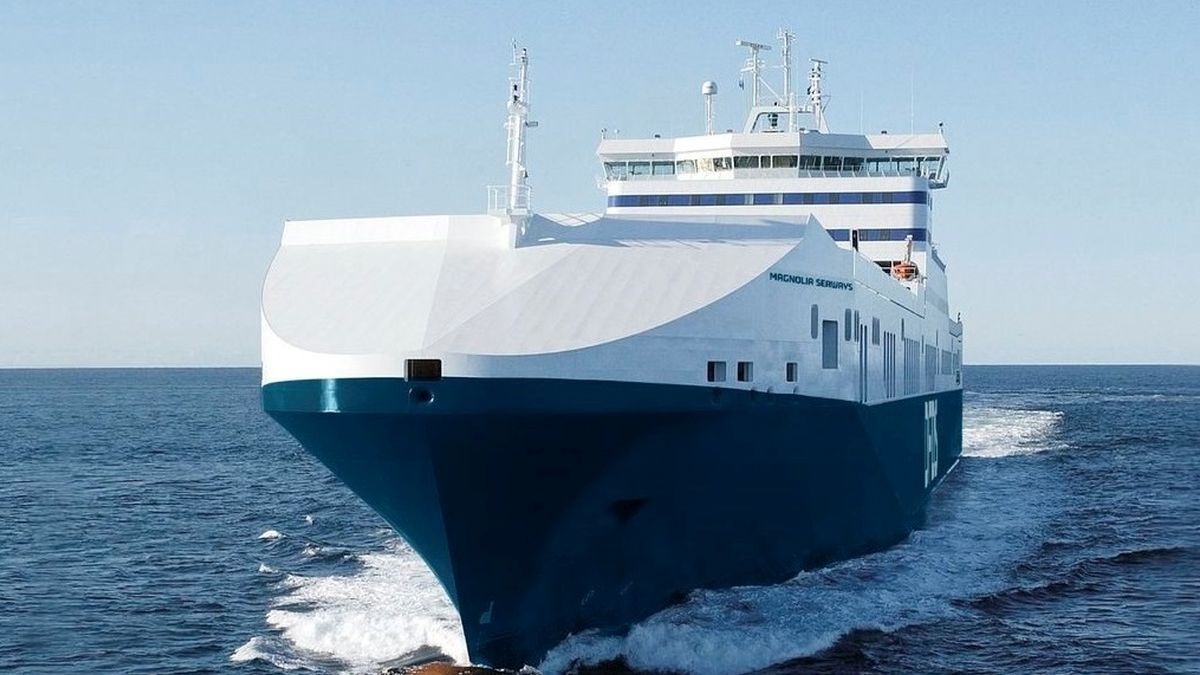
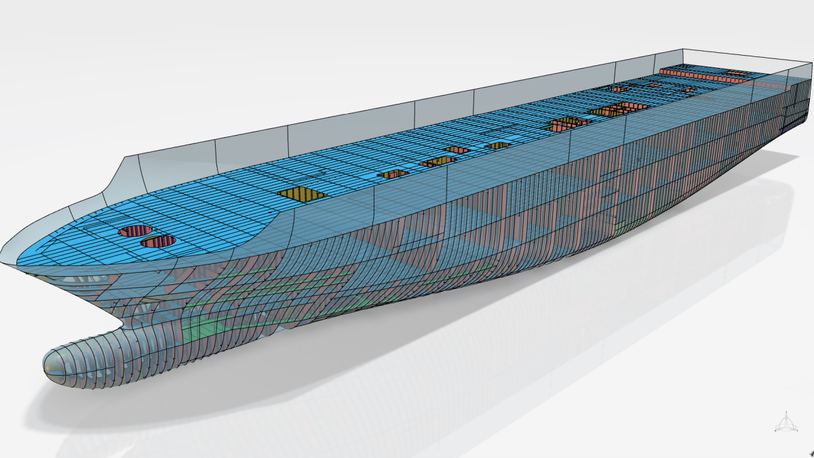
The performance of the new technology has been simulated using techno-economic modelling of the green shipping corridor and includes using DFDS Seaways’ roro freight ferry Magnolia Seaways. Both new construction and retrofit concept designs have been developed.
Predeployment trials have been successfully carried out in the Port of Larne to prove the concept of fuel cells being able to produce electricity to charge battery-electric port vehicles, light vans and cars. Additionally, B9 Energy has commissioned FAST Technologies of Londonderry, Northern Ireland to integrate a methanol water mixing skid and catalytic reformer, to produce hydrogen for a fuel cell, to generate green electricity, to charge battery-electric terminal tractors and/or HGV logistics vehicles. The green CO2 will be captured and transferred in liquid form into a suitable storage tank.
JG Maritime Solutions managed the stakeholder engagement, conducting a mapping exercise to identify and then engage the regulatory and industry stakeholders in relation to the various regulatory and policy measures, with interests in both ship and port regulations including the safety aspects.
The regulators included the Department for Transport, Maritime and Coastguard Agency, the Isle of Man Ship Register, Health and Safety Executive, Environment Agency and four classification societies – Lloyd’s Register, DNV, Bureau Veritas and RINA. The industry included ship and port operators, their relevant associations, ship designers and engine manufacturers. During the project, eight workshops were hosted, four each with both the regulatory and industry stakeholders.
During the workshops held with the regulators and industry stakeholders, the application of various regulatory and policy measures and regulations were debated, captured in the minutes of the meetings then collated in tables and slides. This enabled any perceived gaps in regulation, including safety regulations, to be initially identified and then considered for a more detailed assessment. This more detailed assessment consisted of a risk matrix which mapped probability versus the impact of key regulatory and policy measures as identified in the workshops. The matrix used was an enhanced version of the Green Corridors Framework matrix, which was developed from the report Getting to Zero – The Next Wave Green Corridors Report. The matrix was used to demonstrate in which area the perceived missing regulations would sit, described by the categories as a Game Changer, Priority, Quick Win or Long Play.
The fourth industry workshop was held on 28 March 2025 and took account of the policy areas/regulations outlined in summary on page 9 of the newly issued UK Maritime Decarbonisation Strategy to address the UK’s maritime greenhouse gas emissions. Within the fourth regulatory workshop, 33 perceived missing regulations had been identified and assessed.
It was pleasing to note we had captured all but four of the policy areas summarised on page 9 of the strategy in our workshop. However, these four additional areas were considered in the fourth industry workshop, added to the table as numbers 34–37 and the key responsible regulators from the regulatory stakeholders were consulted to gain their agreement. Additionally, eight regulatory/policy measures were identified which appear not to be included in the strategy.
While our project confirmed there are no particular regulatory barriers why this project cannot be successfully implemented, it also identified the very significant amount of work which is required to introduce a new regulatory framework, with associated infrastructure to accommodate alternative fuels and technologies to reduce greenhouse gas fuel intensity as identified by IMO and the UK.
John Garner is founding director of JG Maritime Solutions Ltd

Related to this Story

Events

Maritime Regulations Webinar Week
 16 Dec 2025
 GMT - ONLINE
Floating energy: successfully unlocking stranded gas using FLNGs and FSRUs
24 Feb 2026GMT - ONLINE
© 2026 Riviera Maritime Media Ltd.


