


Business Sectors
Business Sectors
Events
Contents

Register to read more articles.
How Höegh Autoliners is fuelling its net-zero ambitions
Advanced ammonia fuel supply systems from TGE Marine are enabling Höegh Autoliners’ transition from LNG to green ammonia, supporting the world’s first ammonia-powered pure car and truck carriers


When it comes to sustainability and market timing, Höegh Autoliners is ahead of the curve. The Oslo-listed roro transportation services provider has ambitious plans to reach net-zero emissions by 2040, backed by almost US$2Bn in investment in the largest multi-fuel pure car and truck carriers (PCTCs) ever built.
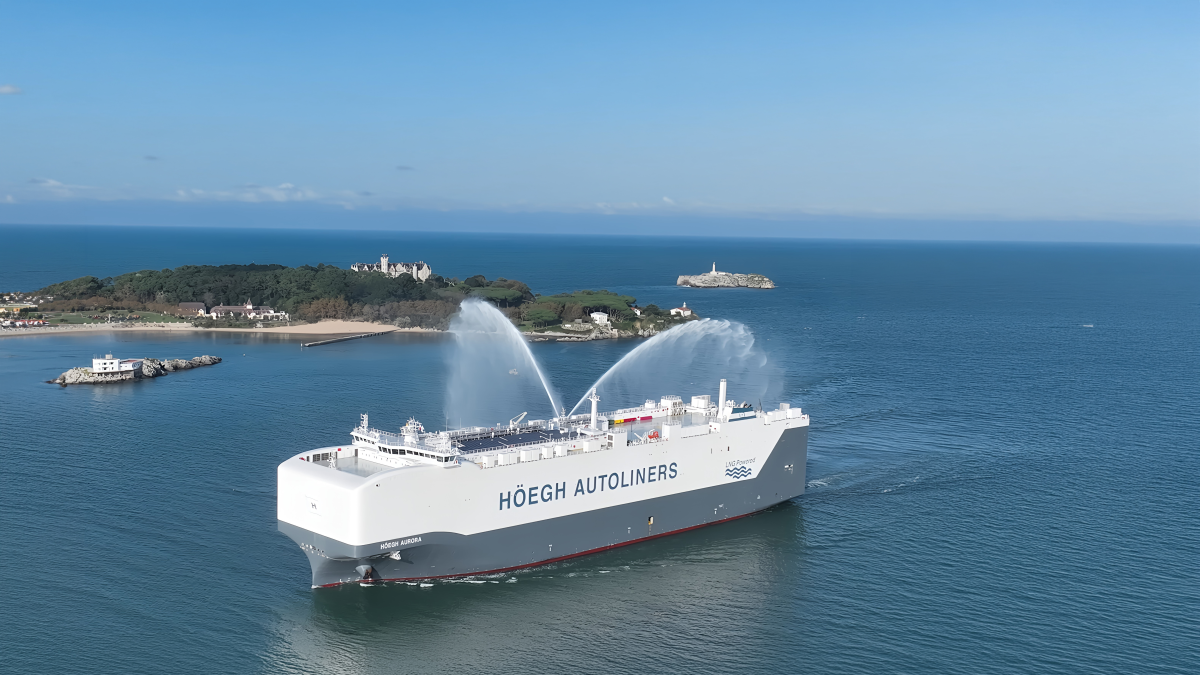
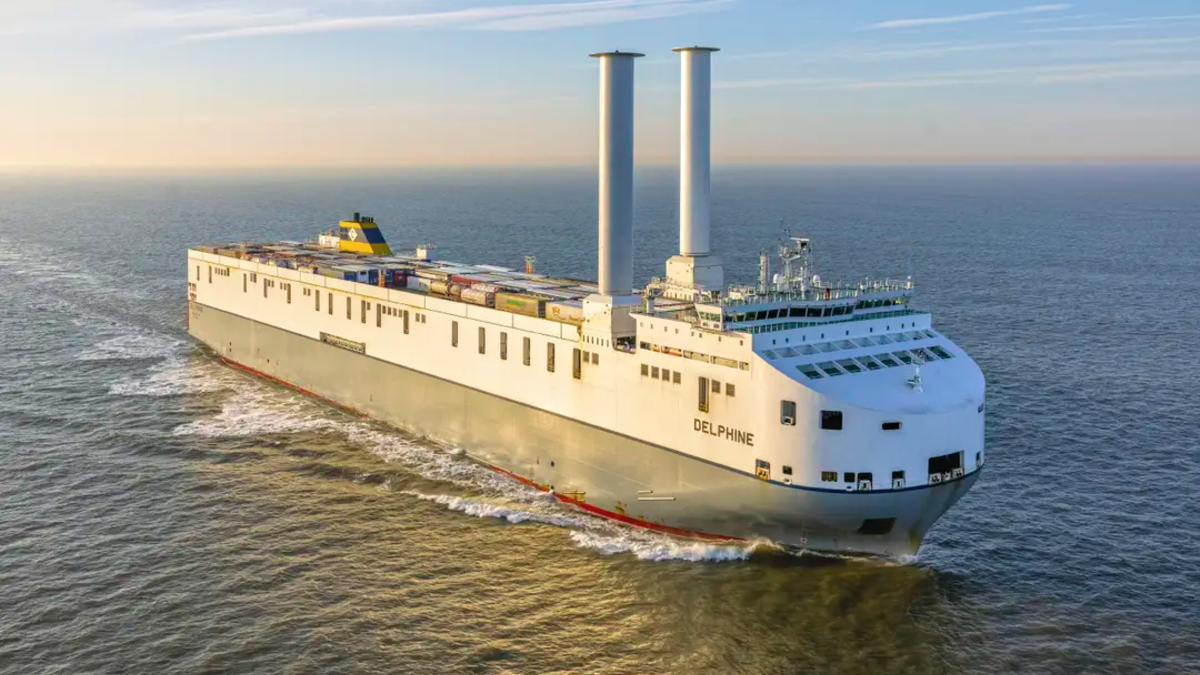
“We did innovate the PCTC capacity market by introducing a new class of vessel, larger and with more fuel flexibility and efficiency,” said Höegh Autoliners chief executive, Andreas Enger, in describing the owner’s new ammonia- and methanol-ready 9,100-CEU Aurora-class PCTCs. The first eight of an original 12-vessel order were in service as of Q2 2026, delivering “record low-carbon intensity”, said Mr Enger, noting that these initial vessels in the series were operating on LNG. He described LNG as “helpful” in producing the improved environmental results but believed the vessels’ design efficiency was central in delivering the lower carbon intensity.
The carbon intensity performance of Höegh Autoliners’ fleet has fallen 18% since 2023 and is over 5% below the ‘C’ rating of the Carbon Intensity Index, according to a Q2 2026 presentation shared with investors. Full deployment of the Aurora vessels in the quarter, favourable weather, lower speed, and increased biofuel consumption led to a 6% decrease quarter-on-quarter in carbon intensity.
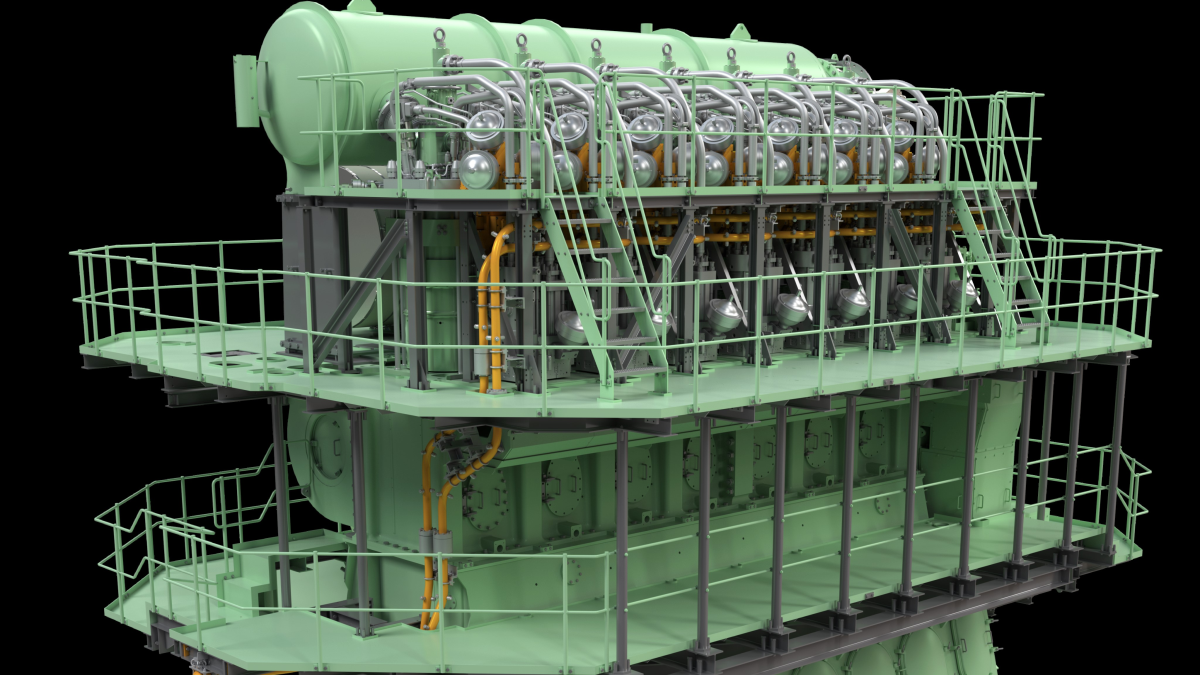
Each Aurora-class vessel in operation has a seven-cylinder Everllence B&W ME-GI LNG dual-fuel, two-stroke, slow-speed engine. Composed almost entirely of methane, LNG is regarded as a transitional alternative fuel on the path to zero-carbon shipping. High-pressure, two-stroke, dual-fuel engines can reduce CO2 emissions by approximately 20%, NOx emissions by 85%, and virtually eliminate particulate matter and SOx emissions.
But LNG is only the first step for these vessels. Working with class society DNV, ship designer Deltamarin, and key suppliers, Höegh Autoliners foresees transitioning the Aurora-class vessels operating on LNG to future zero-carbon fuels, including green ammonia, by modifying their multi-fuel engines.
“We are looking forward to the next four dual-fuel VLSFO-ammonia vessels delivered mid-next year and onwards,” Mr Enger told investors. Under construction at China Merchants Heavy Industry (Jiangsu) Co (CMHI), the next four Aurora-class PCTCs will have Everllence B&W 7S60ME-LGIA (Liquid Gas Injection Ammonia) dual-fuel engines, which were ordered last year from HD Hyundai Heavy Industries in South Korea.
With capacity constrained, Chinese demand growing, the global fleet aging, and charter rates strong, the roro specialist remains confident in its newbuilding strategy.
In late August, Höegh Autoliners extended its newbuilding programme to 18 Aurora-class PCTCs, ordering six additional LNG dual-fuel and zero-carbon-ready vessels for deliveries between 2029 and 2031. Further, it secured options for four more PCTCs and reserved shipbuilding slots for four more vessels at CMHI, potentially increasing the newbuilding programme to 26 ships.
“The carbon intensity of Höegh Autoliners’ fleet has fallen 18%”
Observed Mr Enger: “The Aurora-class newbuilds have demonstrated very strong earnings potential, carbon performance, cargo flexibility and future-proof conversion capability. Through our newbuild programme, we secure capacity costs at a competitive level, supporting profitable operations even during potential periods of lower freight rates. Further expanding our fleet strengthens our ability to capture growth in the Asian market and meet evolving customer demand, while giving us greater strategic flexibility, supporting long-term fleet renewal and positioning us to capture commercial opportunities in the years ahead.”
Advanced ammonia fuel supply systems
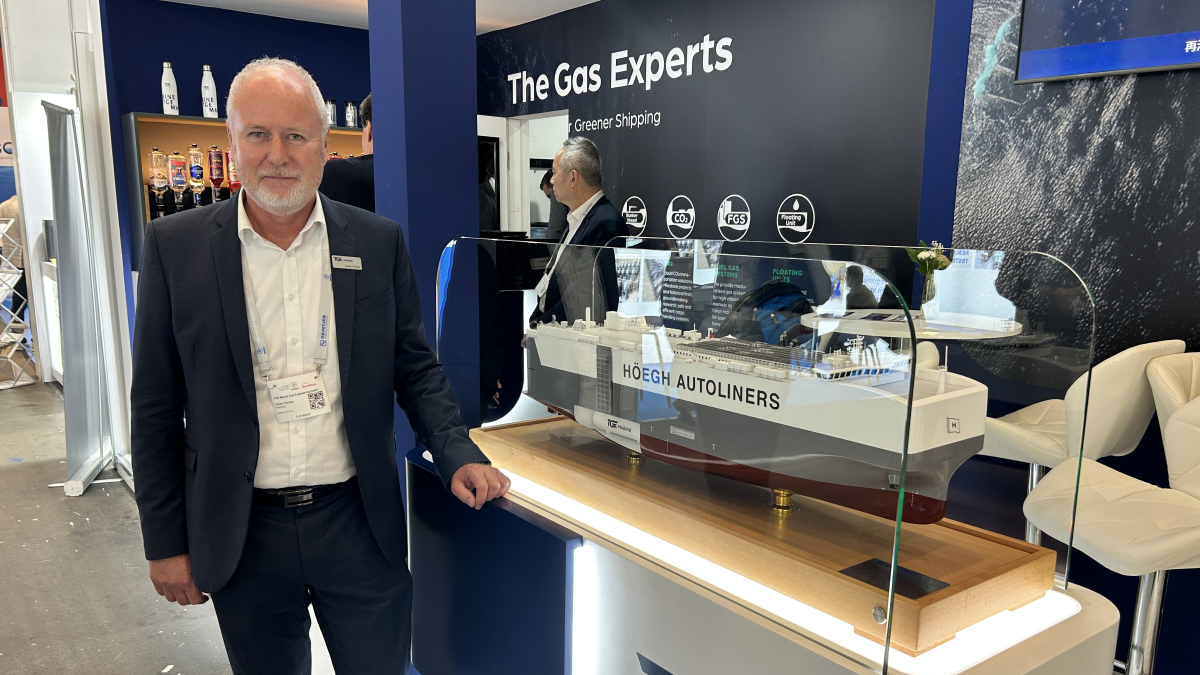
TGE Marine Gas Engineering is playing a pivotal role in Höegh Autoliners’ transition to low- and zero-carbon fuels, with advanced ammonia fuel supply systems (AFSS). “These will be the world’s first ammonia-powered PCTCs, and we are proud to be a part of it,” TGE Marine senior sales director, Dieter Hilmes, told Marine Propulsion. “The beauty of ammonia is that there is no ‘C’”, Mr Hilmes said, referring to the fuel’s molecular structure (NH3), meaning it is an excellent hydrogen carrier that contains no carbon. “If ammonia is produced with green electricity, you can operate the vessel without any CO2 emissions from the main engine. That’s a big achievement for the industry,” he said.
While ammonia offers a promising pathway to decarbonisation, it comes with trade-offs. As Mr Hilmes explained during an exclusive interview at SMM 2026, ammonia’s energy density is lower than traditional marine fuels, meaning ships must either install larger fuel tanks or bunker more frequently. At the same time, ammonia is both highly toxic and corrosive, which raises the bar significantly for onboard safety and system design.
“The beauty of ammonia is that there is no ‘C’”
To future-proof newbuilds, TGE Marine has supplied stainless-steel fuel tanks capable of handling ammonia, methanol, and LNG. The first eight vessels in the current series have received “ammonia-ready” notation from DNV. They will initially operate on LNG but can be converted later to ammonia or methanol without changing the tank design. From the ninth ship in the series, the vessel will start operating directly on green ammonia, highlighting how quickly owners are moving toward next-generation fuels.
According to Mr Hilmes, the AFSS represents “a completely different story” compared with LNG. A key distinction lies in boil-off gas management. Whereas LNG systems often burn boil-off directly in the engines, TGE’s ammonia concept centres on a reliquefaction system that condenses ammonia vapour back to liquid and returns it to the tank. This approach avoids energy loss and minimises emissions.
And, he said, redundancy is built in: should the reliquefaction unit fail, a gas combustion unit (GCU) can safely burn excess ammonia gas. This dual-path strategy is essential because, unlike methane from LNG, ammonia slip is unacceptable from a safety and environmental perspective. This method burns the boil-off gas, which allows the tank temperature and tank pressure to remain within limits. The GCU can also support the treatment of nitrogen-ammonia mixtures and non-standard operations, such as gas-freeing of systems for maintenance, preventing the release of ammonia to the atmosphere.
Engine integration is a critical part of the overall safety envelope. Mr Hilmes noted that some enginemakers have committed to avoiding any formation of potential laughing gas during the combustion process internally, without needing additional exhaust gas aftertreatment.
“These will be the world’s first ammonia-powered PCTCs”
On the safety side, TGE Marine is responsible for the fuel supply system’s safety functions. If a leak or abnormal condition is detected, the system immediately shuts down ammonia supply and switches over to diesel fuel. Following a switch, the system must be purged, and any remaining liquid ammonia is recovered and reused where possible.
For ammonia that can no longer be safely reintroduced to the high-pressure system, TGE Marine provides its Ammonia Release Mitigation System (ARMS), a dedicated scrubber solution. ARMS processes ammonia-laden streams through water-based scrubbers, reducing concentrations to safe levels before any release to the atmosphere. This ensures compliance with strict safety thresholds, while keeping crew and the environment protected.
New AFSS at Tamano Works
Mr Hilmes said TGE Marine is working with its parent company, Mitsui E&S, on the supply of an AFSS for land-based testing at the Japanese engine manufacturer’s Tamano Works, in anticipation of projected growth in demand for marine engines fuelled by ammonia.
Mr Hilmes said the AFSS is scheduled for delivery in 2028, with commissioning planned for 2029. The AFSS is designed as a hybrid system that can support engine technologies from both Everllence and WinGD. This will ensure flexibility and compatibility across a broader range of marine engines licensed by Mitsui E&S.
Mitsui E&S used its existing ammonia engine test bench to support testing of the first full-scale Everllence two-stroke, slow-speed ammonia dual-fuel engine. This installation will later be fitted to Japan’s first ammonia-fuelled bulk carrier.





Related to this Story
Events

Maritime Regulations Webinar Week
 16 Dec 2025
 GMT - ONLINE

Floating energy: successfully unlocking stranded gas using FLNGs and FSRUs
24 Feb 2026GMT - ONLINE
© 2026 Riviera Maritime Media Ltd.


