


Business Sectors
Business Sectors
Events
Contents
Register to read more articles.

KBB Turbochargers: pioneering innovation for the future of marine propulsion
The German OEM has developed next-generation marine turbochargers specially designed for alternative fuels and increased fuel efficiency, while leveraging digitalisation for predictive maintenance and performance optimisation


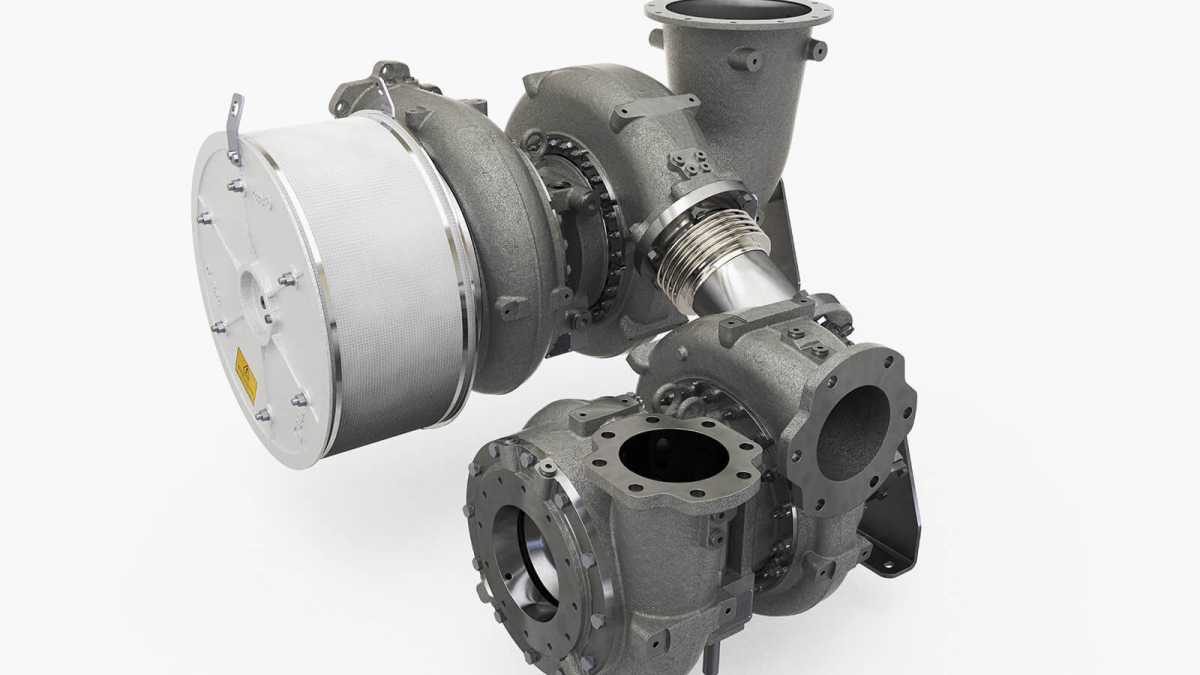
Kompressorenbau Bannewitz GmbH (KBB) has long stood as a cornerstone of turbocharger innovation, boasting over seven decades of expertise in enhancing engine efficiency for marine propulsion, stationary power generation, and locomotive applications.
As the global maritime industry confronts growing pressure to decarbonise and adopt sustainable fuels, KBB is leading the charge with forward-thinking technology, digitalisation, and advanced material science. By addressing the complexities of alternative fuels such as hydrogen, ammonia, methanol, and biofuels, KBB is setting the stage for a transformative shift in marine propulsion.
“Each new energy source presents technical challenges for turbocharger design”
Turbochargers amplify engine performance by compressing intake air using exhaust gas energy, thereby increasing the oxygen density available for combustion. This results in greater engine power without requiring larger engines or proportional increases in fuel consumption. As emissions regulations tighten globally, turbochargers are vital to improving fuel efficiency and reducing pollutants, particularly in large diesel engines. KBB’s history of technological leadership has uniquely positioned it to adapt its systems for modern challenges, including decarbonisation and alternative fuel integration.
Digitalisation
KBB’s collaboration with AVAT highlights the transformative potential of digitalisation in turbocharger systems. By integrating sensors and advanced digital interfaces, KBB turbochargers can now monitor critical operational parameters — such as pressure, temperature, and rotational speed — in real time. The data generated is analysed through artificial intelligence (AI), enabling predictive maintenance and optimising performance.
Dr Silvio Risse, KBB engineering director, explained: “Condition-based monitoring systems use AI to provide a health index of the turbocharger and predict when maintenance is required, helping operators avoid unplanned downtime and extend equipment lifespan.” This shift from fixed maintenance schedules to data-driven maintenance reduces costs, enhances reliability, and maximises the lifecycle of critical components.
A significant advancement in KBB’s digitalisation strategy is the development of digital twins — virtual models of physical turbochargers. These twins simulate real-world operations, allowing engineers to test various scenarios and optimise performance without risking equipment damage. According to Dr Risse, this technology is especially beneficial in remote maritime environments where immediate technical support may not be available.
“Digital twins enable remote diagnostics and troubleshooting, providing invaluable insights into operational efficiency and potential failure points,” Dr Risse said. This innovation underscores KBB’s commitment to leveraging digital tools to meet the growing demands of the maritime industry.
Alternative fuels
As the shipping industry pivots toward alternative fuels, each new energy source presents unique technical challenges for turbocharger design. KBB has demonstrated remarkable agility in adapting its systems to these emerging fuels.
Ammonia is heralded as a carbon-neutral fuel, but its slow combustion rate and the production of nitrous oxide (N2O) emissions present significant hurdles. Furthermore, its interaction with engine oils can lead to material degradation, particularly in copper-bearing systems.
“Corrosion is a significant challenge with ammonia,” noted Dr Risse. “We’ve invested heavily in high-performance materials and have optimised air intake and compression systems to address these issues.” KBB is also exploring ammonia-hydrogen blends, which improve combustion stability and reduce the need for complex exhaust gas treatment systems, like selective catalytic reduction (SCR).
Hydrogen’s rapid combustion and high flame speed necessitate turbochargers capable of handling extreme thermal loads and delivering significantly higher air mass flow. KBB has risen to the challenge by developing turbochargers tailored to these conditions, enabling efficient hydrogen combustion in dual-fuel engines.
“Our work on hydrogen-diesel dual-fuel engines demonstrates how KBB turbochargers can maintain efficiency while accommodating hydrogen’s demanding characteristics,” Dr Risse explained. The company’s innovations in this area highlight its ability to align with emerging energy trends without sacrificing performance.
Methanol’s combustion properties are closer to conventional marine fuels, making it a more straightforward transition for shipowners. However, its lower calorific value and unique chemical profile still require careful adaptation. KBB has optimised its turbochargers to manage methanol’s characteristics, ensuring efficient combustion with minimal modifications to existing engines.
Dr Risse pointed out that methanol’s high-octane number supports higher compression ratios, which aligns well with KBB’s advanced turbocharger designs. “Methanol is increasingly being used in real-world applications, such as harbour tugs, demonstrating its practicality as a transitional fuel,” he said.
Biofuels, such as hydrotreated vegetable oil (HVO) and fatty acid methyl esters (FAME), are increasingly being adopted as drop-in replacements for traditional fuels. These fuels have lower energy density and higher viscosity, which can affect engine performance. KBB has modified its turbocharger systems to accommodate these properties, enabling efficient combustion, even when using biofuels.
Material science and emissions control
Alternative fuels place immense stress on turbocharger materials, due to high combustion temperatures and corrosive environments. KBB has addressed this challenge through the development of advanced alloys and ceramic coatings. These materials ensure durability and efficiency, even under the extreme conditions associated with hydrogen and ammonia combustion.
To meet emissions regulations, KBB turbochargers integrate seamlessly with advanced exhaust gas after-treatment systems such as SCR and exhaust gas recirculation (EGR). These systems mitigate NOx emissions, a common challenge with hydrogen and ammonia. Dr Risse emphasised the importance of a system-wide approach: “The turbocharger, engine, and after-treatment system must function as a cohesive unit to meet decarbonisation targets.”
“Methanol is increasingly being used in harbour tugs”
The flexibility of dual-fuel engines, which can switch between conventional and alternative fuels, requires turbochargers capable of dynamic adaptability. KBB’s variable geometry turbines (VGTs) and adaptive compressor technologies allow seamless transitions between fuels, ensuring optimised performance regardless of fuel type.
“Pressure ratio demands are increasing, and two-stage turbocharging systems are becoming more prevalent to meet the requirements of alternative fuels,” Dr Risse noted. These systems deliver the higher air pressures needed for efficient combustion of low-energy-density fuels, like ammonia and methanol.
A vision for sustainability
KBB’s forward-thinking approach ensures its turbochargers are not only efficient but also aligned with the maritime industry’s broader decarbonisation goals. By combining digital innovation, material advancements, and adaptability to alternative fuels, KBB is creating solutions that meet the demands of both shipowners and regulators.
The company’s efforts extend beyond product development. Dr Risse underscored the importance of collaboration with engine manufacturers, academic institutions, and other stakeholders to ensure a holistic approach to sustainability. “Our goal is to support the maritime industry through a balanced focus on future fuels, retrofitting existing vessels, and integrating advanced technologies,” he said.
“Digital twins enable remote diagnostics and troubleshooting”
As the maritime sector navigates a period of unprecedented change, KBB is leading the way with turbochargers that combine innovation, efficiency, and environmental responsibility. By addressing the challenges of alternative fuels, integrating advanced digital tools, and pushing the boundaries of material science, KBB is setting a new standard for marine propulsion.
With a steadfast commitment to research, collaboration, and sustainability, KBB turbochargers will continue to play a pivotal role in shaping the future of global shipping. By embracing the complexities of alternative fuels and leveraging cutting-edge technology, KBB is not just adapting to change — it is driving it.
Related to this Story

Events

Maritime Regulations Webinar Week
 16 Dec 2025
 GMT - ONLINE
Floating energy: successfully unlocking stranded gas using FLNGs and FSRUs
24 Feb 2026GMT - ONLINE
© 2026 Riviera Maritime Media Ltd.


