


Business Sectors
Business Sectors
Events
Contents
Register to read more articles.
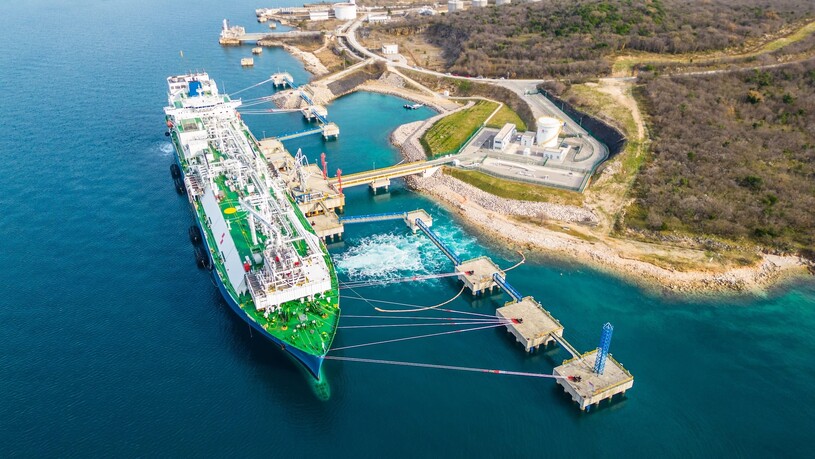
LNG supply set to be interrupted for weeks after QatarEnergy declares force majeure
Gas giant QatarEnergy declared force majeure to its affected buyers on 4 March, two days after halting LNG production, with supplies expected to remain disrupted for at least a couple of weeks


“QatarEnergy values its relationships with all of its stakeholders and will continue to communicate the latest available information,” the company said.
The company initially suspended LNG and associated production on 2 March following “military attacks” on its facilities in Ras Laffan and Mesaieed industrial cities. The next day, it also halted production of certain downstream products in Qatar, including urea, polymers, methanol, and aluminium.
Exports from Ras Laffan account for roughly 18% of global LNG supply, according to a report by Poten & Partners.
ICIS senior LNG analyst Alex Froley told Riviera that the force majeure declaration was a logical step after Monday’s decision to begin shutting down the 77M tonnes-per-year LNG plant at Ras Laffan.
“When ships stopped crossing the Strait of Hormuz, Qatar had to halt production, or its storage tanks would fill up. Declaring force majeure is the next logical step, as Qatar cannot supply its customers for reasons beyond its control,” he explained.
Mr Froley added that once the plant is fully shut down – which could take several days – it would take at least a week or more to restart production. As a result, supplies are expected to be interrupted for at least a couple of weeks.
Shifting trade flows
The situation could also disrupt global LNG trade flows.
According to ICIS data, Qatar’s largest LNG customers include China, India, Taiwan, Pakistan, and South Korea. Drewry reports that roughly 80%–85% of Middle Eastern LNG is destined for Asia, with China and India heavily dependent on Qatari supply.
If the blockade continues, these countries will need to source LNG from alternative suppliers, prompting trade adjustments.
“While India, Japan, South Korea, and Taiwan could import more US LNG, the share of Russian LNG to China and other South Asian countries could rise,” said Drewry Maritime Research lead analyst for LNG shipping Pratiksha Negi.
“We are seeing traders quote gas prices in Asia at a large premium to European prices, suggesting that LNG cargoes may begin moving from the Atlantic to the Pacific,” Mr Froley noted.
“For example, US cargoes originally destined for Europe might be redirected to Asia. This trend has not started yet, but could grow in the coming days,” he added.
Soaring charter rates
Meanwhile, LNG carrier charter rates continue to climb.
Spark Commodities data shows that the Spark30S Atlantic LNG carrier daily spot rate for 174,000-m³ two-stroke vessels reached US$278,250, rising by US$116,500 – surpassing yesterday’s record increase. “This marks the highest Atlantic freight rates since December 2022 and continues to set new records for this time of year,” the company said.
The Spark25S Pacific index also jumped by US$108,750, reaching US$207,500 per day.
GasLog chief operating officer Konstantinos Karathanos has told Riviera that around 20 LNG carriers are currently trapped in the Gulf – almost the same number as vessels currently available globally.
Riviera’s LNG Shipping & Terminals Conference will be held on 10-11 November 2026. Use this link for more information and to register for the event.




Related to this Story



Events

Maritime Regulations Webinar Week
 16 Dec 2025
 GMT - ONLINE
Floating energy: successfully unlocking stranded gas using FLNGs and FSRUs
24 Feb 2026GMT - ONLINE
© 2026 Riviera Maritime Media Ltd.


