


Business Sectors
Business Sectors
Events
Contents

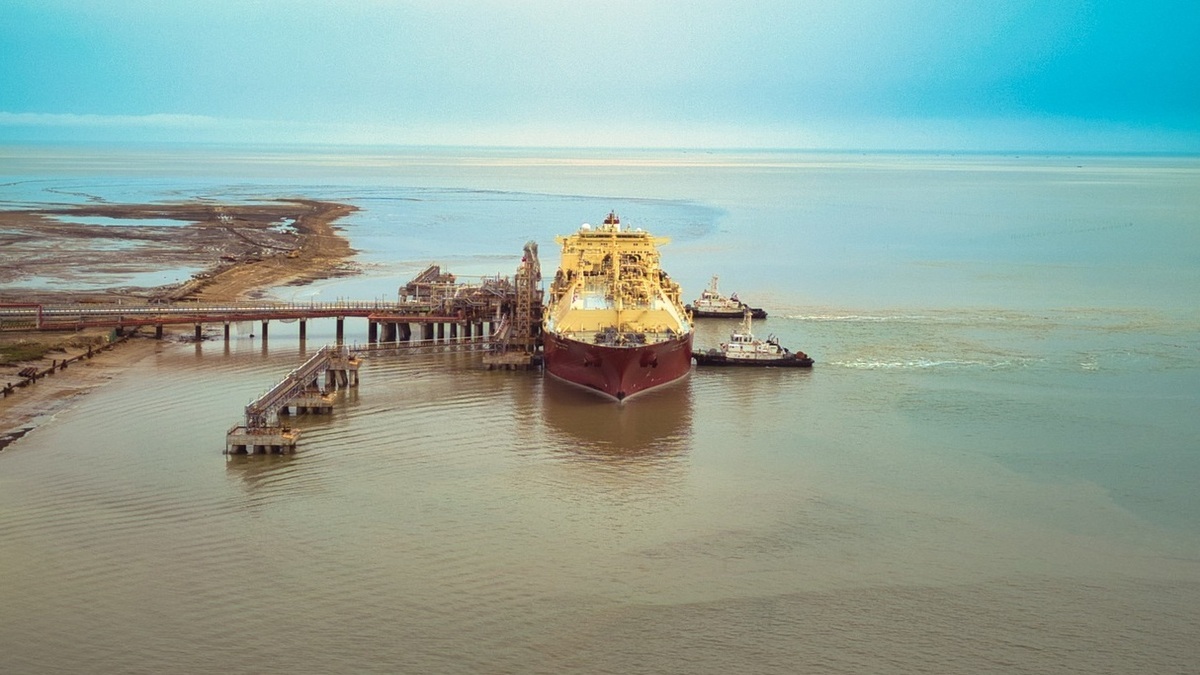
Missile attacks on QatarEnergy LNG reduce export capacity 17%
QatarEnergy said it estimates annual revenue loss at US$20Bn after attacks damaged two LNG trains at Ras Laffan Industrial City


Qatar is tallying up the damage from strikes on the world’s largest liquefied natural gas (LNG) export facility, Ras Laffan, at US$20Bn, with state-owned QatarEnergy set to declare ’long-term’ force majeure.
According to the company’s chief executive, Saad Sherida Al-Kaabi,’missile attacks’ damaged two LNG-producing trains, Train 4 and Train 6, curtailing 12.8M tonnes per annum (mta) of production, or approximately 17% of Qatar’s LNG exports.
Mr Al-Kaabi, who is also head of Qatar’s energy ministry, said the damage at LNG facilities will take between three and five years to repair.
"The impact is on China, South Korea, Italy and Belgium. This means that we will be compelled to declare force majeure for up to five years on some long-term LNG contracts,” he said.
US-headquartered ExxonMobil has a roughly one-third stake in each of the two damaged production trains.
The strikes that damaged the Ras Laffan facility came from Iran in retaliation for strikes on Iran’s South Pars gas field, the world’s largest-known natural gas deposit that stretches from Iran into Qatar, where it is called the North Field.
Iran’s Ministry of Petroleum said that several facilities were damaged in the strike.
Iran telegraphed its targets in response to the attack, with the Islamic Revolutionary Guard Corps issuing a statement that energy and petrochemical facilities across Saudi Arabia, the United Arab Emirates (UAE) and Qatar had been designated "legitimate and priority targets" for strikes and calling for civilian and personnel evacuations.
US President Donald Trump has disavowed any knowledge of the strikes on Iran’s South Pars gas fields, claiming they were unilaterally undertaken by Israel, but US-based Axios has reported that the strike on South Pars by Israel was "co-ordinated with and approved by the Trump administration," citing confirmation by an unnamed US Defense official and other US and Israeli officials whose names remained off the record.
Qatar’s Ministry of Foreign Affairs issued a statement condemning what it called Iran’s "blatant" attack on Ras Laffan and said the attack caused fires that inflicted "significant damage to the facility".
The ministry said Qatar views the attack as "a dangerous escalation".
Qatar’s Prime Minister and Ministry of Foreign Affairs spokesperson Dr Majed Al Ansari also took issue with Israel’s targeting of South Pars, an extension of Qatar’s North Field, calling it "a dangerous and irresponsible step" and "a threat to global energy security".
In a long and digressive post on the social media property, Truth Social, that the US President owns, Mr Trump threatened to "massively blow up the entirety of the South Pars Gas Field" if Iran continued attacks on Qatar’s LNG facilities.
On 18 March, QatarEnergy said attacks on Ras Laffan Industrial City resulted in extensive damage to its Pearl Gas-to-Liquids facility, which is expected to be offline for a "minimum of one year".
While Mr Al-Kaabi said he is "relieved to confirm that no one was injured" in the attacks, his statement detailed the products expected to be lost in association with the outages at QatarLNG’s facilities.
These losses include: condensates at 18.6M barrels which is around 24% of Qatar’s exports, LPG at 1.28M tonnes which is around 13% of Qatar’s exports, naphtha at 0.59M tonnes, which is around 6% of Qatar’s exports, sulphur at 0.18M tonnes which is around 6% of Qatar’s exports and helium production drops of around 14% of Qatar’s exports.
- Iranian reprisal for attack on world’s largest gas field hits Qatar LNG facility, ports and vessels
- 20,000 seafarers trapped in Gulf as US urges Hormuz reopening, IMO weighs evacuation corridor
- Merchant ships caught in crossfire as Iran broadens strikes on UAE energy targets
- India faces LPG supply crisis, despite VLGC transits through Hormuz
- IEA approves ’largest ever’ 400M barrel emergency release as oil markets grapple with war-shuttered supply
Market outlooks
Shipbrokers Fearnleys said that, prior to the attacks on South Pars and Ras Laffan, there had been a lack of liquidity in the market, "especially in the West".
"With fresh fixtures few and far between, market levels proved hard to call from all sides and bid/offer spreads remained wide, ultimately finding support in the low-mid US$100k’s," the shipbrokerage firm posted on its LinkedIn page.
East of the Suez Canal, Fearnleys said the market had been "bolstered by continued Omani flows and excess cargoes out of Australia and Malaysia".
"While levels have trended lower overall... there is even life for some steamers finding spot employment," the firm said.
Overall, Fearnleys said that, while the attacks do not alter the immediate supply of cargoes or ships, spikes in delivered gas prices and potential arbitrage in the market could cause "a scramble for tonnage and kneejerk bullishness on spot rates in the coming days".
Fearnleys also pointed to the potential impacts on rates from new capacity, in terms of dozens of LNG carriers ordered by charterers for QatarEnergy LNG projects which are set to hit markets in the near-term.
Nearly 50 LNG carriers are due to be delivered by shipyards from Qatar-linked contracts in 2026 and 2027.
Vortexa analysis said that Qatar’s multi-year force majeure declarations are expected to affect contracts with offtakers including Petronet, Edison, KOGAS, CPC and EDF.
The projection from Vortexa is that "a six-month slippage to upcoming projects, combined with the medium-term loss of two RasGas trains, reduces anticipated 2028 global capacity additions by approximately 28 mta," but that "despite this, a sizeable non-Qatari supply wave remains on track, with 32 mta and 67 mta of new capacity expected in 2026 and 2027 respectively".
Sign up for Riviera’s series of technical and operational webinars and conferences:
- Register to attend by visiting our events page.
- Watch recordings from all of our webinars in the webinar library.





Related to this Story



Events

Maritime Regulations Webinar Week
 16 Dec 2025
 GMT - ONLINE

Floating energy: successfully unlocking stranded gas using FLNGs and FSRUs
24 Feb 2026GMT - ONLINE
© 2026 Riviera Maritime Media Ltd.


