


Business Sectors
Events
Contents
Register to read more articles.
New UK study examines ammonia engines for OSVs
A new study will assess ammonia as a marine fuel and develop four-stroke dual-fuel engine concepts to meet IMO emissions targets


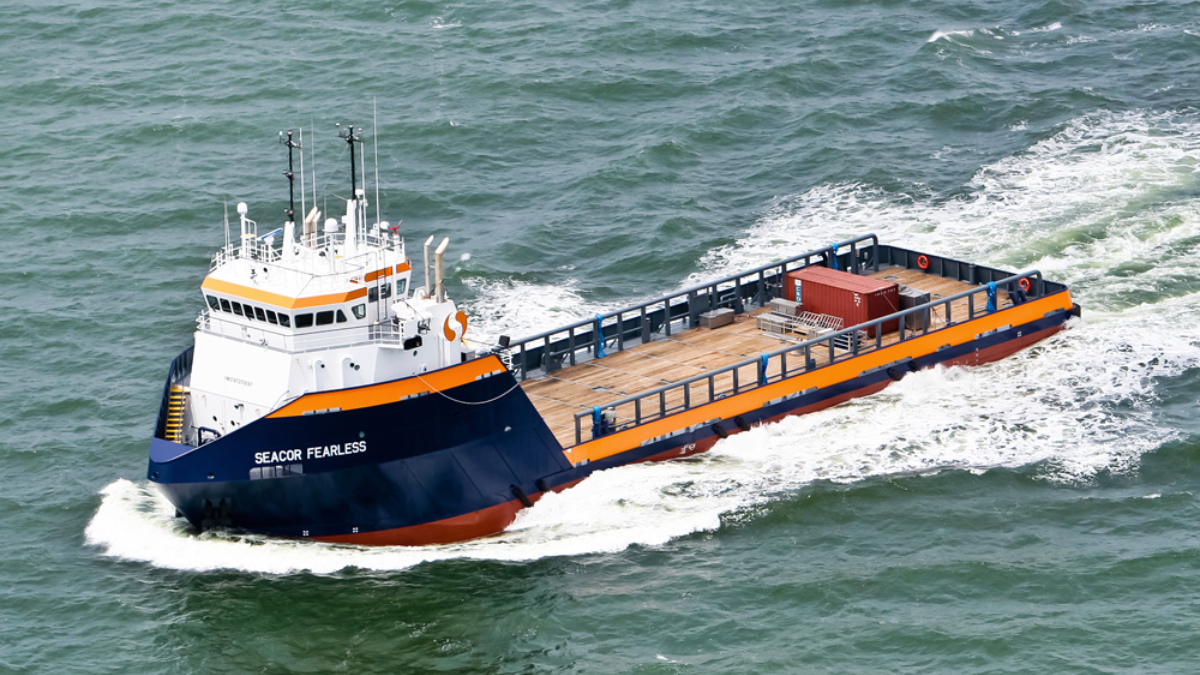
A new UK-backed study will evaluate the feasibility of ammonia -fuelled four-stroke engines for use by offshore support vessels to reduce CO2 and greenhouse gas (GHG) emissions to meet IMO emissions regulations.
The study, Project Fastmove, brings together partners Ricardo, Brunel University of London and the Port of Cromarty Firth, and is part of a Department of Transport-funded initiative, UK Shipping Office for Reducing Emissions (UK SHORE).
Funded under CMDC Round 6, the project will assess the opportunity to use ammonia — a zero-carbon fuel — for decarbonisation of OSVs operating out of the Port of Cromarty Firth, while developing further understanding of high-pressure, dual-fuel ammonia combustion. As described, the project focuses specifically on OSVs, with outputs also applicable to dredgers, some of which will be more than 24 m in length. These vessels typically operate with large four-stroke engines and in deep-sea ports or harbours where ammonia may be bunkered to service vessels using larger two-stroke engines.
Key goals of the project include maximizing the use of the ammonia substitution rate, while minimising the use of pilot fuels in the combustion process. When produced using renewable energy, ammonia (NH3) has the potential to be a zero-carbon fuel. But it is still highly toxic and corrosive, requiring specialised handling by the crew and shoreside personnel. The study will address port and vessel safety considerations.
“The next step in proving ammonia’s potential as a zero-carbon fuel”
As part of its role in the study, engineering and environmental consultancy Ricardo will use its experience in combustion engines and the maritime sector to develop initial combustion concepts. It will evaluate the feasibility of four-stroke ammonia-fuelled marine engines for OSVs, as a route to reducing emissions.
Brunel will examine spray characterisation and combustion modelling at its laboratories, while the Port of Cromarty Firth will assess safety requirements for ammonia storage and fuelling systems in ports for OSVs.
Ricardo global technical expert in sustainable engines, Richard Osborne, said: “This feasibility study gives us the opportunity to look at the potential benefits and challenges of the use of four-stroke ammonia-fuelled marine engines in offshore support vessels, determining whether they will offer a more sustainable solution in this part of the maritime sector.”
Xinyan Wang, professor and UKRI Future Leaders Fellow at Brunel University of London, noted that the university has performed pioneering ammonia research, using fuel blends for lorries to new applications in shipping. He said the project would “take the next step in proving ammonia’s potential as a zero-carbon fuel and in setting the standards to decarbonise one of the hardest sectors.”
Port of Cromarty Firth head of strategy and business development, Joanne Allday, sees the project as playing “a foundational role in helping to establish the safety standards for use of this future fuel in the UK and beyond.”
Since 2022, UK SHORE has allocated over £230M (US$311M) to almost 250 projects, drawing some £107M (US$145) in private investment.
Related to this Story


Events

Maritime Regulations Webinar Week
 16 Dec 2025
 GMT - ONLINE
Floating energy: successfully unlocking stranded gas using FLNGs and FSRUs
24 Feb 2026GMT - ONLINE
© 2024 Riviera Maritime Media Ltd.


