


Business Sectors
Business Sectors
Events
Contents
Register to read more articles.
A sustainable, secure cruise industry from scratch
Saudi Arabia’s port and transit capabilities are rapidly expanding


Cruise Saudi, a company fully owned by Saudi Arabia’s sovereign Public Investment Fund, made waves in 2021 when it was officially launched to develop the infrastructure and services required to scale a full-suite cruise market in Saudi Arabia.
The company is responsible for the development and operation of cruise berths and terminals as cruise gateways to key Saudi destinations, and scaling cruise services from marketing, to shore excursions and vessel operations. There is an ambitious roadmap for the industry’s development, targeting 1.3M cruise passenger visitors to the Kingdom by 2035. So far, there have been three successful seasons, welcoming 300,000+ passengers and seven major international cruise lines. The current season launched in October 2023 and ends in May.
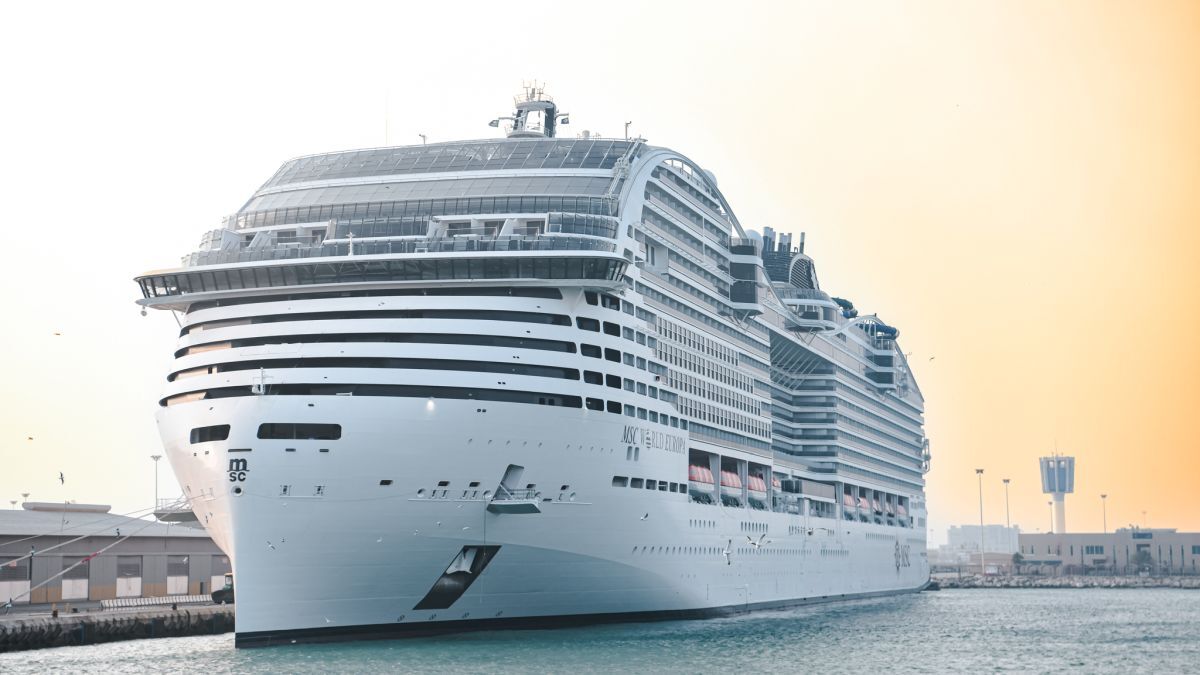
Central to increasing Saudi’s appeal as a must-visit cruise hub is expanding homeport and transit capabilities nationally. Cruise Saudi has developed the required cruising infrastructure to welcome the largest cruise ships currently plying the seas in Jeddah Islamic Port and Yanbu Commercial Port on the Red Sea, as well as King Abdulaziz Port in Dammam on the Arabian Gulf. In August, Cruise Saudi signed an MoU to develop a port in Jazan, in the southern part of Saudi.
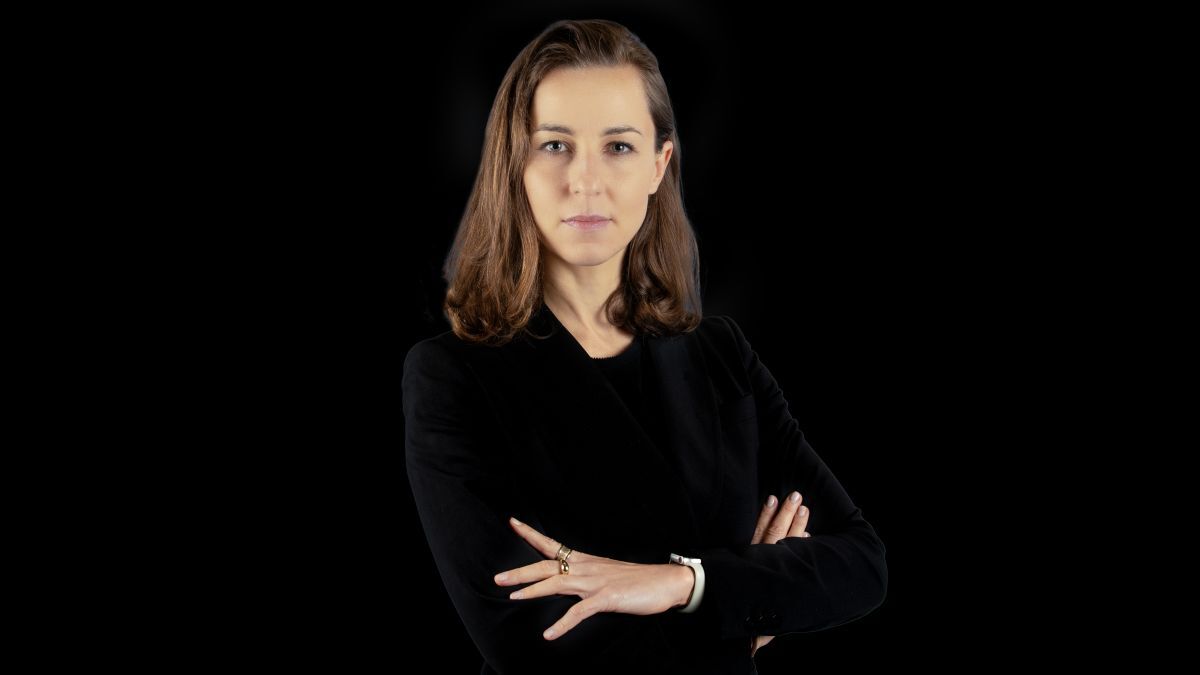
For Cruise Saudi chief asset management and operations officer Barbara Buczek, the embryonic project means there is both the opportunity and the flexibility to deploy shore power, renewable energy sources such as solar and hydrogen, and automated waste processing in new cruise facilities lacking legacy systems.
The final decisions on shore power systems at Saudi cruise terminals will depend on the terminal’s particular ownership models, she explains. For example, terminals operated by SASPorts fall under the remit of Mawani, Saudi Arabia’s ports authority, which manages assets nationally.
Meanwhile, some ports have been transferred to private ownership by entities like Neom which now oversees the former Ports of Duba. Shore power usage will also vary by terminal type and expected traffic, however the homeport facilities anticipating significant cruise volumes will all be equipped with shore power capabilities.
Cruise Saudi also intends to adopt solar power across terminals and buildings with adequate roof space and is exploring emerging renewable technologies around hydrogen and other options through partnerships.
Cruise Saudi is collaborating with multiple Saudi organisations on sustainability research. "A key partnership is with King Abdullah University of Science and Technology, a leading Saudi research university focused on new sustainability technologies,” says Ms Buczek, adding details on specific projects "will be announced in the near future."
Where existing terminals were retrofitted, there was no need for an environmental impact assessment (EIA), however, new cruise infrastructure is subject to EIAs "which are rigorous given Saudi Arabia’s sensitive Red Sea environments."
"There are ambitious goals, at the same time we want to minimise environmental impacts," says Ms Buczek. "The cruise industry already ranks among those industries with the highest wastewater discharge standards and in practice its water needs, a key topic in the Middle East, are low compared with other industries.
"Our commitment to doing the right thing in these areas is reflected in the investments we are making in water conservation and treatment. This includes specialised pool water treatment that returns cleaned water for reuse; advanced wastewater plants employing membrane bioreactor and other technologies to treat blackwater and greywater before discharging; and marine water desalination systems to minimise shore water needs. State-of-the-art incinerators will reduce ship waste up to 98%. Plastics, paper, glass, cooking oil, electronic waste and even photo development chemicals will get thoroughly sorted and recycled both on board and ashore via port facilities. Food waste is composted or offloaded to bio digesters and water treatment facilities."
Equally rigorous is the priority being given to cyber security and data protection considerations, says Ms Buczek. "Cruise Saudi follows international regulations like GDPR when handling customer information. It also adheres to recent robust Saudi data protection laws instituted to shield personal data. Biometric collection from cruise passengers aligns with global norms," she says.
To ease embarkation bottlenecks and speed up security screening, investment has been earmarked for virtual check-in and facial recognition, where passengers submit required forms, passport scans, and biometrics data via web portals or mobile apps ahead of arrival. Attachable luggage tags with embedded RFID chips interface with conveyor systems and scanners to identify and route baggage to the correct ship and stateroom automatically. And integrated security checkpoints will feature backscatter scanning technology, explosive trace detection, facial recognition cameras, radiation monitors and other sensors to non-invasively screen passengers and carry-on items.
As the guardian of all cruise infrastructure and scheduling, Cruise Saudi serves as the single point of contact for cruise lines. "We have dedicated teams offering personalised support and information to meet planning needs," she says. "A first-come first-served policy enables transparent berthing allocations across ports. Pricing practices align with global standards around cruise line contracts," she adds.
Cruise regulations are new for Saudi Arabia, admits Ms Buczek, and there is a particular determination to showcase global best practices and standards around issues such as passenger clearances. An evolutionary approach is being taken that allows the terminals, over time, to get familiar with cruise profiles and requirements. On current performance, expect rapid progress.
Sign up for Riviera’s series of technical and operational webinars and conferences:
- Register to attend by visiting our events page.
- Watch recordings from all of our webinars in the webinar library.

Related to this Story



Events

Maritime Regulations Webinar Week
 16 Dec 2025
 GMT - ONLINE
Floating energy: successfully unlocking stranded gas using FLNGs and FSRUs
24 Feb 2026GMT - ONLINE
© 2026 Riviera Maritime Media Ltd.


