


Business Sectors
Business Sectors
Events
Contents

AR technology is coming to shipping


Editor Martyn Wingrove discusses how augmented reality can revolutionise ship bridge operations
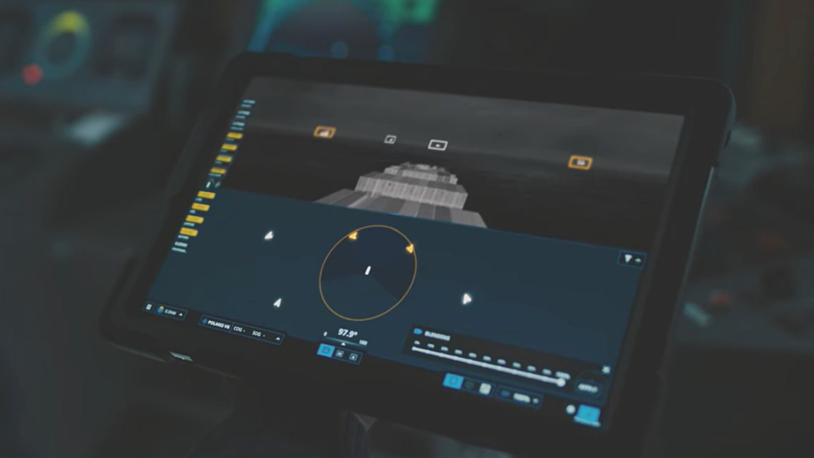
Augmented reality, or AR for short, will be introduced to bridge systems on future ships to improve navigational safety. The first prototype of bridge AR is likely to be tested by 2020 and ships built with this technology within the next five years.
By the middle of the next decade, we should see fleets of ships sailing across our oceans with wall-high displays augmented with critical navigation information.
Perhaps the first application of AR on ship bridges will be on vessels crossing Arctic seas using the Northern Sea Route from northern Europe to East Asia. This is because a partnership of 14 organisations plans to design and test AR technology as part of the three-year SEDNA project.
Some bridge system suppliers have also considered using AR technology on ships. For example, Rolls-Royce incorporated AR technology in its oX bridge concept and predicted that these will be in use by 2025.
An alternative approach, and possibly a more flexible and cost-effective option is to use glasses to deliver data to navigators. Developments in this technology made good progress for non-maritime applications. Therefore, just like the use of smartphones and other mobile devices on ships, AR glasses could be at sea sooner than AR window displays.
Thus we can expect AR technology to be used by navigators at sea within the next five years – will you be an early adopter of this technology and drive the market, or react later than others when the technology is well tested.



Related to this Story


Events

Maritime Regulations Webinar Week
 16 Dec 2025
 GMT - ONLINE
Floating energy: successfully unlocking stranded gas using FLNGs and FSRUs
24 Feb 2026GMT - ONLINE
© 2026 Riviera Maritime Media Ltd.


