


Business Sectors
Events

Floating energy: successfully unlocking stranded gas using FLNGs and FSRUs
 24 Feb 2026
 GMT - ONLINE
Contents
Design rethink, smarter equipment and retrofits reshape OSV outlook
Improving endurance, integrating systems and finding practical vessel upgrade options are driving how offshore support vessels are designed, equipped and modernised


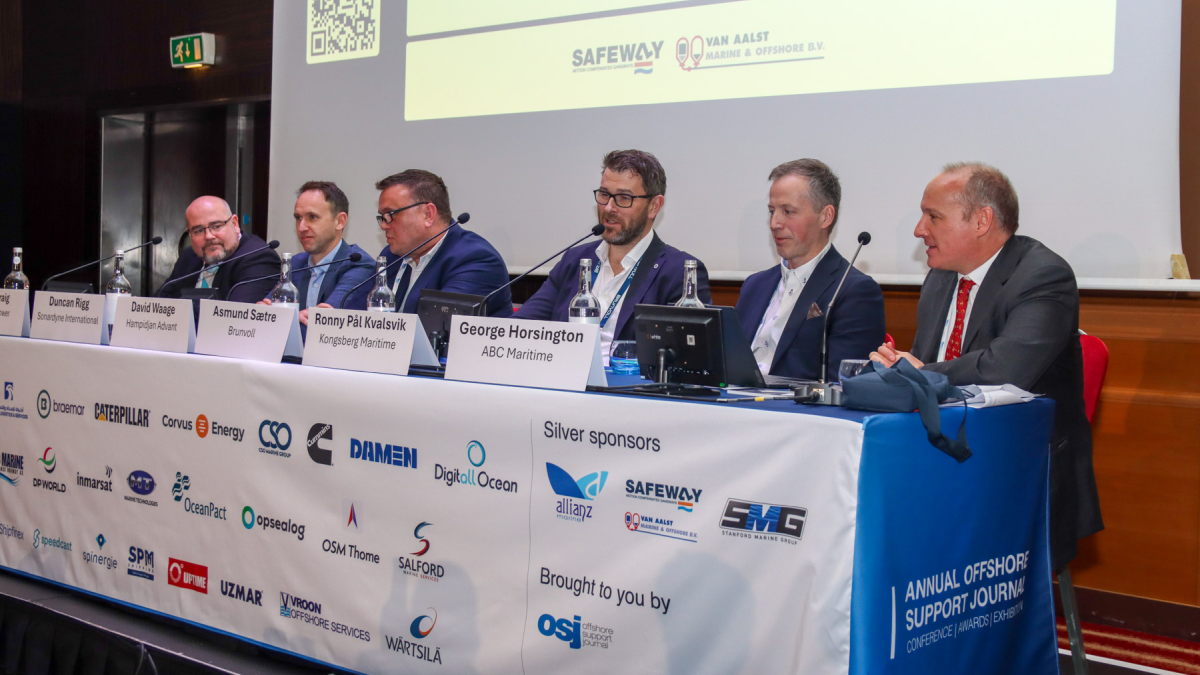
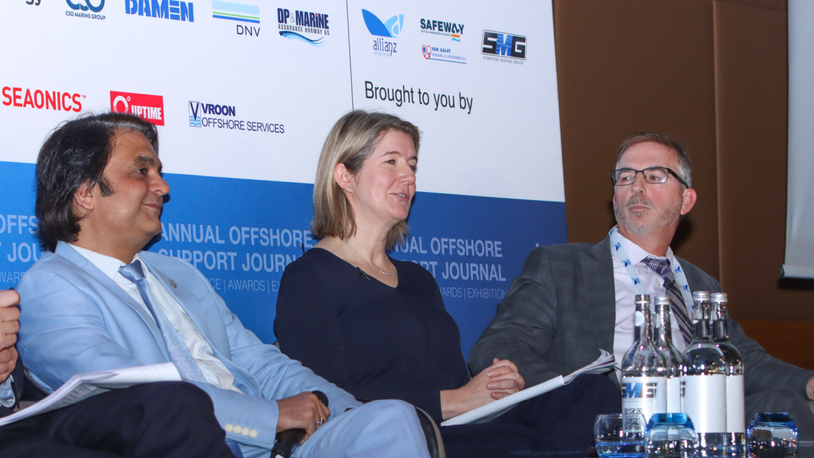
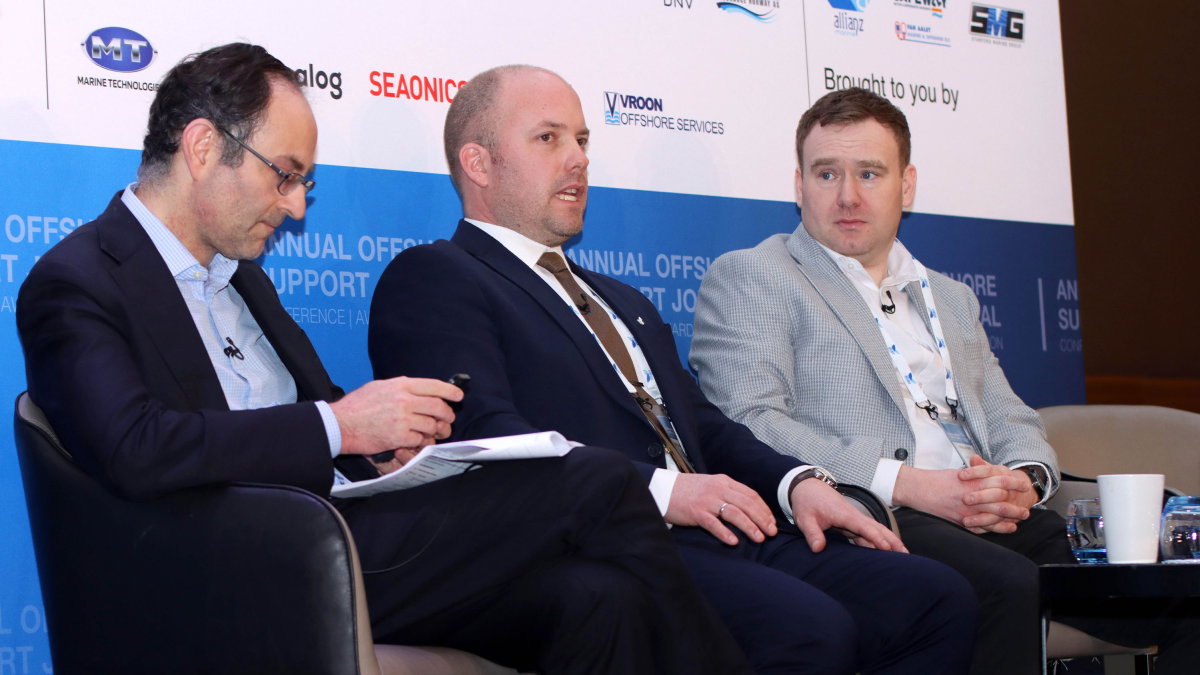
Across vessel design, propulsion, deck equipment and subsea technologies, the emphasis of a discussion at Riviera’s Annual Offshore Support Journal Conference, Awards & Exhibition showed the offshore vessel segment is adopting technologies that deliver clear operational value now and do not close down options in the longer term.
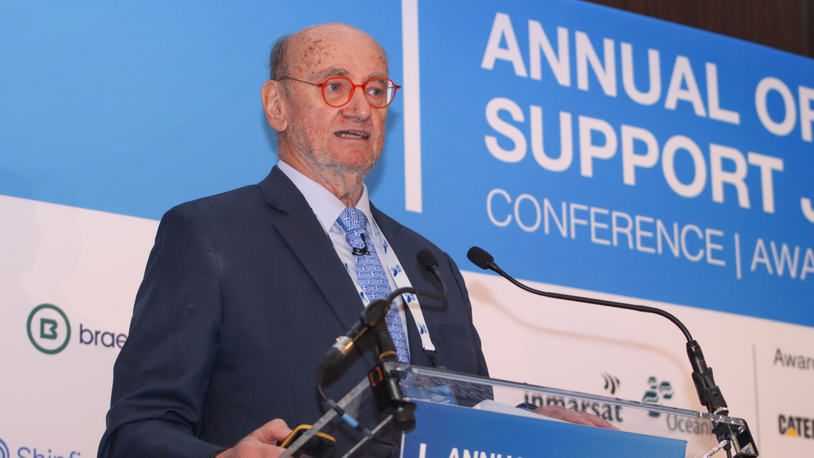
Kongsberg Maritime vice president Ronny Pål Kvalsvik outlined how modern OSV design concepts are being shaped by vessels’ needs for operational endurance and system integration.
Recent designs from Kongsberg, which enable vessel deployments for up to 22 days consecutively, illustrate how automation, remote operations and carefully matched power and propulsion systems can reduce crew requirements and vessel operating costs, Mr Kvalsvik said.
“If somebody told me three or four years ago that this concept would operate for 22 days in a row… I would not believe it,” he said, adding that this capability now “shows innovation” and how quickly design thinking is moving.
With activities spanning energy and control systems as well as propulsion and handling, Mr Kvalsvik said that Kongsberg is placing strong emphasis on digitalisation, the energy transition and ’ocean space’ applications in its work, with access to a global footprint and a large base of installed technology and systems.
Mr Kvalsvik said that, rather than optimising individual components, Kongsberg Maritime is embedding mission-critical equipment, propulsion and digital systems into the design process from the outset.
“It’s not only one component that delivers the major step changes,” Mr Kvalsvik said. “It’s vital to see the total picture.”
This approach underpins new concepts for cable-lay vessels responding to high-voltage infrastructure demand in Europe, as well as updated designs for mooring installation and anchor handling vessels, both segments where fleets are ageing.
From a propulsion and manoeuvring perspective, Brunvoll executive vice president Asmund Sætre reinforced the opinion that upgrades that are both technically robust and practical to install are a necessity. And Mr Sætre agreed that owners increasingly want systems that can evolve with changing demands.
“There’s nothing worse than when someone says, ‘I want 10 MW of power’ without understanding what they’re actually doing with it,” he said, stressing that understanding vessel operations is critical to finding appropriate upgrades.
Deck equipment innovation is also underway in the offshore vessel segment. Rope manufacturer Hampidjan Advant chairman David Waage highlighted how his company is working to convince the offshore industry that fibre ropes are a mature alternative to steel wire in hoisting applications.
“We can outperform steel wire,” he said, noting that material choice is key to durability and that it must both match operations and follow known operational limitations.
Mr Waage said his company’s product “doesn’t elongate, has far superior temperature resistance and a longer lifetime" than many alternatives.
In the critical niche of subsea operations, underwater technology specialists Sonardyne focused on how marine robotics and automation are expanding with the rapid introduction of continuously evolving digital technologies that are coming into the industry.
Sonardyne business development manager Duncan Rigg described the company’s ultra-short baseline positioning technology as “a gateway between the surface and the subsea environment”, allowing vessels to act as communication hubs for multiple subsea assets.
Automation, he said, can take over repetitive tasks that crews sometimes face – and that can cause fatigue. “This is where automation and robots can really pay a dividend,” freeing crews from long, monotonous operations, he said.
Future-proofing existing fleets remains a parallel challenge for an industry that is, like many others, trying to react to the forces of rapid technological change.
With so much rapid change to contend with, OneStep Power president Mark Craig warned owners and operators against overbuilding systems without a clear operational case.
“There’s no point throwing the steel out… if we don’t know what we’re going to be doing to power and control [the vessels] in a few years,” he said.
Mr Craig also pointed to closer vendor co-operation as being essential, adding, “Integration is a huge part and a huge cost, and by not doing it properly, it could cost us.”
Riviera’s Offshore Support Journal Conference, Brazil, will be held in Rio de Janeiro on 13-14 October 2026. Use this link for more information and to register for the event.
Related to this Story
Events

Maritime Regulations Webinar Week
16 Dec 2025GMT - ONLINEFloating energy: successfully unlocking stranded gas using FLNGs and FSRUs
24 Feb 2026GMT - ONLINE
© 2024 Riviera Maritime Media Ltd.


