


Business Sectors
Business Sectors
Events
Contents
Register to read more articles.
Early class involvement supports innovation in next generation OSVs
Class involvement helps minimise risk in the uptake of new fuels and novel technologies, supporting safety and innovation, says Dr Wei Huang, ABS director, global offshore and offshore support vessel sector lead


To meet evolving emissions reduction regulations, lower opex, gain a competitive advantage or expand into new offshore sectors, vessel owners are boldly exploring novel fuels, technologies, systems, and business models – almost all of which have never been deployed in the maritime industry. Without a goal-based safety approach to mitigating risk, many of these innovations would stall.
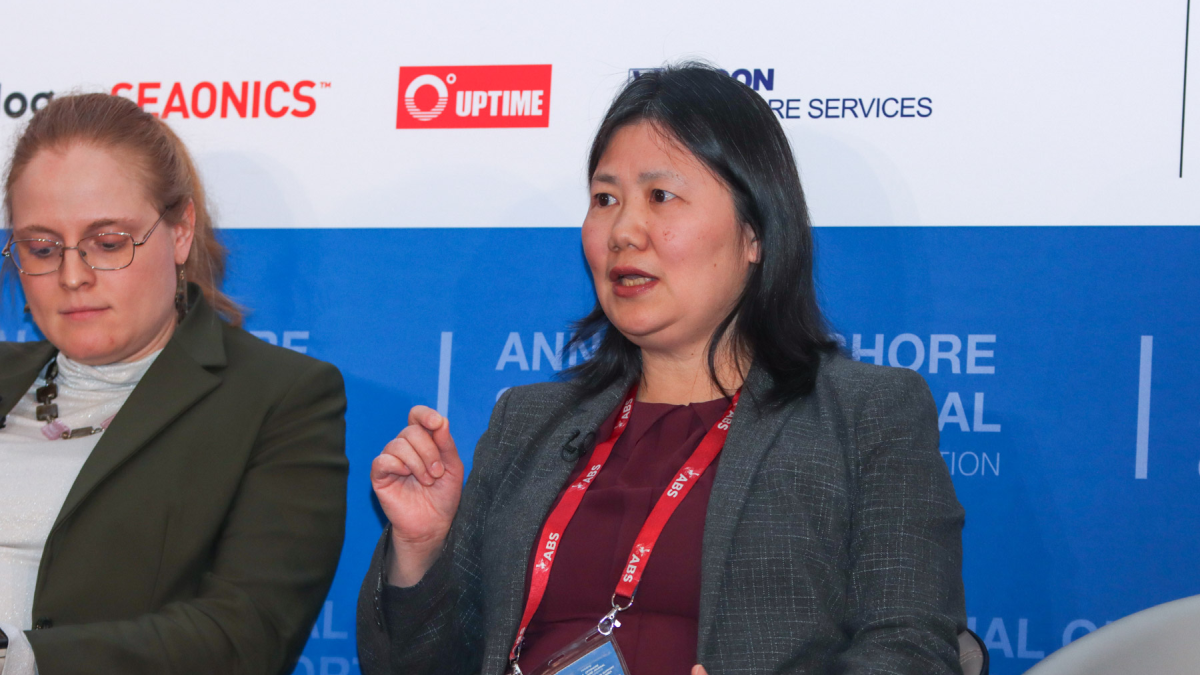
“Offshore operations have become more complex, with remote monitoring centres, remote operation centres, autonomous functions, advanced communications and hybrid energy solutions,” said Dr Wei Huang, ABS director, global offshore and offshore support vessel sector lead. “This kind of complexity expands the risk profile directly or indirectly.”
A regular participant at the Annual Offshore Support Journal Conference, Dr Wei Huang told delegates at the event in early February how ABS was helping to minimise the risk in the adoption of new technology in the offshore support vessel sector.
When it comes to adopting novel technologies in the offshore vessel sector, Dr Wei Huang explained that ABS supports industry through the entire development process. “We are there: from concept to technology qualification to pilot project through actual application on one vessel to multiple assets,” she said.
In her presentation, Navigating regulation and building resilience: pioneering new technologies for a safer and stronger future, she described how a paradigm shift is underway in the offshore energy sector, shaped by evolving emissions regulations, charterer demands and new technologies.
Offshore support vessel owners and operators are “under pressure to reduce emissions, cost, and downtime, while increasing efficiency – all at the same time,” she said, stressing these objectives must be accomplished safely.
Tech trends
She spotlighted four technology trends: digital and automation; alternative fuel and alternative energy sources; remote and autonomous functions; and integrated logistics, covering the offshore field, vessel, port infrastructure and completed supply chain.
Traditionally, OSVs – platform supply vessels, anchor handlers, offshore construction vessels and emergency response and rescue vessels – have been used only in offshore oil and gas fields. But new-generation offshore vessels and platforms are now being deployed in offshore renewables as well as emerging sectors such as carbon capture and storage, floating nuclear power, subsea mining, and space launch and recovery.
In 2025, for example, Seagate Space’s unmanned semi-submersible launch platform became the first offshore asset to receive an approval in principle (AiP) under the class society’s newly published ABS Requirements for Offshore Spaceports. An AiP is an intermediate approval step, demonstrating project feasibility of novel concepts to project partners and regulatory bodies.
Seagate Space’s platform, designed specifically for remote offshore launch operations and referred to as the Gateway-S, introduces a new category of modular offshore spaceport infrastructure. Gateway-S can be configured for both launch and recovery as well as disassembled into container-sized modules for transportation by sea or land, allowing for multi-site deployments.
Other key features of the design include its semi-submersible hull form, which reduces wave-induced motion, and deck arrangement which can facilitate various mission- specific equipment.
Offshore recovery missions have skyrocketed over the past decade, soaring from just two in 2015 to over a hundred in 2024. Specialised barges and offshore support vessels enable this rapid growth, serving as a key theatre for an array of offshore operations in support of the expanding commercial space industry.
Offshore spaceports enable more convenient and efficient launch operations by moving operations to sea, reducing public impact while relieving pressure on shore-based spaceport infrastructure.
“Technology is developing faster than regulations”
Additionally, the platform received the AiP in line with ABS Rules for Building and Classing Offshore Units (Offshore Rules).
ABS has taken a leading role in the development of industry requirements for offshore space infrastructure, publishing the first requirements addressing the unique challenges of offshore spaceports in 2023 as well as a joint development project reviewing remotely controlled dynamic positioning functions of autonomous rocket recovery droneships with SpaceX.
She said: “An offshore energy vessel can be multi-functional.” As an example, she cited commissioning service offshore vessels that can operate in offshore windfarms or serve as flotels for offshore oil and gas fields.
An offshore launch and recovery vessel can be a newbuild, retrofit or a conversion from a traditional asset.
ABS is supporting the next generation of offshore vessels, adopting clean technology and smart technologies to meet the latest regulations and decarbonisation goals.
It has developed guidelines, safety standards and advisories on adopting alternative energies and sources, hybrid power, decarbonisation strategies and solution-driven services.
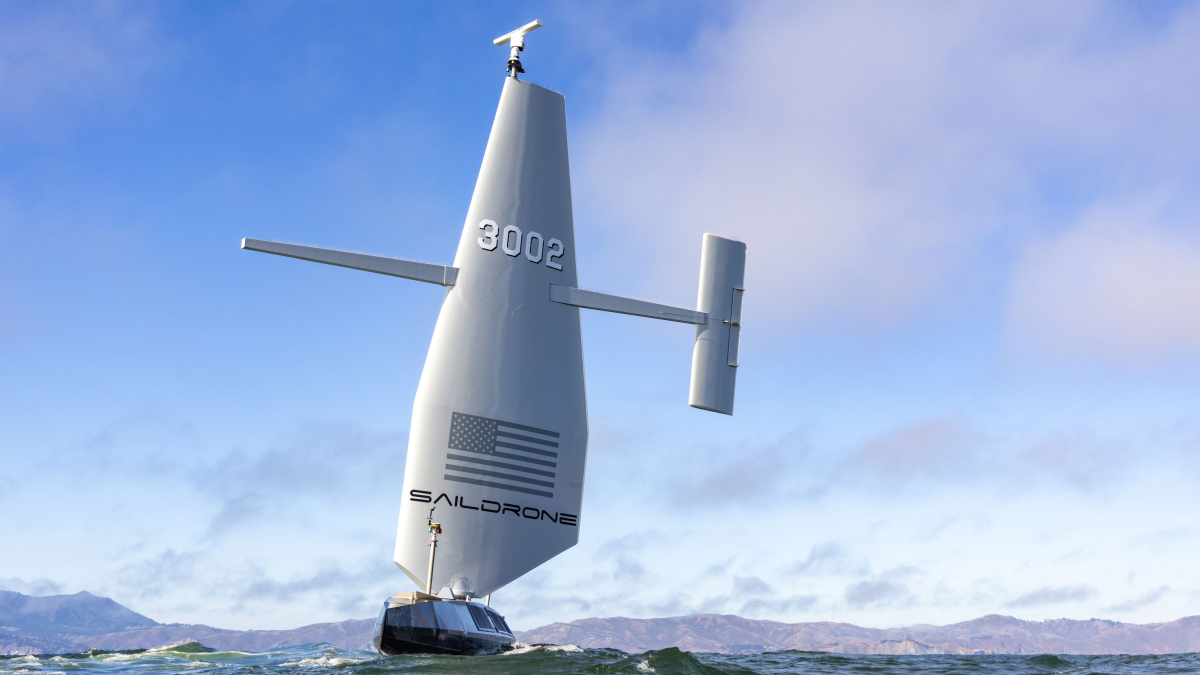
Dr Wei Huang highlighted the class society’s work in support of Saildrone unmanned surface vessels (USVs). The company’s 10-m Saildrone Voyager achieved ABS Class in 2023 and is designed for persistent surveillance in coastal and near-shore environments. Saildrone USVs are capable of fully autonomous operations with no human onboard and are remotely monitored 24 hours a day, seven days a week by the company’s global Mission Management team.
In 2025, ABS awarded classification to the Saildrone Surveyor, a 20-m fully autonomous deepwater USV capable of unmanned operations across all the world’s oceans.
One of the vessel’s most ambitious assignments is mapping the Mariana Trench, which reaches a depth of 10,935 m below sea level.
“Technology is developing faster than regulations,” she said.
Autonomous vessel technologies are outpacing regulatory frameworks at IMO. She said the non-mandatory version of the IMO Maritime Autonomous Surface Ship (MASS) Code is expected to be finalised and adopted in May 2026. “And the mandatory code won’t come into effect for another six years - until 2032.”
Dr Wei Huang asked: “Has this stopped the development? No. We use a goal-based approach and risk assessment. We work closely with industry to develop guides and notations, and flag state administrations to fill the gap between current safety standards and their equivalencies.”
She advised offshore support vessel owners that are considering using novel technologies to “bring class early in the process to identify risks so that ABS can then help them to identify and mitigate the risks together.”
Related to this Story

Events

Maritime Regulations Webinar Week
 16 Dec 2025
 GMT - ONLINE
Floating energy: successfully unlocking stranded gas using FLNGs and FSRUs
24 Feb 2026GMT - ONLINE
© 2026 Riviera Maritime Media Ltd.


