


Business Sectors
Business Sectors
Events
Contents
Register to read more articles.
European ports race to plug the alternative fuels gap
Major and secondary European ports are investing in biofuels, methanol and ammonia bunkering infrastructure, as oil price volatility and EU regulations begin to bite


The increasingly unpredictable price of oil is accelerating demand for biofuels and other alternative fuels in European ports, according to suppliers who also cite pressure from regulatory measures.
As John Bassadone, founder and chief executive of Peninsular, a global biofuels supplier that has signed deals with the Port of Algeciras, explains: “We are seeing an acceleration of biofuel adoption as a result of price volatility of conventional fuels and regulatory measures such as FuelEU and EU ETS. These regulations are designed to ratchet up, and biofuels are the most versatile, available option today to meet decarbonisation targets.”
A Marine Propulsion survey of preparedness at major seagoing hubs in the region shows a concerted effort to bunker adequate supplies of methanol first, and later other biofuels such as ammonia as soon as they become available at scale.
As Rotterdam, Amsterdam and Antwerp-Bruges lead the charge with existing methanol bunkers, other ports such as Algeciras, Bremerhaven, Marseille Fos, Barcelona and Le Havre are following suit. Others, such as North Sea Port in the Benelux region and the Port of London, are in preparatory stages.
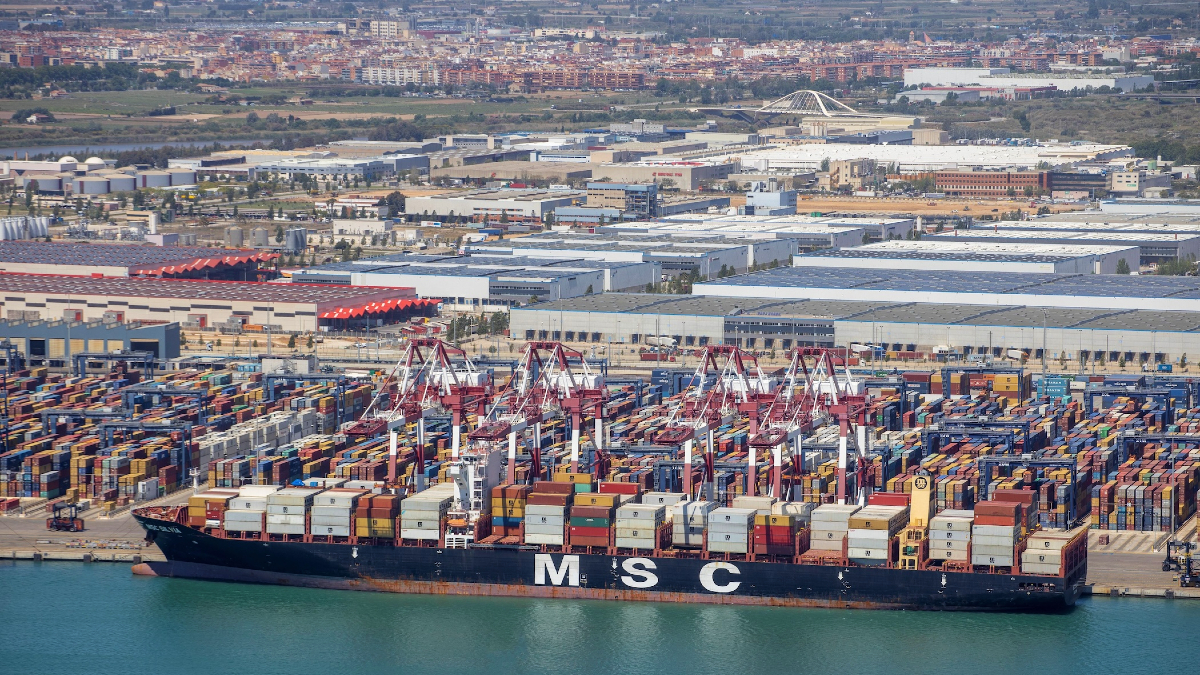
Among the latest developments, Maersk’s dual-fuel container ship Antonia Maersk was refuelled with 2,800 tonnes of renewable biofuel by the bunker vessel Bahía Candela at APM Terminals at the Port of Barcelona in July. And Spanish energy giant Repsol says it has signed supply agreements for renewable methanol due for delivery in 2029.
The port’s president, José Alberto Carbonell, sees Barcelona at the centre of bunkering low-carbon fuels at scale under an energy transition plan. “As the Mediterranean’s leading logistics and energy hub, we are committed to providing the infrastructure, operational capabilities and collaborative environment needed to accelerate the maritime sector’s decarbonisation.”
Another Spanish port, Algeciras in the Bay of Gibraltar, is installing specialised bunker vessels and other arrangements for storing methanol and ammonia in bulk which, it says, will be in operation by late 2027 and will take the hub a step closer to being what it describes as “the chief alternative fuels node in the Mediterranean”. The port authority envisions green corridors connecting it to north European hubs like Rotterdam and, further afield, Colombia and Panama.
A 7,500 m3 ammonia bunker vessel will be part of the infrastructure. At present the port is a leading hub for bioLNG, but has ambitious plans for alternative fuels. In August, biofuels supplier Peninsula signed an MoU with Evos, a European storage company, to develop up to 60,000 m3 of capacity for bunkering low-carbon marine fuels.
Another giant hub, Bremerhaven, which mainly bunkers LNG-fuelled container ships and car carriers, considers itself methanol-ready. The Northern German port has set 2030 as the year it becomes a multi-fuel port. At present, methanol bunkering is handled on a case-by-case basis. “There is already methanol-capable storage capacity on the Weser, bunker suppliers in Bremerhaven are looking into expanding, and several companies are involved in the production of green methanol”, explains senator Kristina Vogt, a Bremen politician who heads the port’s transformation. ”With the regulations now clear, we are well positioned, and Bremen also has the best structural prerequisites.”
Another key German gateway, Hamburg, isn’t far behind, having already approved ship-to-ship and truck-to-ship operations.
Smaller ports
Other smaller ports are moving in the same direction. Located on the Dutch-Belgian border at the mouth of the River Scheldt, North Sea Port is developing what will promise to be the biggest hydrogen network in the Benelux region. Chief executive Cas Konig predicts “North Sea Port will become the operating base for large-scale hydrogen import, bunkering and transfer to the European hinterland”.
Another sleeping giant is Haropa in Le Havre, France, Europe’s leading river port, which has plans to bunker methanol and ammonia. The €500M (US$582M) Methavert project plans initial production of 200,000 tonnes of e-methanol while America’s Air Products is working on a €1.1Bn (~US$1.3Bn) hydrogen and ammonia import terminal. Haropa has also signed for a green shipping corridor, in this case with China.
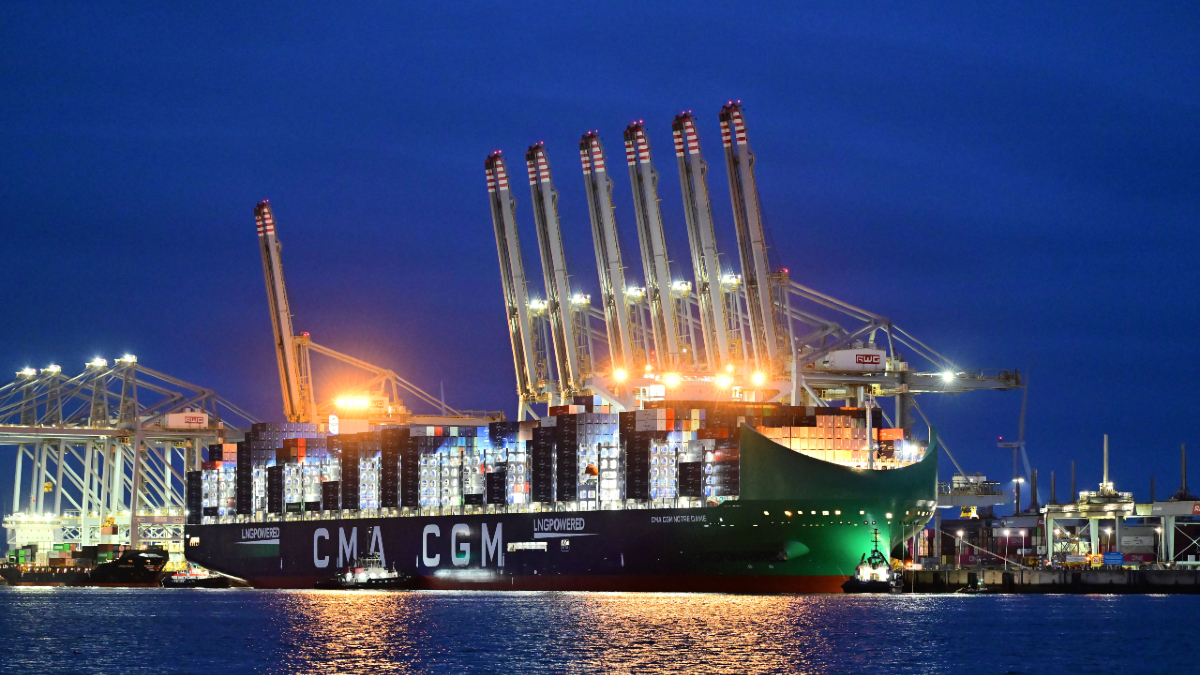
Another future alternative fuel giant will be Marseille Fos, where CMA CGM is backing “massive e-methanol and green hydrogen production infrastructure” timed for commissioning in 2028.
Competitive advantage
Bremerhaven’s managing director Robert Howe sees alternative-fuel readiness as a competitive advantage as well as good for the climate. “The aim must be for universal bunkering to be possible in our universal ports - regardless of whether methanol, LNG, ammonia or, in future, green hydrogen is pumped into the ship’s tanks. The fact that we already have clear process plans and regulations for LNG and methanol is a very good step in the right direction.”
A compelling reason for the early adoption of methanol over other alternatives is that the infrastructure is relatively simple, certainly compared with ammonia. Risk assessments conducted by major ports show that bunkering methanol is similar to fuel oil and only limited modifications are required for bunker barges. Also, as the Global Maritime Forum explains, there’s little resistance among port workers, terminals and public authorities.
That makes methanol the poster fuel. “Methanol has surged in adoption because it is liquid at ambient temperature and pressure, making it far easier to store and bunker than cryogenic or gaseous fuels”, explains Marine Inspection in a detailed paper published in June 2026. ”It works in available dual-fuel engines, uses adapted petroleum bunkering infrastructure, and comes in bio- and e-methanol variants that support a path to deep decarbonisation. Methanol is the first new fuel many deep-sea operators can run at scale, and dual-fuel fleets are growing fast.”
Ammonia’s time will come
As for ammonia, the consensus is that its time will come. As the first ammonia-fuelled ships are launched through 2026, the IMO is evolving rules around it. According to experts, ammonia should become the most cost-competitive alternative fuel within about 10 years.
In early 2025, the port of Rotterdam conducted an ammonia bunkering operation between two ships, and Antwerp-Bruges is developing ammonia bunkering. Incidentally, both these Dutch hubs already have methanol bunkering.
A study by the not-for-profit Global Maritime Forum has found that bunkering is currently the weakest link in the ammonia value chain and will require some dedicated cooperation. “Early adopters also note that the knowledge levels and risk appetite for ammonia bunkering differ markedly between ports and terminals, and successful introduction of ammonia bunkering will require timely and proactive engagement between operators, the port ecosystem, and local communities.”
But will there be more methanol-fuelled ships than fuel available for them? There are some 60 methanol-capable (but not necessarily methanol-fuelled) ships already on the water, but over 300 more methanol-ready ships are on order. Simultaneously, the number of retrofits is on the rise following successful pioneering projects.
“The catch in 2026 is the gap between methanol-capable ships and low-emission methanol supply: the carbon benefit depends entirely on whether you can source bio- or e-methanol consistently on your lanes, rather than fossil-derived methanol”, concludes Marine Inspection.
The risk is that the cart may be put before the horse.



Related to this Story

Events
Maritime Regulations Webinar Week
 16 Dec 2025
 GMT - ONLINE
Floating energy: successfully unlocking stranded gas using FLNGs and FSRUs
24 Feb 2026GMT - ONLINE
© 2026 Riviera Maritime Media Ltd.


