


Business Sectors
Business Sectors
Events
Contents
ExxonMobil and Zhejiang Energy expand LNG horizons with supply deal


ExxonMobil has signed a framework agreement under which it will supply China’s Zhejiang Provincial Energy Group (ZPEG) with 1 mta of LNG for 20 years. Deliveries are expected to commence in the early 2020s.
The arrangement is ZPEG’s first long-term LNG supply deal. The utility is responsible for 30% of the electricity-generating capacity in China’s eastern Zhejiang province, while also meeting 45% of its coal and 85% of its natural gas demands.
In line with the central government’s programme of replacing coal consumption with clean-burning natural gas to the greatest extent possible, the current emphasis at ZPEG is on building its natural gas distribution network.
There is plenty of room for manoeuvre as coal accounts for over 60% of the province’s energy supply. Gas met only 5.2% of the energy needs of Zhejiang’s population of 56M in 2017 but the masterplan calls for this to be increased to 10% by 2020.
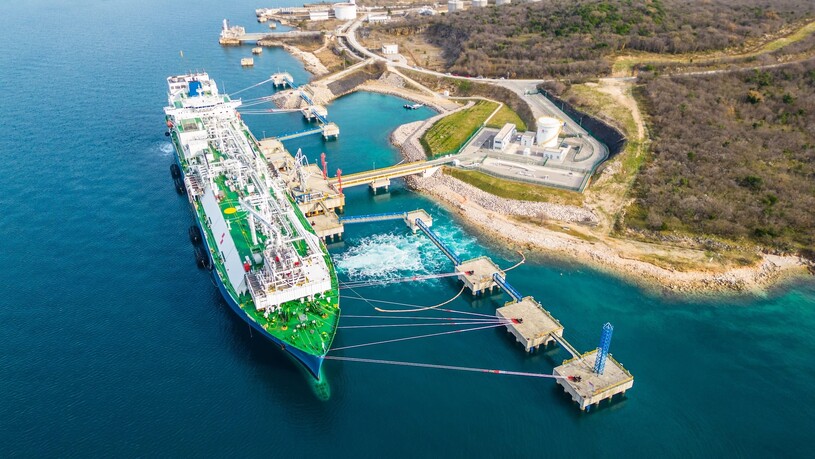
In addition to its pipeline gas supplies, ZPEG has access to LNG through its 29% shareholding in the CNOOC-operated Ningbo import terminal in the north of the province.
Ningbo received its first commissioning cargo in September 2012 and imports are currently running well above its 3 mta nameplate capacity. Ningbo is set to receive over 5M tonnes of LNG in 2018, about 40% more than the 3.6M tonnes discharged at the facility last year. An expansion project is currently underway that will double Ningbo’s nameplate capacity to 6 mta on completion in 2020.
Sendout from the Ningbo terminal is not all from pipeline deliveries of regasified LNG. The installation is one of China’s busiest import terminals for LNG road tanker loadings; dispatches in recent months have been averaging around 300 tankers per day.
In August 2018 Sinopec and ZPEG announced they would jointly build a 3-mta LNG receiving terminal at Wenzhou in south Zhejiang. ZPEG will hold a 51% stake in the new Zhejiang Zheneng Wenzhou LNG facility, which is due onstream towards the end of 2021, while Sinopec will control 41% and a local investment firm, Wenzhou Daxiaomen Inland, the remaining 8%.
The new framework LNG supply agreement with ZPEG also suits ExxonMobil. The energy major is keen to build its LNG sales portfolio, and China, the world’s second-largest and fastest growing LNG market, has been identified as central to its plans.
ExxonMobil has non-US LNG supplies available that will enable the delivery of cargoes unencumbered by the recent 10% surcharge recently imposed by China on LNG shipments from the US as part of the escalating tit-for-tat trade war between the two countries.
A partner in several established LNG export schemes, ExxonMobil is also a key player in developing new liquefaction projects. Central to these aspirations are an expansion of the company’s Papua New Guinea-based PNG LNG export project and the twin-pronged approach to develop, in tandem with Eni of Italy, the rich Area 4 gas deposits in the Rovuma Basin off the coast of northern Mozambique.
ExxonMobil and its partners in the PNG LNG initiative are considering building an additional three trains at the existing Port Moresby terminal in a major expansion project that would provide a further 8 mta of LNG output to the established nameplate capacity of 6.9 mta. The PNG LNG project participants hope to make a final investment decision (FID) on the expansion project in 2019, to enable the new volume to begin flowing by 2023-24.
ExxonMobil owns a 25% stake in the Rovuma Area 4 gas fields and will lead the construction of a two-train, shore-based LNG export terminal of 15.2 mta. Subject to an FID, the facility is due onstream in 2024.
For its part of the Rovuma scheme, Eni is co-ordinating the construction of the already-sanctioned Coral FLNG floating LNG production vessel. The floater, with a capacity of 3.3 mta and a start-up date of 2021, will enable early exploitation of part of Area 4’s gas reserves.
Back in China, ExxonMobil announced a preliminary deal in September 2018 to construct a new LNG import terminal near Huizhou in south Guangdong. The facility would be part of a new petrochemical complex.
No domestic joint venture partners have been named as yet but if the initiative comes to fruition ExxonMobil would become only the second international energy major, after BP, to hold a stake in a Chinese LNG import terminal.


Related to this Story
Events

Maritime Regulations Webinar Week
 16 Dec 2025
 GMT - ONLINE
Floating energy: successfully unlocking stranded gas using FLNGs and FSRUs
24 Feb 2026GMT - ONLINE
© 2026 Riviera Maritime Media Ltd.


