


Business Sectors
Events

Floating energy: successfully unlocking stranded gas using FLNGs and FSRUs
 24 Feb 2026
 GMT - ONLINE
Contents
Register to read more articles.
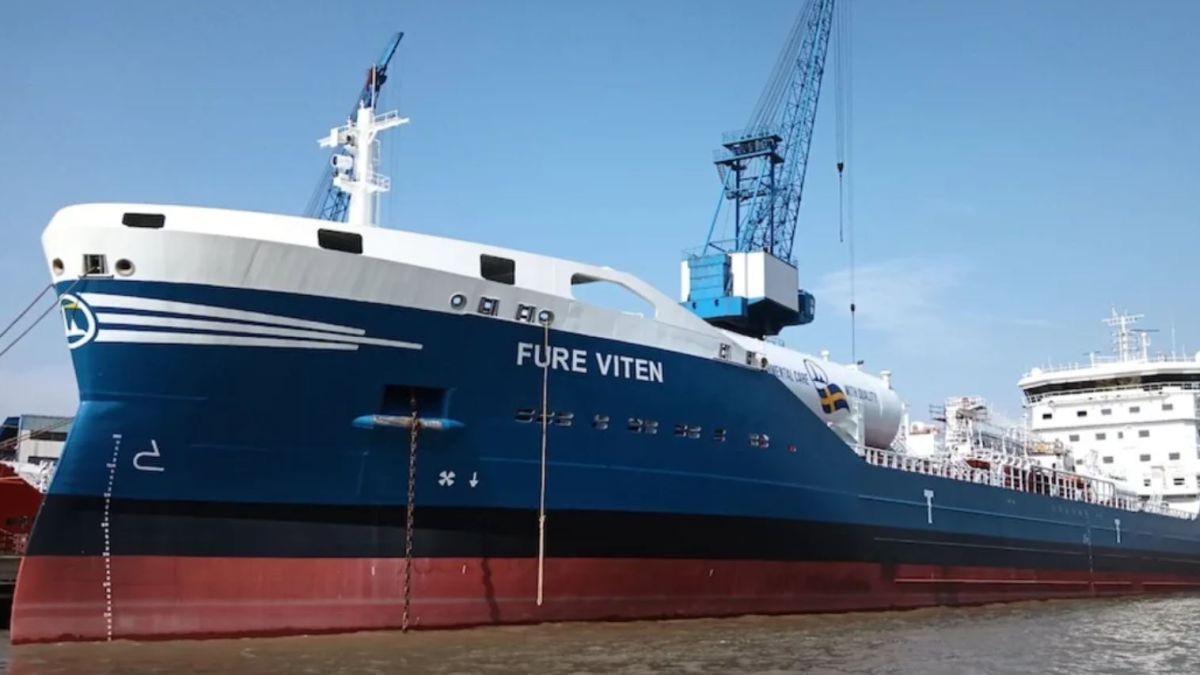
Furetank newbuilding already surpasses IMO 2050 target
Fure Viten is the latest newbuilding designed by Furetank and FKAB Marine Design in collaboration with Wärtsilä, with the aim of reducing fuel consumption as much as possible


Throughout the design and construction process, energy efficiency has been increased and the EEDI value has been improved.
Fure Viten’s delivery is a milestone for Swedish Furetank Rederi, but it is also an international flagship, as due to LNG dual-fuel propulsion and a unique combination of fuel-saving solutions the tanker reaches a very low EEDI value of 4.65 points meaning Furetank’s new vessel series already meets IMO’s emissions target for 2050.
The requirement for a vessel the size of Fure Viten is to reach below 9.37 EEDI points, but Fure Viten’s value of 4.65 EEDI points is the best result achieved in the size segment so far.
Furetank chief executive Lars Höglund said “We will operate the ships we build now for the coming 20 years, so we have put a lot of effort into investigating what is the best possible technology we can invest in today. Climate change is a reality and we believe that politicians mean what they say.”
“Thus, if we are to survive as a shipping company in the future, we must do our best to reduce our climate and environmental impact,” he said.
Fure Viten is the latest vessel in a series of eight vessels so far, out of which Furetank owns four and commercially operates all. Throughout the design and construction process, energy efficiency has been increased and the EEDI value has been improved.
Mr Höglund commented, “We have developed ships since the 1980s and used our experience to optimise every detail. There is not a single system we have not improved. This combination of interacting, energy-saving technical solutions is unique,” he said.
Examples of high-level optimisation include batteries to reduce the use of auxiliary engines, a ducted propeller to increase thrust and reduce power requirements, an improved hull shape to minimise drag, and the main engine and shaft generator use variable frequency to increase propeller efficiency and reduce fuel consumption.
The eight dual-fuel vessels will be operated with liquefied biogas (LBG) or LNG.
“The next step will be to operate the ships completely without fossil fuels. We are in the process of securing the supply of larger quantities of biogas within a year or so, through an exclusive agreement with a supplier, said Mr Höglund. “My view is that in 2030 we will run these vessels largely on LBG with zero fossil emissions.”
Fure Viten and preceding sister vessel Fure Vinga are the first tankers in Europe fully equipped to operate the energy-demanding cargo pumps with 6.6-kV high voltage shore power. This will reduce emissions even further as more ports introduce shore power for cargo handling.
The solution is being developed in collaboration with the ports of Gothenburg and Rotterdam, currently in the process of developing the full capacity power connection required to operate the pumps. An important effort, as the emissions in port can account for up to 20% of the total emissions from a tanker, in an environment that is often even more sensitive to pollution and noise than at sea.
With the delivery of Fure Viten, the average carbon dioxide emissions from Furetank’s intermediate fleet have been decreased by 50% compared with 2008. The vessel series fulfills its part of the IMO’s total emissions target for the world fleet: to halve emissions up to year 2050.
Fure Viten specification
Dwt: 17,999
Load capacity: 20,300 m3
Tanks: 12
Design: Furetank & FKAB Marine Design
Shipyard: China Merchants Jinling Shipyard Dingheng Co Ltd
Commercial manager: Furetank Chartering within the Gothia Tanker Alliance
Flag: Sweden
Ice class: 1A
Fuels: Dual-fuel, LBG/LNG
EEDI value: 4.65 points
Do not miss Tanker Shipping & Trade Webinar Week 5-8 July 2021. Register here
Related to this Story
Events

Maritime Regulations Webinar Week
16 Dec 2025GMT - ONLINEFloating energy: successfully unlocking stranded gas using FLNGs and FSRUs
24 Feb 2026GMT - ONLINE
© 2024 Riviera Maritime Media Ltd.


