


Business Sectors
Business Sectors
Events
Contents

Register to read more articles.
Pilot carbon-offset cargoes: path to reducing supply chain emissions
Energy companies have begun to provide more transparency around the ‘well-to-discharge’ carbon emissions associated with the production and transport of fossil fuels


These initial efforts underpin the development of low- or net zero-carbon-differentiated energy products, supporting global decarbonisation policies and corporate goals.
Just this year, BP delivered its first carbon-offset LNG cargo to the Energía Costa Azul terminal in Mexico, Occidental Petroleum shipped the first carbon-neutral crude oil to India, Lundin shipped 600,000 bbl of certified carbon-neutral crude to Italy, TotalEnergies and Technip announced they were teaming on developing low-carbon solutions for LNG and offshore production, Chevron USA and Qatar Petroleum inked long-term sales and purchase agreements with Pavilion Energy supporting carbon tracking and Cheniere has pledged to provide carbon emissions tags for its cargoes starting 2022.
Australia-based Woodside’s initial foray into carbon-offset cargoes occurred in Q1 2021. Working with its Pluto LNG joint venture partners Kansai Electric, Tokyo Gas Pluto, Woodside reported it delivered its first-ever carbon-offset condensate cargo to commodity trader Trafigura. Calling it a “significant milestone”, Woodside said it demonstrated “tangible progress towards offering carbon-differentiated products to the Asian market.”
CO2 equivalent (CO2e) emissions associated with the extraction, storage and shipping of the cargo were offset through a combination of efficiency measures to reduce actual emissions, and high-quality carbon offsets sourced from nature-based projects in the Asia Pacific region, reported Woodside’s Trunkline magazine. Trafigura said these offsets were independently validated and verified by the Gold Standard or Verified Carbon Standard.
Woodside vice president marketing, trading and supply Mark Abbotsford said the transaction “provided an opportunity to further develop our carbon-offset marketing capability and gain an understanding of the carbon market in its early phases.”
Trafigura global head of naptha and condensates Dmitri Croitor said the deal makes it “possible to offset emissions associated with the cargo from wellhead to delivery.” He added Trafigura is “developing this offering for other oil products for our customers around the world.”
Through a memorandum of understanding (MOU), Trafigura and Woodside are exploring opportunities for further co-operation in marketing carbon-offset condensate, crude oil and liquefied petroleum gas (LPG).
“The MOU is consistent with Woodside’s and Trafigura’s respective objectives to explore a market for carbon-offset products over the long term and reduce emissions intensity across the value chain,” Mr Abbotsford said.
Woodside Energy carbon adviser Joel Hernaman sees two halves of the market unfolding.
“One is around the transparency and accountability of emissions and the other is reducing the net emissions associated with the transaction. We’ve captured the good parts about both of those in this transaction,” he said.
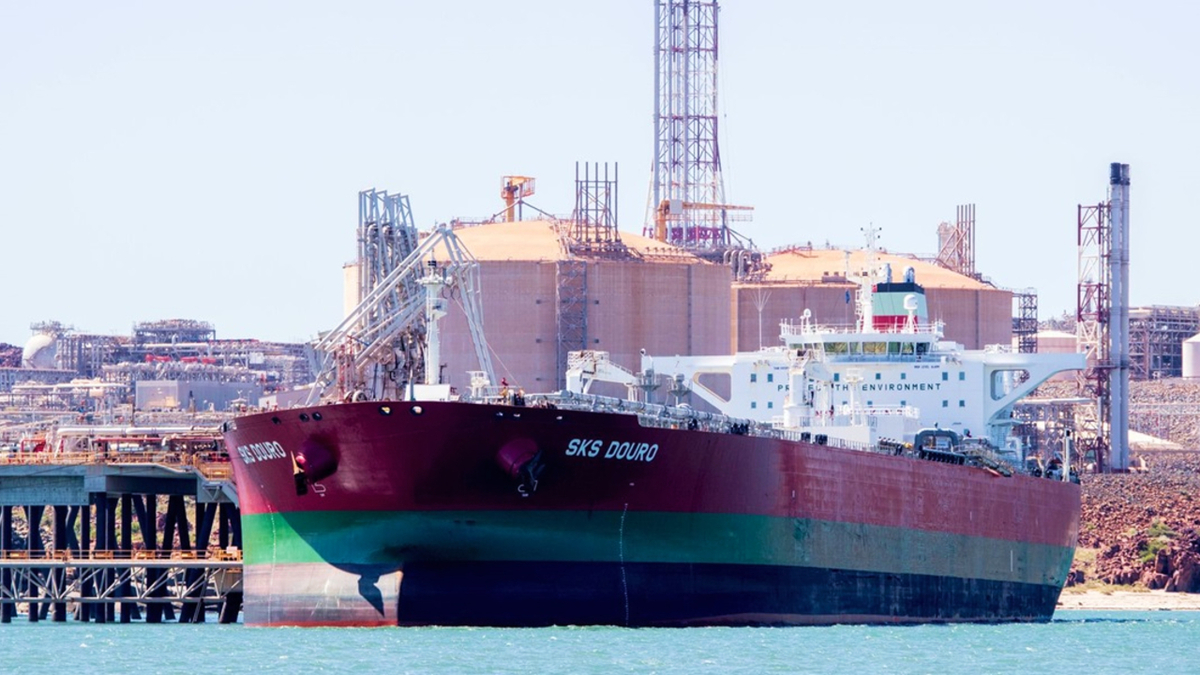
CO2e emissions for transporting the cargo on the tanker SKS Douro to customers in the Asia Pacific region were calculated jointly by Woodside and Trafigura, which worked with the vessel owner to reduce emissions associated with transporting the cargo.
“Feedback from the liquids trading and carbon market has been positive, particularly in relation to the rigour of calculating actual carbon emissions and use of high-quality and meaningful carbon offsets,” said Woodside Energy oil trader Elise Marciano.
In the coming years, carbon-differentiated products are expected to become increasingly attractive to buyers as a means of achieving decarbonisation targets.
Many Asian countries, for example, have already established carbon-reduction targets and are interested in purchasing low-carbon, or carbon-offset products, said Woodside.
Woodside said it supports the Western Australia Government’s ambitions to reduce and offset carbon emissions to net-zero by 2050. The energy company’s Pluto Greenhouse Gas Abatement Programme envisions abating 30% of emissions by 2030 and 100% by 2050. This will be done through a series of emissions reduction-technology investments – such as the use of renewable energy – and operational efficiencies.
Riviera Maritime Media’s LNG Shipping & Terminals Webinar Week is being held 3 August 2021 – use this link for more details and to register


Related to this Story



Events

Maritime Regulations Webinar Week
 16 Dec 2025
 GMT - ONLINE
Floating energy: successfully unlocking stranded gas using FLNGs and FSRUs
24 Feb 2026GMT - ONLINE
© 2026 Riviera Maritime Media Ltd.


