


Business Sectors
Business Sectors
Events
Contents
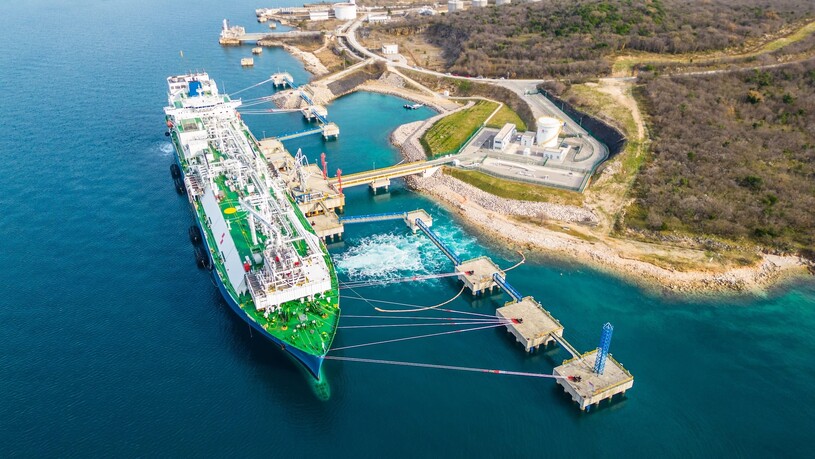
Tonnage tailored for Arctic service


Innovation in hull and propulsion plant design is dictated to ensure safe and efficient transport solutions for expanding trades in ice-bound northern waters
A continuing need for ships capable of transiting or supporting the navigation of Arctic waters will be driven by the increasing demand for energy and mineral supplies from icebound resources. Russia’s Arctic and sub-Arctic regions reportedly account for 90 per cent of the country's gas reserves and over 20 per cent of its crude oil.
Arctic ice conditions are experienced in the Barents Sea, Kara Sea, Laptev Sea, Beaufort Sea, Greenland Sea, Davis Strait and Arctic Ocean, while sub-Arctic ice conditions occur in the Sea of Okhotsk, the Caspian Sea and the Black Sea.
Gazprom has indicated that offshore Russia field development to 2020 alone will call for more than 10 production platforms, over 50 ice-class tankers and other specialised ships, and at least 23 LNG carriers. Such tonnage will need to operate year-round, many of the ships required to navigate through ice up to 1.5m thick.
Another market will be created by plans by oil majors and North American operators for a new fleet of icebreakers and tankers for service in the Beaufort Sea.
Many projects will tap the expertise of Finland's Aker Arctic Technology (AARC), which offers specialist support for ice field assessment, icebreaking R&D and vessel design. A third generation ice model testing facility near Helsinki enables any ice conditions anywhere in the world to be simulated in the tank.
Recent tests have involved record ice thicknesses and multiple layers; and investment in a modular false bottom system for shallow water tests has benefited Caspian Sea projects as well as BP Alaska North Star artificial island tests. Arctic oil shuttle systems have been developed for the Barents and Beaufort Seas, and other AARC commitments include new logistics systems for Arctic LNG shipments.
Diverse tonnage - crude and product tankers, container ships, offshore supply vessels and pure icebreakers - now exploits Aker Arctic's double-acting (DAS) icebreaking principle in conjunction with ABB Azipod electric propulsors. A DAS vessel proceeds stern first when navigating in thicker ice, the milling action of the propellers helping to break through ice ridges and mash up the broken ice. The bow can be optimised for efficient open-water navigation.
Wärtsilä and AARC have evolved the Double Acting Pusher Puller Barge concept as an alternative to the double-acting ship for Arctic applications, such as LNG carriers, general cargo and container ships, but particularly for oil transport. The DAPPB system promises sound icebreaking properties at a lower cost without undermining open water performance.
In open waters the barge is pushed by a dedicated pusher tug, but when the combination approaches the ice edge the pusher is replaced by a specially designed tug, or puller, which tows the barge through the ice.
Aker Arctic’s world-leading status in designing pure icebreakers has been strengthened by a current portfolio that includes ARC-series vessels for supply operations and ice management (DNV Ice-10 and DNV Polar 15), ARC 106 multipurpose icebreakers and shallow draught ARC 104 PSV icebreaker tugs for Caspian Offshore service (a fleet of more than 30 is anticipated).
Russia’s projected 25MW Polar icebreaker is proposed with an AARC propulsion solution for high-powered drives: the patented Aker Arctic Hybrid DAS system based on two fixed pitch propeller Azipods flanking a central fixed pitch main propeller. A particularly powerful installation could embrace a pair of 13MW Azipods with 5.6m-diameter propellers and an 18MW main propeller with a diameter of 8m.
AARC expertise is benefiting the design of the world’s most advanced Polar research vessel, Europe’s Aurora Borealis project, for which it has performed all the thickest ice model tests. The 65,000 tons-displacement multipurpose heavy icebreaker, with an overall length of around 200m and a moulded breadth of 49m, is due for construction in 2012-2014 to the highest AICS ice class (Polar Class 1).
Autonomous navigation in the central Arctic Ocean with 2.5m of ice cover throughout the year (rather than just the summer months) will be facilitated by the special hull design and three 27MW electric motor-driven 6.5m-diameter fixed pitch propellers. Manoeuvrability will be enhanced by an outfit of six fully retractable transverse thrusters.
A deep drilling capability will enable sampling of the ocean floor in waters up to 5,000m depth (with 1,000m penetration) in the most inhospitable regions.
Hamburg-based Wärtsilä Ship Design was assigned by the Alfred Wegener Institute for Polar and Marine Research to undertake the initial design concept, general arrangement planning and full tender documentation.
In 2005 Aker Yards Projects (now STX Norway Offshore Design) created a portfolio of own-design icebreaking concepts including platform supply vessels and anchor handling ships, incorporating Aker Arctic’s offshore experience.
The ARC 105 PSV is an example, the 99.2m-long x 21m-wide x 8m- draught DNV Icebreaker ICE-10 design having a deadweight of 4,200 tonnes. The 18MW diesel-electric power plant drives two 6,500kW azimuthing propulsors, which contribute to excellent icebreaking/ice management performance:
Astern mode: 1.8m level ice at 1 knot; 1.6m level ice at 3 knots; and 0.9m level ice at 7 knots; ahead mode: 1.2m level ice at 3 knots; and 0.6m level ice at 8 knots. The capability to move continuously in rubble fields with thicknesses up to 12m is also reported.
The larger Aker ARC 106 icebreaking multipurpose supply vessel is also ICE-10 classed and specified with diesel-electric machinery based on four Wartsila 12-cylinder V32 medium speed engines with a combined rating of 24MW. Propulsive power is fed to a pair of 8,400kW azimuth thrusters that enable a speed of over 13 knots in 0.5m-thick level ice.
A recent contract calls for AARC to undertake technical project and class approvals for three (option two) icebreaker tugs to be built by STX RO Offshore Braila yard in Romania for the Kazakhstan-based Caspian Offshore Construction group. The 66m-long x16.4m-wide BV-classed vessels will deployed in North Caspian oil field development, exploiting an exceptionally shallow design draught of 2.5m.
A prime duty will be pushing and towing cargo barges to the Kashagan field but the equipment specification also addresses ice management, firefighting, rescue and evacuation in a hydrogen sulphide cloud.
A 50 ton bollard pull and an independent icebreaking performance in up to 1m-thick level ice as well as rubble ice clearing capability are sought from a diesel-electric plant based on Caterpillar high speed engines. Power will be supplied to three Schottel azimuthing propulsors and two Schottel pumpjets, the outfit securing a redundant dynamic positioning capability.
Aker Arctic’s DAS features are already successfully applied in Caspian icebreaking operations.
Finnish consultant Elomatic and Aker Arctic will jointly execute the concept design, feasibility verification and basic design of a new offshore patrol vessel for year-round rapid response service with the Finnish Border Guard. AARC is responsible for the hull form, with particular respect to the hydrodynamics, seaworthiness and ice performance, as well as for developing the propulsion concept.
Border patrol and marine safety operations will be supplemented by rescue, environmental and natural resource monitoring, oil spill control in the open sea, marine research and emergency towing.
Special attention is being paid to the vessel’s environmental friendliness and achieving low emission levels and energy efficiency. LNG-fuelled machinery is under consideration to meet strict exhaust gas emission requirements. Technical documentation for tendering is anticipated to be ready later this year, enabling the vessel to be operational in 2014.
A new type of oil spill combat icebreaker will be developed and built for Russia’s Sovcomflot and RosMorPort by Aker Arctic Technology, STX Finland and Southeast Trading Oy for protecting the Baltic Sea and providing vessel assistance. With an asymmetrical hull based on AARC icebreaking technology, the 67m-long x19m-wide multipurpose vessel will deploy three rudder-propeller propulsors and an innovative sideways movement to collect oil in demanding conditions as well as to break a broad ice band effectively.
Escort and towing support for large tankers will also be undertaken along with a range of other towing and rescue duties.
Last July saw Russia’s Baltic Shipyard deliver the second in a series of diesel-electric icebreakers to RosMorPort, the St. Petersburg following the first-of-class Moskva, which was handed over at end-2008. The 16MW podded vessels were commissioned to assist tankers and other ships calling at Russian ports in the inner Gulf of Finland; the specification also addresses a search-and-rescue role.
Baltic Shipyard built all of Russia’s nuclear-powered icebreaker fleet except for the two shallow draught vessels Taymyr and Vaygach which were executed in co-operation with what was then the Wärtsilä Helsinki yard. It completed the last traditional nuclear-powered icebreaker, 50 Let Pobedi, around three years ago.
Management of Russia’s nuclear-powered icebreaker fleet was taken over in autumn 2008 by Rosatom from the Murmansk Shipping Company. Only two of the current fleet are expected to be in operation by 2018.
Nuclear propulsion could be exploited for Arctic shipping projects to reduce greenhouse gas emissions, eliminate particulate matter emissions and gain potential operational cost savings over fossil fuels. The technology exists but needs to be commercialised, says Lloyd’s Register, which cites the high cost of current military-derived PWR units in marine applications. The development of small reactors in land-based use (the so-called battery concept) may be a solution.
A fleet of six 8,000 TEU nuclear-powered container ships has been proposed for a Siberian Arctic Ocean Highway concept, trading via the Arctic from the western and eastern seaboards of the USA with weekly port calls at New York, Reykjavik, Petropavlovsk and Bremerton. The route is seen as an alternative to transiting the Panama Canal. Nuclear-powered transPolar VLCCs are also mooted.
All ships – whether dedicated icebreakers operating in multi-year ice with ice inclusions or tankers trading for only three months a year in first-year ice – face the challenges imposed by severe ice abrasion on the hull and ice adhesion. Traditional anti-corrosive systems, including standard pure epoxy types, are unable to meet these challenges, says UK-based International Paint.
Some classification societies, such as Lloyd’s Register and DNV, recognise the benefit of applying specialised, low friction ice resistant hull coatings which have demonstrated a capability to aid the passage of a ship as well as protect the steel from corrosion.
According to International Paint, the first class-recognised abrasion-resistant ice coating - its own Intershield 163 Inerta 160 - was specifically formulated for tonnage trading in Baltic Sea region, and in temperatures down to -50°C.
Some 1,200 applications of the coating over the past 35 years include 141 on dedicated icebreakers, the product having exhibited up to 2.5 times the impact and erosion resistance of standard epoxies. A smooth surface assists ice slip and resists ice adhesion to the coating surface, while abrasion resistance controls mechanical damage and hull roughness.
In addition to pure icebreakers, the reference list includes the latest AARC-designed double-acting tanker delivered in March by Russia’s Admiralty Shipyard to Sovcomflot. The first of a pair, the 70,000 dwt shuttle tanker Mikhail Ulyanov, will be deployed in the Prirazlomnoye field in the Pechora Sea off northern Russia. A speed of 3 knots is sought when going astern in first-year ice up to 1.2m thick with a 20cm snow layer; and a similar speed when going ahead in first-year ice up to 0.5m thick.
Intershield 163 Inerta 160 coatings were also specified for Norilsk Nickel’s Arctic container ship fleet. The five 14,500 dwt/648 TEU double-acting icebreaking vessels have entered service since 2006 for the year-round transport of nickel from northern Siberia to Murmansk.
Research has shown, International Paint reports, that a steel hull with a traditional anti-corrosive system trading in ice can experience abrasion and subsequent corrosion that increases average hull roughness in the first year from 100 to 225 microns. The result is an increase of up to 4 per cent in the power required to maintain the same speed as before.
Intershield 163 Inerta 160’s coefficient of friction has been measured and compared with a traditional anti-corrosive system and corroded steel with a measured surface roughness of 100 microns. The tests reportedly demonstrated that it is possible to achieve annual fuel savings of 7-10 per cent with a typical vessel trading in the Baltic region if it is coated with the Intershield product rather than with a standard coating system.
Main machinery systems need to be designed for operation in ice, with particular emphasis placed on the ice loads on propellers and the entire propulsion line. Not only do engine output requirements have to be established for independent or escorted operations but auxiliary machinery systems must be designed taking into account snow, ice and the expected low temperatures.
Steering gear, for example, has to operate in low ambient temperatures, ballast tanks above the waterline need to be heated, and vent pipes, sea chests, intake and discharge pipes and associated systems have to be designed so that blockage or damage due to freezing or ice and snow accumulation is avoided.
Electrical installations and safety systems call for special attention. Loss of essential services or control systems – for example, due to vibration, dampness or low humidity – has to be avoided; emergency batteries must be protected from low temperatures; and the danger of explosion when gas ventilation is restricted by the accumulation of ice or snow has to be addressed.
Last December saw the IMO adoption of voluntary Guidelines for Ships Operating in Polar Waters, with further details to follow in Resolution A.1024(26). The IMO's Design Equipment sub-committee is developing a mandatory code. The major classification societies also offer guidance on designing, equipping and operating Arctic tonnage. MP
Acknowledgements: Aker Arctic Technology; International Paint; Lloyd's Register



Related to this Story



Events

Maritime Regulations Webinar Week
 16 Dec 2025
 GMT - ONLINE
Floating energy: successfully unlocking stranded gas using FLNGs and FSRUs
24 Feb 2026GMT - ONLINE
© 2026 Riviera Maritime Media Ltd.


