


Business Sectors
Business Sectors
Events
Contents
Register to read more articles.
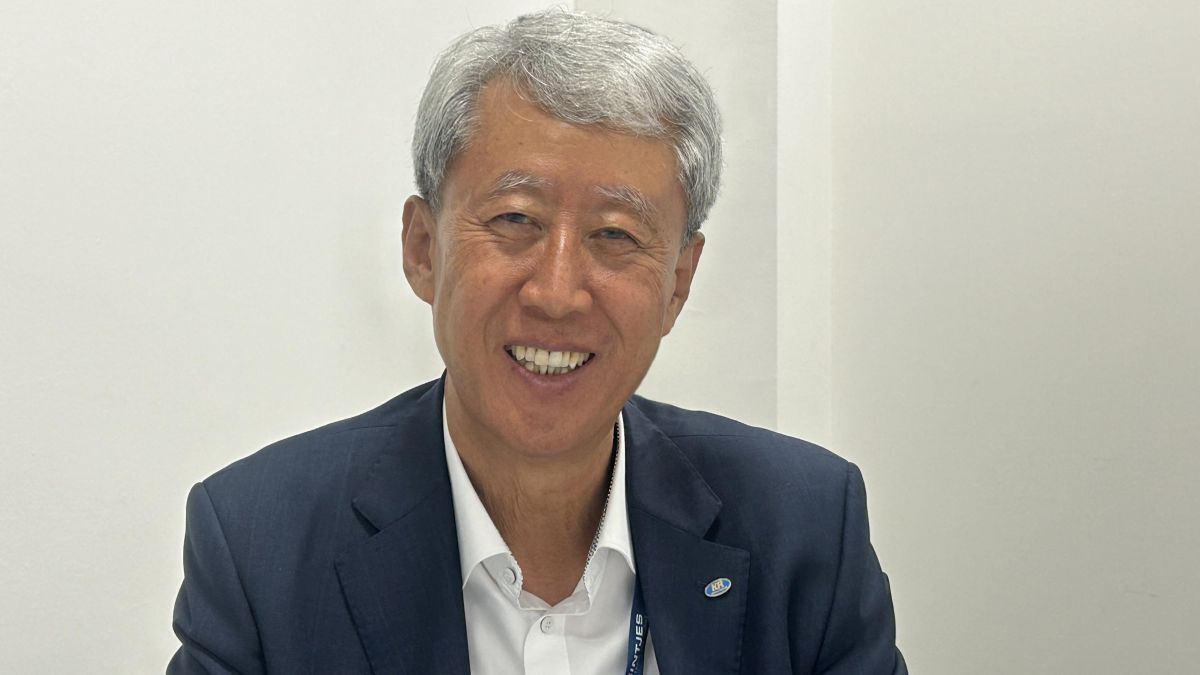
Why Western shipowners can look East for their classification requirements
Our technical expertise is second to none. We are regulatory pioneers. But we are not as well-known as we should be in the West, says the chairman and chief executive of Korean Register Lee Hyungchul


Korean Register (KR) finds itself at a critical juncture. While the classification society is undertaking vital technical, technological and regulatory work, its client base remains 70% Korean. To improve its global market standing, KR must do more than demonstrate technical prowess; the society needs to broaden its international perspective and networks and compete for market share with leading Western classification societies that have long-standing relationships with Western vessel owners and operators. Chairman and chief executive Lee Hyungchul says a strategy is in place to address these challenges – and it is producing results.
“My ultimate goal is to achieve a 50-50 balance between Korean-owned tonnage and international clients,” says Mr Lee. “Korean shipping companies are not expanding their fleets at historic rates, preferring to maintain their core assets.” This dormant phase can be traced to the August 2016 collapse of Hanjin Shipping, once one of the world’s top 10 shipping companies and South Korea’s largest container line, and the significant restructuring of HMM (formerly Hyundai Merchant Marine) to enhance its focus on containerisation.
KR’s international client roster is growing and now includes Songa Ship Management, part of the Blystad Group, in Glasgow; Israeli owners such as Ray Shipping; and Navig8 Group headquartered in UK. “Also, Bernhard Schulte serves as an excellent reference for us and a relationship that has opened many doors in Germany,” says Mr Lee.
The society has established various international committees (European, Hellenic, China and southeast Asia) and recently opened offices in Finland, Antwerp and Santiago. It will shortly expand the network to Marseilles and Bucharest in Romania. The latter will serve Bulgaria where many ships are drydocked and surveyed, reducing the need for surveyors from Istanbul or Athens to travel there.
Key to the internationalisation strategy is establishing KR as a flexible and responsive partner, and this approach is taking root, says Mr Lee. “One of our clients faced challenges with handling costs under the new EU ETS regulations starting this year. Instead of an annual greenhouse gas emissions certificate, they needed specific certificates for each voyage route to calculate the EU ETS costs and charge them to shippers. This meant issuing hundreds of certificates, requiring significant processing time. To resolve this customer inconvenience, KR collaborated with an external software development company to create a customised system that collects real-time voyage data and generates reports for each voyage. This significantly reduced the time required for data entry and automated the process, resulting in a highly satisfied client.”
Technological innovation and digital transformation are also embedded in KR’s DNA, says Mr Lee, adding that the society has a strong focus on AI integration and is working with Microsoft Korea to integrate this functionality throughout the organisation.
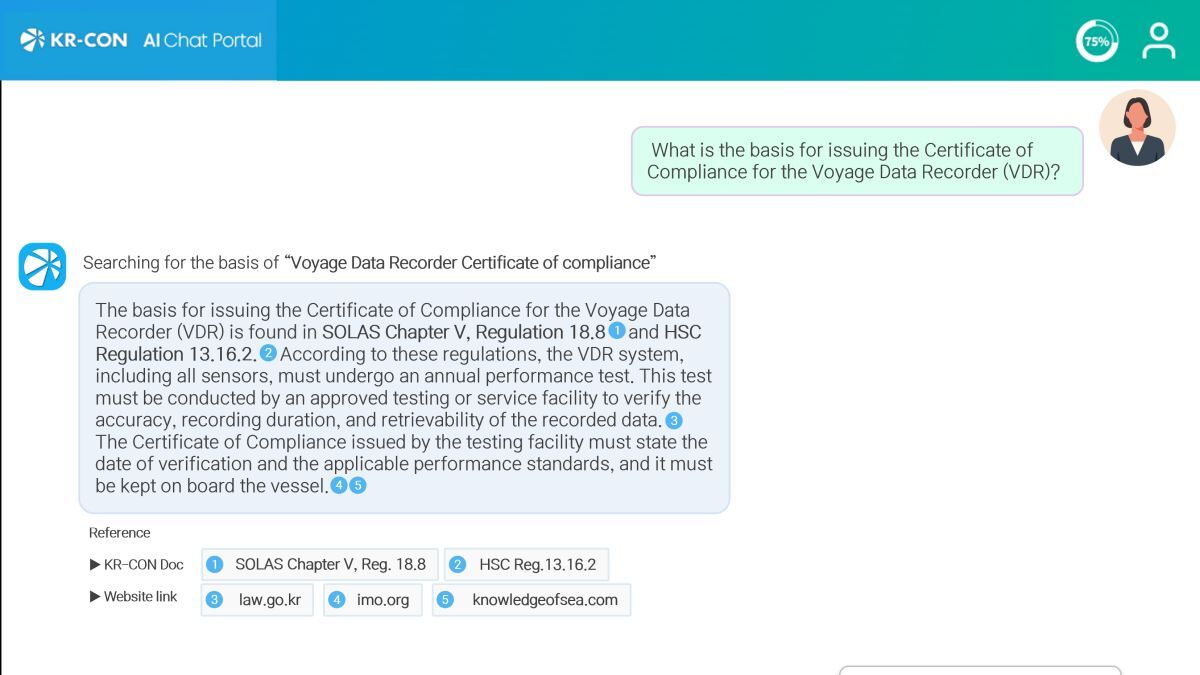
Another case in point has been the decision to incorporate AI functionality into KR-CON, KR’s database of maritime regulations. This move aims to transform KR-CON from a simple regulation-finding tool to a more sophisticated, interactive system capable of answering complex queries and potentially assisting in design reviews.
“With the AI function, users will be able to engage in query-based conversations rather than relying solely on keyword searches to find information. For KR-registered vessels, the AI features will incorporate the vessel’s data, allowing for easier access to relevant information on IMO instruments.”
KR-CON was initially designed in 2000 to aid KR’s technical staff and field surveyors, as “it can be challenging for surveyors to determine which regulations apply to specific ships and published IMO documents often don’t clarify applicability to vessels built before certain dates, potentially leading to misapplication of regulations,” says Mr Lee.
The belief that regulations often do not reflect operational realities, prompted KR to launch a successful campaign to reverse an unreasonable share rating formula in the IMO guidelines related to the Carbon Intensity Indicator (CII) calculation. The issue centred on the fixed capacity value used in CII calculations for bulk carriers over 279,000 dwt and vehicle carriers over 57,700 gt. “We successfully proposed using actual capacity values instead of fixed ones for these calculations. KR’s proposed correction was agreed upon at the IMO MEPC 81 meeting held in March this year and was applied to the first attained CII rating in May. As a result, many of these vessels are expected to receive a higher CII rating, which can lead to economic advantages.”
As well as pioneering regulatory change, the society has sought to pioneer new rules on the use of alternative fuels, particularly ammonia. “Since 2014, we have also published guidance for fuel-cell systems on board ships, including associated fuel-reforming equipment. As part of a Korean government-funded R&D project, we are now developing a fuel-cell power pack for ship propulsion with our partners, integrating an ammonia reformer-fuel-cell system,” says Mr Lee.
He readily admits ammonia reformers and fuel-cell systems offer significant potential, but face several safety and efficiency challenges. “There is a pressing need for technologies that can miniaturise and lighten ammonia reformers while improving fuel-cell durability. Larger ships require more power, which means bigger reforming systems, but space for installation is limited. Additionally, fuel cells generally have shorter lifespans than internal combustion engines, complicating maintenance on ships. To tackle these issues, more work is needed on storage technologies and materials resistant to ammonia corrosion and hydrogen embrittlement. For stable operation, integrated control systems that connect the ammonia reformer and fuel cell are needed.”
KR is also collaborating with HD KSOE and STX Engine to develop a four-stroke ammonia engine. “We operate the TCC Green Engine Test & Certification Center in Gunsan, Korea, and have been working with domestic engine developers on ammonia engines since last year,” he says. “We have established safety facilities at the TCC, including an ammonia catching system, an after-treatment system, detectors and ventilation systems. The ammonia engine operates entirely remotely from a separate control room. We intend to use this experience developing ammonia engines to enhance class guidelines and support crew training.”
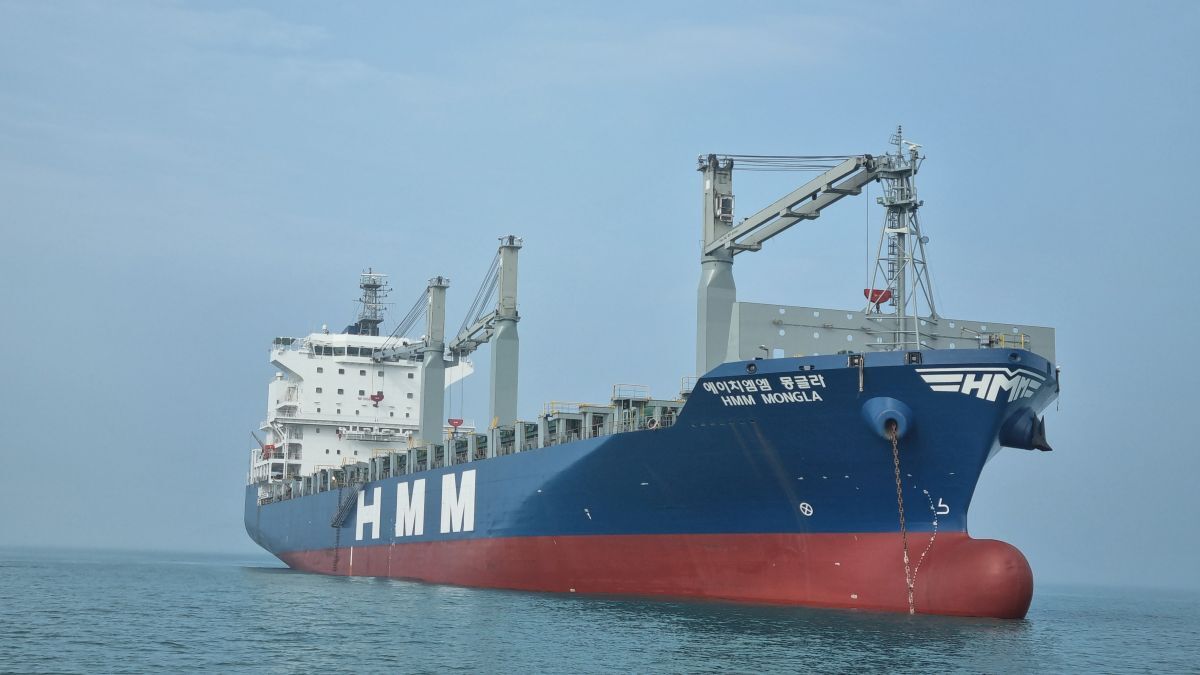
Another collaboration involves KR working with Panasia and HMM on testing an onboard carbon capture system (OCCS). Panasia manufactured the system, while Samsung Heavy Industries developed the liquefaction and storage components. The carbon capture plant has been installed on HMM Mongla, a 2,200-TEU container vessel owned by HMM. KR was involved in the project from the beginning and early on, Mr Lee recalls the KR team identified a key issue: the lack of international reference documents for developing and installing onboard carbon capture systems. “Our staff encountered challenges during testing and verification.
At each stage, we conducted risk assessments to determine the best approach for installation, and we faced numerous difficulties in ensuring the safe installation and operation of the onboard carbon capture system while balancing the interests of all stakeholders.”
Before the OCCS project began, KR had just completed new OCCS guidelines and applied them to the project. Additionally, KR was actively submitting relevant documents to IMO’s MEPC to incorporate OCCS into the greenhouse gas regulatory framework, particularly in short-term measures such as EEDI, EEXI and CII. “It’s important to note that even if a ship is equipped with such a system, there is currently no standard for incorporating it into Carbon Intensity Indicator (CII) ratings,” he says. “We are estimating the amount of carbon that can be captured during the operation of the onboard carbon capture system. Through this demonstration, we expect the safety and performance of the OCCS to be verified, contributing to the further widespread adoption of OCCS technology in the maritime industry.”
As he approaches the end of his second and final three-year term as chairman and chief executive in December 2025, Mr Lee acknowledges he has not achieved all his objectives for KR, particularly in business promotion. The Covid-19 pandemic significantly hindered his plans, preventing international travel for nearly two years from 2020.
KR currently holds 5.6% of the IACS member market and employs approximately 1,000 people across 75 offices: 60 international branches and 15 in Korea. “We’re gradually increasing our share, but other societies are also expanding, sometimes at a faster rate,” says Mr Lee.
There have been some notable gains. In Germany, for example, the society has increased its market share from less than 1% in 2017 to almost 6% today. The workforce has also diversified during Mr Lee’s tenure. “In the German office, six out of eight colleagues are German. And our senior vice president for the business division in Northern Europe is German, and serving as KR’s voice in the region.”
New areas are being targeted for expansion, notably around offshore wind. Much of the German work relates to multi-purpose vessels engaged in windfarm installations in Northern Europe and Germany. The society is also leveraging its expertise in structural analysis and hydrodynamic analysis from commercial vessels for offshore projects. On the domestic front, KR is assessing the Korean government’s plans to expand windfarm areas in the East Sea of Korea.
While Mr Lee has spent 30 or so years working for Korean Register, his successor could come from either inside or outside the organisation at the end of next year. Typically, when an election is called, there is a long-list of candidates. These are whittled down to a shortlist of three that embark on a three-week campaign presenting their vision to the 75 or so members of KR’s governing assembly. This body is made up of a cross-section of industry and there are strict limits that ensure no one sector is over-represented. On the last day of the campaign, the Assembly elects the new chairman.
Mr Lee’s successor, whoever that may be, will have a solid foundation to continue the society’s internationalisation efforts. The KR brand has never been stronger and Korea’s brand internationally – thanks to the good standing of its leading companies, as well as the global popularity of Korean culture – has never been stronger too.
Riviera’s CO2 Shipping, Terminals & CCS Conference, Americas will be held in Houston, Texas 16 September 2024. Click here for more information on this industry-leading event.
Related to this Story

Events

Maritime Regulations Webinar Week
 16 Dec 2025
 GMT - ONLINE
Floating energy: successfully unlocking stranded gas using FLNGs and FSRUs
24 Feb 2026GMT - ONLINE
© 2026 Riviera Maritime Media Ltd.


