


Business Sectors
Events
Contents
Register to read more articles.
Path to zero emissions? Leave room for larger batteries
To aid with the quest for zero emissions, battery-hybrid CSOV newbuilds are being designed with extra space for larger batteries, with some also being methanol ready


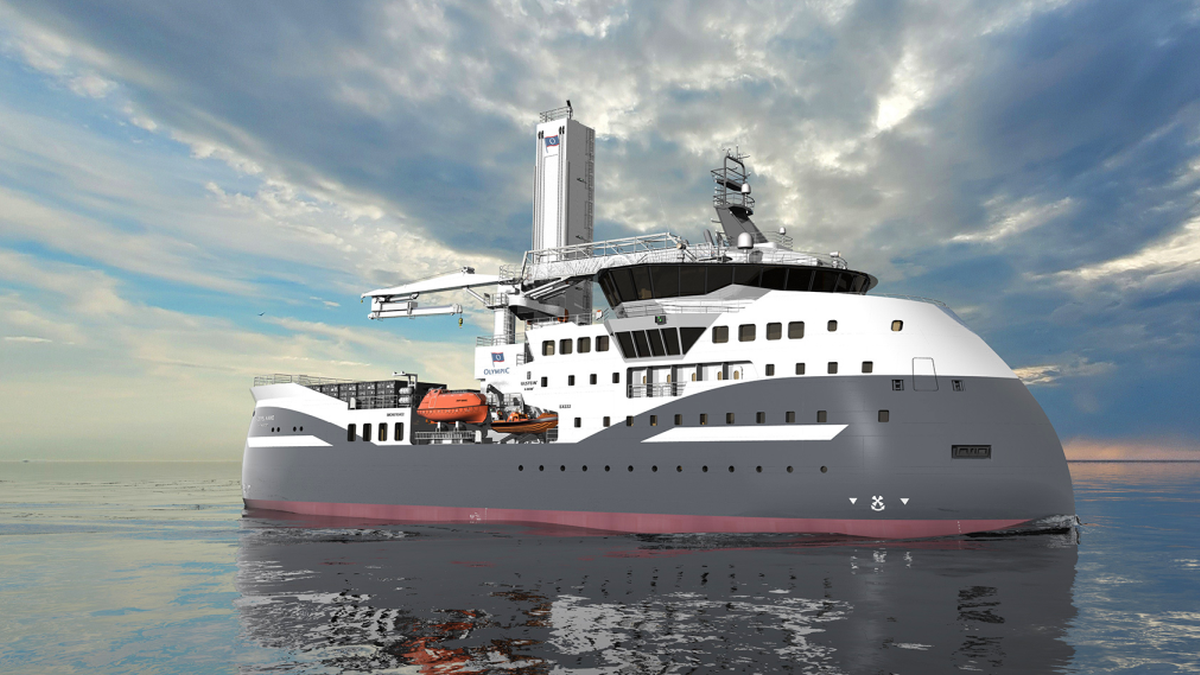
Norwegian shipowner Olympic Subsea will shortly take delivery of the first of two hybrid-electric-powered construction offshore support vessels (CSOVs) that derive much of their power from the biggest batteries installed so far in this type of ship.
These CSOVs are powered by diesel-electric propulsion with variable speed, in combination with large battery energy storage systems (ESS).
Production on the hulls of the two CSOVs is well underway at Poland’s Crist Shipyard. The first hull will arrive at Ulstein Verft in Norway in Q4 2023 for final outfitting.
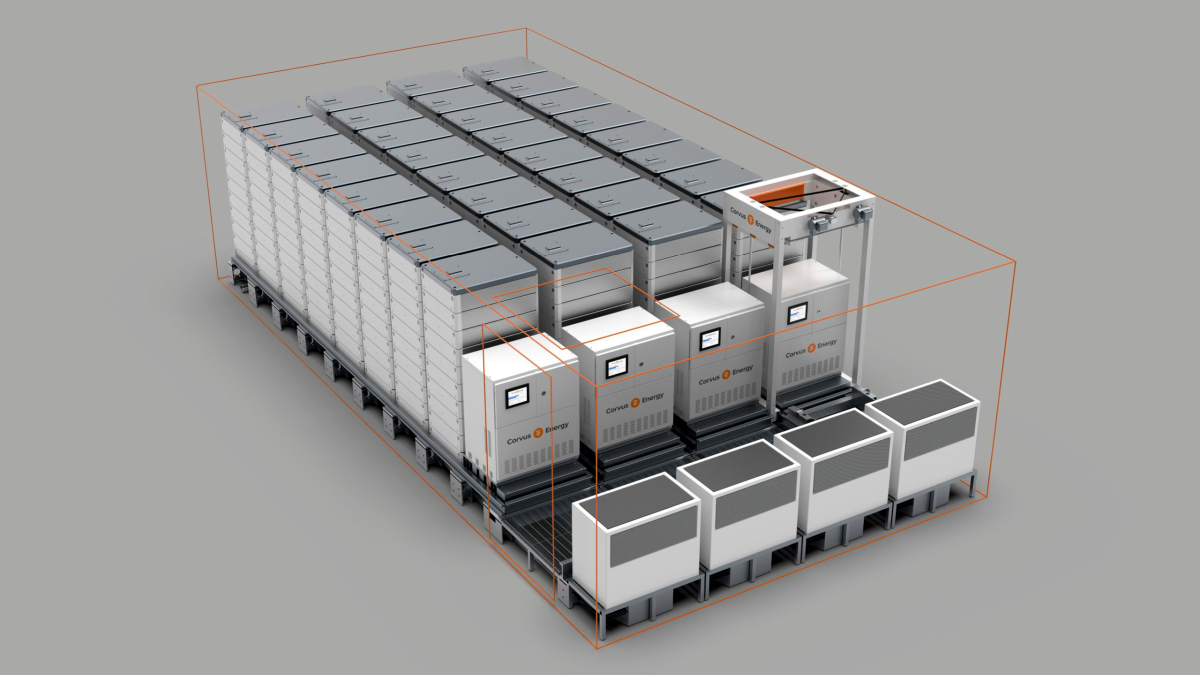
At the heart of these Ulstein Design Solutions’ SX22, twin X-stern designs are Corvus Orca ESS, in what Olympic describes as a low-energy configuration. The Norwegian group says the vessels, which will service offshore wind turbines, will underpin its mission to be the “most specialised and best performing partner in blue energy.”
During operation, the CSOVs will stay positioned at the turbines most of the time as the batteries help balance out their energy requirements. Because the main propellers are installed fore and aft in these twin-stern vessels, the power output will be reduced to a new low level when the vessels are in dynamic positioning (DP) operations, according to Corvus.
The 90 m-long, 19 m-wide CSOVs, which Ulstein designed principally as OSVs for turbines, will be delivered in 2024, joining Olympic’s 10-strong fleet operating in subsea and renewables.
Looking to the future, these CSOVs are prepared for methanol fuel and have extra space built in so they can be entirely powered by batteries in due course.
“We see increased interest for batteries from the entire offshore wind segment”
That time may not be too long in coming. Corvus believes the order from Ulstein, the integrator for the project, opens the way for zero-emission OSVs in offshore wind installations.
“We see increased interest for batteries from the entire offshore wind segment along with larger and larger battery installations,” says vice-president of sales Pål Ove Husøy. “Due to the operational profile of OSVs, the potential for reducing emissions and costs by installing batteries is very high. This contract will be the largest battery installation for SOVs so far.”
The benefits of batteries in support of diesel generators are increasingly recognised in OSVs. They keep the machine at optimal efficiency because the battery functions both as a peak-shaver and a load leveller. It also acts as a spinning reserve and supplier of backup power. The overall benefit is that fewer and different generators are needed, which leads to saving in fuel and maintenance costs.
The hybrid solution and accompanying spinning reserve allows the engines of dynamically positioned vessels to operate at optimal load because total installed engine power is reduced.
As these benefits are better understood, Corvus Energy, which opened a plant in Bellingham, Washington, in late 2022, has noticed a marked swing to electrical power as the technology has progressed. “Shipowners, designers, naval architects as well as electric propulsion integrators in North and South America are turning to Corvus in record numbers,” says Americas President Ole Jacob Irgens, citing over 650 Orca projects since the energy storage system was introduced in 2016.
Offshore charging
Meantime, the next big thing in ESS could be offshore charging. In early 2023, a powerful Norwegian-driven consortium launched a three-year project that aims to develop zero-emission solutions to connect vessels to the power grid in the windfarm itself. Funded by the Norwegian government to the tune of Nrk38M [US$3.6M], the Ocean Charger programme would mean batteries are recharged at sea without the use of fossil fuel. It would apply to a wide variety of vessels, including OSVs. The official aim is to “power operations at the field, without using any additional energy sources.”
Lead by Vard Design, the project involves other Norwegian heavyweights in the pursuit of zero-emissions for OSVs and other vessels. The collaboration comprises Rem Offshore, which has a fleet of OSVs, Solstad Offshore, the not-for-profit Sintef Energi, Norwegian Offshore Wind and Marine Energy Test Centre, energy giant Equinor, Ireland’s renewables group Source Energie, US hydrogen fuel-cell manufacturer Plug Power, Marine Energy Test Centre, University of Bergen, the Maritime Cleantech cluster, and Norse Research, which runs thousands of maritime consultancy projects around the world.
With its Blue Whale technology having completed sea trials late last year and now ready for delivery, Corvus is also involved in the Ocean Charging project. The ESS specialist sees a big future for Blue Whale in OSVs: “The wind segment is next in line for full zero-emission operations,” predicts Mr Husøy. “With requirements for even larger battery systems, we see that Blue Whale has great potential for this type of vessel.” In anticipation of demand, Corvus has boosted production of Blue Whale at its Vancouver plant.
“The potential for reducing emissions and costs by installing batteries is very high”
Blue Whale has been under development for nearly five years, as part of Corvus Energy’s pursuit of the next-generation ESS for maritime applications. The first product in what promises to be a series of breakthroughs, Blue Whale is designed for bigger vessels requiring high volumes of power. That is why the trials were conducted on board Seaspan Reliant, a drop-trailer cargo ferry owned and operated by Seaspan Ferries Corporation, which runs a commercial cargo ferry service between four coastal terminals on Vancouver Island and British Columbia’s mainland. Seaspan Ferries has already installed Corvus systems on four dual-fuel hybrid ferries.
According to Seaspan, the gains emerged quickly. “During the sea trials it was impressive to witness the advantages of this new technology by discharging the battery system to 3% capacity while still outputting peak power to propel the vessel,” says the ferry group’s project manager Ahmed Khan. “We envision being able to operate on a single generator and using the battery system to maintain target speeds, which will reduce fuel costs and total engine hours. In addition, the 1.8 MWh capacity of the Reliant’s new system affords new modes of operations, such as powering the vessel by battery power only during port cargo exchanges.”
Harly Penner, Seaspan’s general manager, is equally enthusiastic: “The Blue Whale system is a remarkable product which is particularly well suited for the Reliant’s existing architecture.”
At nearly 150 m-long and 26 m-wide, the dual-fuelled 2017-built Reliant certainly qualifies as a vessel requiring high energy. It has a payload capacity of 59 trailers and an ESS capacity of 545 kWh. By Seaspan’s estimates, the batteries save nearly 100,000 litres of diesel a year and knock 266 tons off CO2 emissions, quite enough for the OSV industry to take note.

Related to this Story
Events

Maritime Regulations Webinar Week
 16 Dec 2025
 GMT - ONLINE
Floating energy: successfully unlocking stranded gas using FLNGs and FSRUs
24 Feb 2026GMT - ONLINE
© 2024 Riviera Maritime Media Ltd.


