


Business Sectors
Business Sectors
Events
Contents

Register to read more articles.
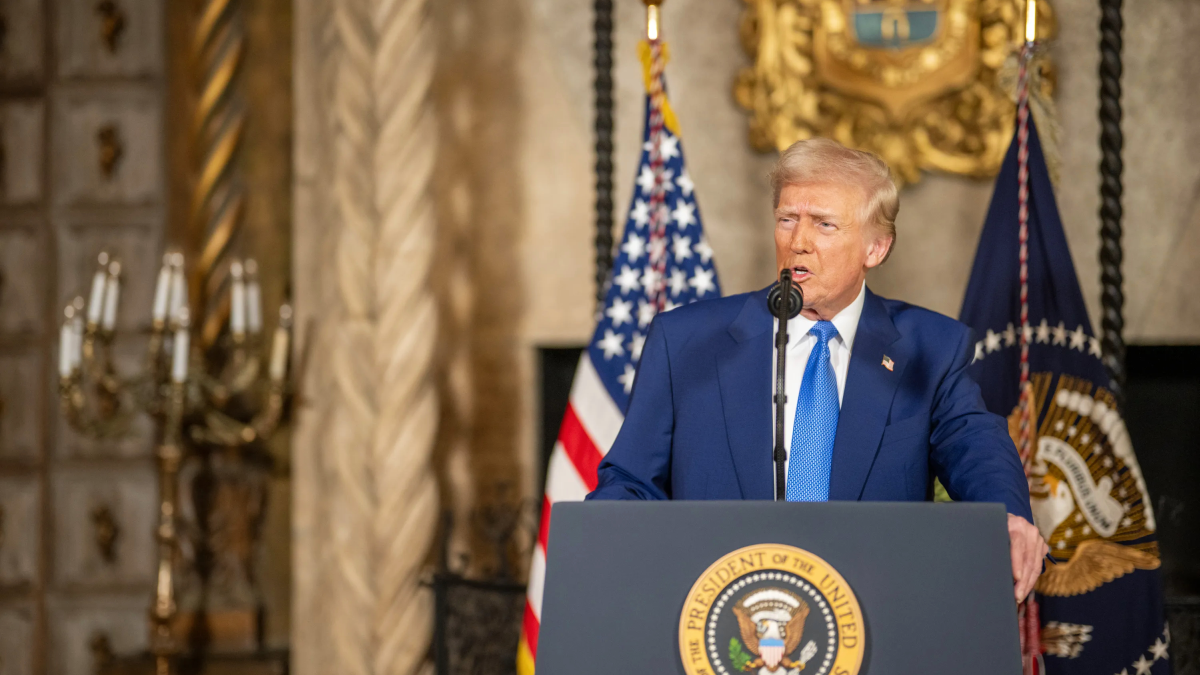
Port fees central to Trump’s Maritime Action Plan ambitions
The White House’s plan to revitalise the American shipbuilding industrial base and the US-flag international fleet would assess port fees on ‘foreign-built’ ships calling at US ports


The Trump Administration released its long-anticipated Maritime Action Plan (MAP) on 13 February, laying out the White House’s roadmap for injecting life into the sagging US shipbuilding industrial base and growing the country’s US-flag international commercial shipping fleet. But reversing the decades-long decline of the US shipbuilding industrial base and the US-flag international fleet will require long-term funding from public and private investors, reform of government policies and regulations, enhanced inter-agency co-operation, and bolstered workforce training and education.
The US constructs less than 1% of commercial ships, and its US-flag fleet has shrunk to roughly 80-90 vessels in international trade. By contrast, it is estimated that China has a commercial fleet of about 5,500 ships.
Ambitious in nature, the 41-page plan fleshes out President Trump’s executive order, ‘Restoring America’s Maritime Dominance’, issued in 2025. It is built on four pillars: rebuilding US shipbuilding; workforce education and training development; protecting the maritime industrial base; and national security, economic security, and industrial resilience.
“MAP represents the most sweeping federal maritime industrial policy initiative in decades,” according to Washington, DC-based maritime attorneys K&L Gates.
“Envisioning ‘hundreds of billions of dollars’ in new investments, the MAP’s broad policy goals will require working with Congress and agencies on appropriations, rulemakings, and new guidance documents. Funding for the White House’s most important goals is expected to be included in the fiscal year 2027 budget request,” said K&L Gates.
Senator Mark Kelly (Democrat-Arizona), who rarely sees eye to eye with the President, said the release of MAP “reinforces the urgency of this moment and shows there’s broad agreement on the need to act.” Senator Kelly is the lead author of the SHIPS for America Act, which has similar goals to MAP.
Chamber of Shipping of America president, Sean Kline, welcomed the release of the plan, noting it would “breathe life back” into the US maritime sector. Speaking during a panel at CMA Shipping 2026 in March, Mr Kline said the SHIPS Act “would be a good vehicle for the MAP, but it doesn’t cover all the elements.”
One of the more controversial elements of MAP is a proposed “universal infrastructure or security fee on all foreign-built commercial vessels calling at US ports, to be assessed on the weight of the imported tonnage arriving on the vessel.” A similar port fee was set to go into effect in October 2025 on Chinese-owned, -operated or -built ships, before being postponed one year.
“The most sweeping federal maritime industrial policy initiative in decades”
Under the plan, a fee of US$0.01 per km on foreign-built ships would yield roughly US$66Bn in revenue over 10 years, and a fee of US$0.25 per km would yield close to US$1.5Trn in revenue, which could be collected for the Maritime Security Trust Fund.
“While potentially the most controversial of the MAP’s proposals, it will likely require congressional or additional administration action to implement,” said K&L Gates.
The International Chamber of Shipping, which represents owners that control about 80% of the tonnage in the global fleet, warned that the proposed fee risks “distorting trade, increasing costs for US consumers and businesses, disrupting the smooth flow of global commerce, and [could] encourage retaliatory measures.”


Related to this Story


Events
Maritime Regulations Webinar Week
 16 Dec 2025
 GMT - ONLINE
Floating energy: successfully unlocking stranded gas using FLNGs and FSRUs
24 Feb 2026GMT - ONLINE
© 2026 Riviera Maritime Media Ltd.


