


Business Sectors
Business Sectors
Events
Contents
Register to read more articles.
Powerful simulation tools can increase safety and shape a ship’s decarbonisation journey
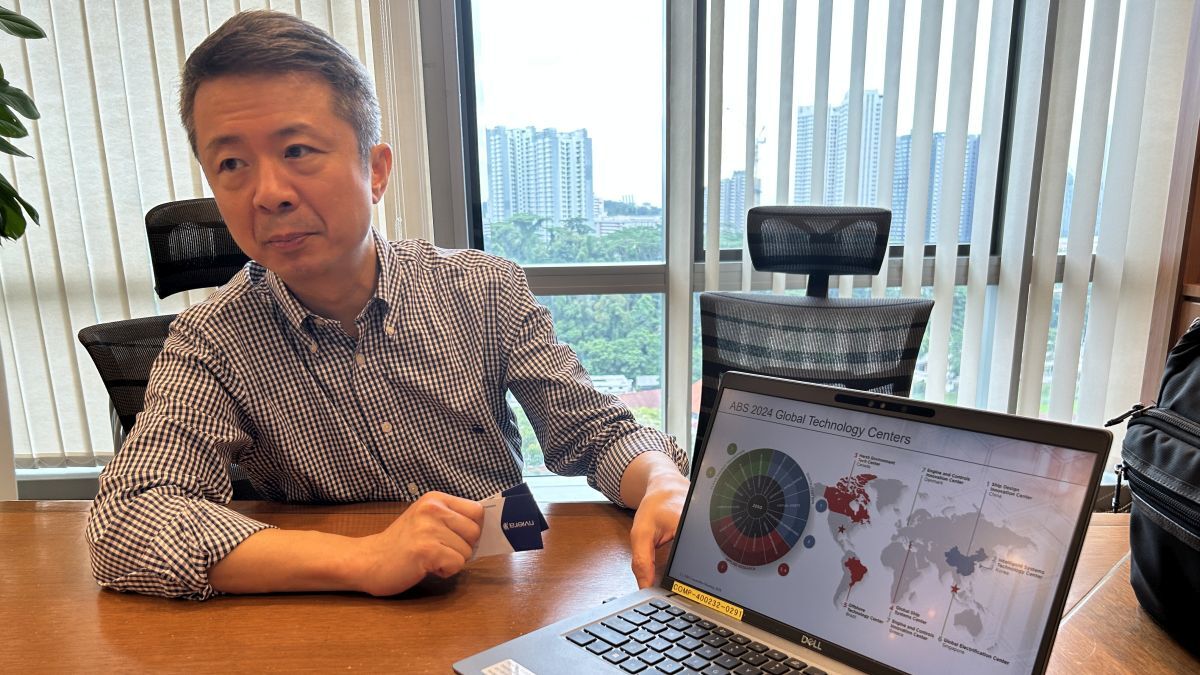
ABS vice president, technology, Dr Gu Hai discusses how the class society is advancing new fuels and new technologies, while mitigating risk using powerful simulation technology


Shipping is under increasing regulatory and societal pressure to adopt new low- and zero-carbon fuels and novel technologies to rapidly reduce CO2 and greenhouse gas emissions over the next three decades. The complexity of transitioning to less carbon-intensive energy sources means no one maritime stakeholder can afford to tackle these challenges on its own.
Collaboration, sharing knowledge, lessons learned, and pooling resources are critical to aggressively advancing technologies, design, safety, training and investment.
This is why ABS has established a technology centre network around the globe, says Dr Gu Hai.
In the Asia Pacific, Dr Gu Hai says the class society has established four technology centres, one each South Korea and China and two in Singapore. Each centre is designed to extend the classification society’s support to a wide range of maritime stakeholders, ranging from shipowners to ship designers to government agencies.
“In South Korea, we have an intelligence technology centre because Korea is developing all kinds of smart technologies. In China, we have a ship design innovation centre because they are building 70% of the world’s commercial ships,” he says.
“Singapore is pushing hard on electrification,” says Dr Gu Hai, but notes, “As a maritime hub, Singapore covers everything.” Singapore has an electrification centre and innovation research centre to cover everything from vessel electrification to carbon capture and storage, clean hydrogen, and digitalisation such as artificial intelligence, autonomous operations, additive manufacturing and data analytics.”
ABS conducted a baseline study to establish a Green and Digital Shipping Corridor between Singapore and Port of Los Angeles and Port of Long Beach. The study analyses maritime trade flows between Singapore, Los Angeles and Long Beach, and provides a baseline of activities and energy demand requirements for ships operating on the corridor through to 2050.
Safety is a core mission of the class society, so it is using simulation and metaverse technology to create walkthrough environments to allow the study of all kinds of scenarios of using alternative fuels like ammonia and hydrogen, for example, he says.
And these same tools can be used to model and evaluate novel technologies, such as onboard carbon capture systems under different operating conditions.
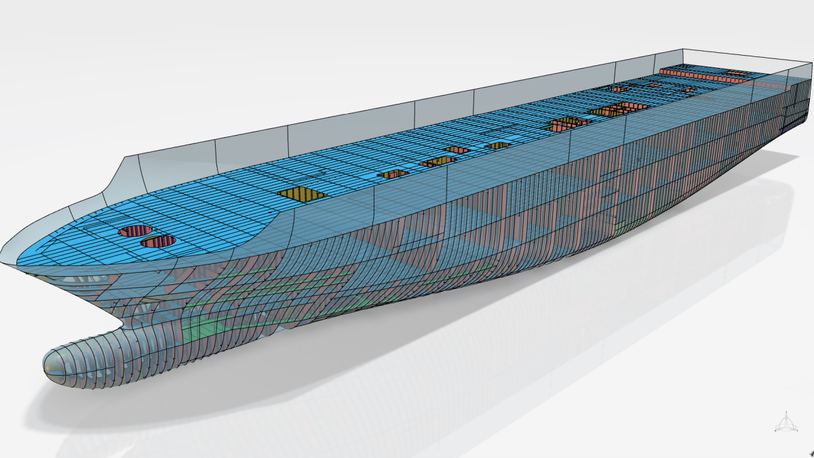
“Basically, you can convert your concept into a simulation model and then run it in the virtual world and see how the system works,” he explains.
Powerful modelling tools can help simulate options for increasing energy efficiency, reducing fuel consumption and lowering greenhouse gas emissions, helping a shipowner to shape its decarbonisation strategy.
“We can create a complex model of the entire ship,” Dr Gu Hai says. “For example, we can check how much fuel could be saved using air lubrication or optimise an onboard carbon capture system.”
Simulation and visual tools can be used to mitigate the risk to the crew of an ammonia release and improve emergency-response procedures.
“We can create a very systematic and intuitive quantitative risk assessment. Based on this quantitative risk assessment, we can increase safety,” he concludes.
Riviera’s Maritime Decarbonisation Conference Asia, will be held in Singapore, 15-16 April 2024. Use this link for more information and to reserve your place.
Related to this Story
Events

Maritime Regulations Webinar Week
 16 Dec 2025
 GMT - ONLINE
Floating energy: successfully unlocking stranded gas using FLNGs and FSRUs
24 Feb 2026GMT - ONLINE
© 2026 Riviera Maritime Media Ltd.


