


Business Sectors
Business Sectors
Events
Contents
Register to read more articles.
Siemens Gamesa fined £600,000 after employee left paralysed
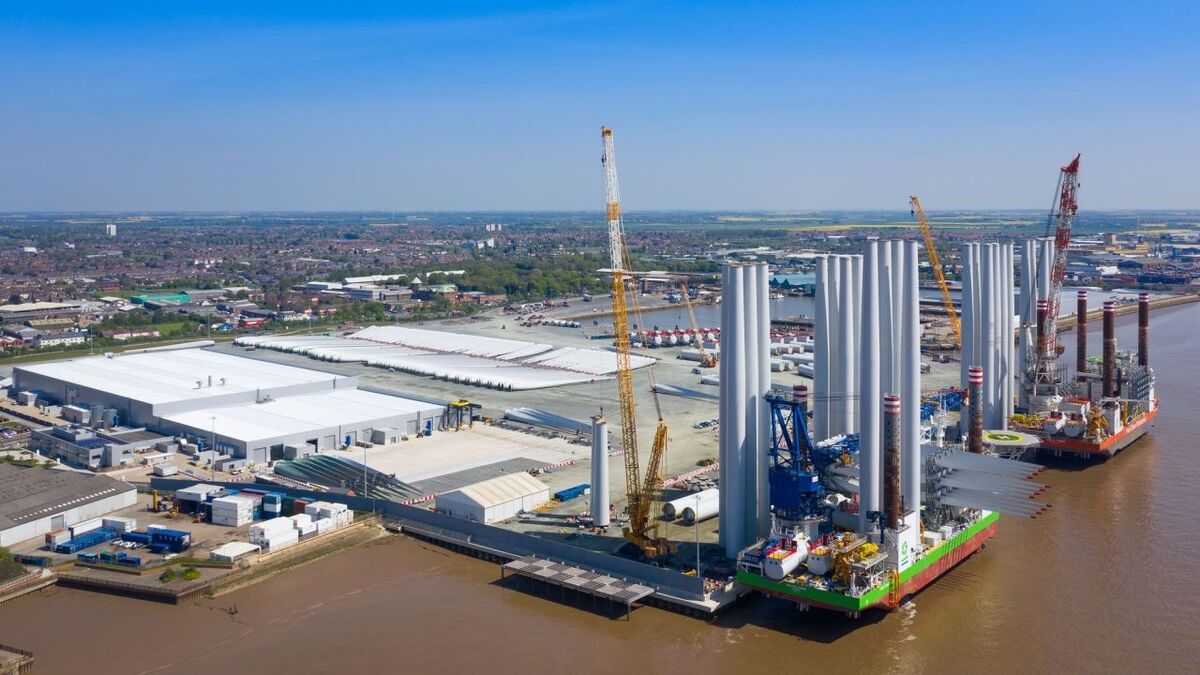
Offshore wind turbine manufacturer Siemens Gamesa Renewable Energy has been fined following an incident in which an employee suffered serious, life-changing injuries at a site in Hull in the UK


On 18 July 2024, a 37-year-old woman was carrying out work as part of the construction of a wind turbine blade when a structure she was working on collapsed on top of her, leaving her paralysed from the waist down.
The task being undertaken at the time of the incident involved building the web section of the blade, a large internal structure running almost the full length of the blade to provide rigidity and prevent buckling in strong winds, functioning much like a spine.
The incident occurred at the pre-cast section of the web, which sits at the root end of the blade where it connects to the rotor. This section weighs approximately 800 kg before additional materials are added during the build process.
As the injured employee and a colleague were preparing the pre-cast section to be wrapped in materials, it fell towards them after support poles, which had been holding the structure in place, were removed.
An HSE investigation found that the company failed to adequately assess the risks arising from the work; failed to devise and implement a robust safe system of work to prevent employees from removing the support poles; and failed to adequately train employees in safe working methods. As a result, employees adopted unsafe practices to complete the task.
Following the incident, the company implemented a system whereby support poles are locked in place and can only be unlocked by a nominated person holding the key, once the relevant stage of the build has been completed.
Siemens Gamesa pleaded guilty to breaching Section 2(1) of the Health and Safety at Work Act 1974. The company was fined £600,000 and ordered to pay £7,980.80 in costs at Grimsby Magistrates’ Court on 22 May 2026.
HSE Inspector Mark Slater said: “All work activities that carry a risk to health and safety must be properly risk assessed, and safe systems of work must be devised and implemented. Where protective measures are provided to prevent catastrophic incidents in high-risk areas, secondary measures such as lock-off procedures should also be in place.
“In this case, inadequate risk assessment and inadequate systems of work left employees to adopt their own working methods, exposing them to an unacceptable level of risk. This was a wholly avoidable incident.”

Related to this Story


Events

Maritime Regulations Webinar Week
 16 Dec 2025
 GMT - ONLINE
Floating energy: successfully unlocking stranded gas using FLNGs and FSRUs
24 Feb 2026GMT - ONLINE
© 2026 Riviera Maritime Media Ltd.


