


Business Sectors
Business Sectors
Events
Contents
Register to read more articles.
Space-efficient wind system targets maritime retrofit bottleneck
A wind propulsion system that addresses the critical deck space constraints that have limited the wider adoption of wind technology in shipping has been formally launched in London


GT Wings aeronautical-inspired AirWing wind propulsion system has been developed through the £3.7M (US$4.9M) UK Government Clean Maritime Demonstration Competition (CMDC) 4 programme. This is a multi-phase funding initiative from the Department for Transport aimed at accelerating maritime decarbonisation innovation.
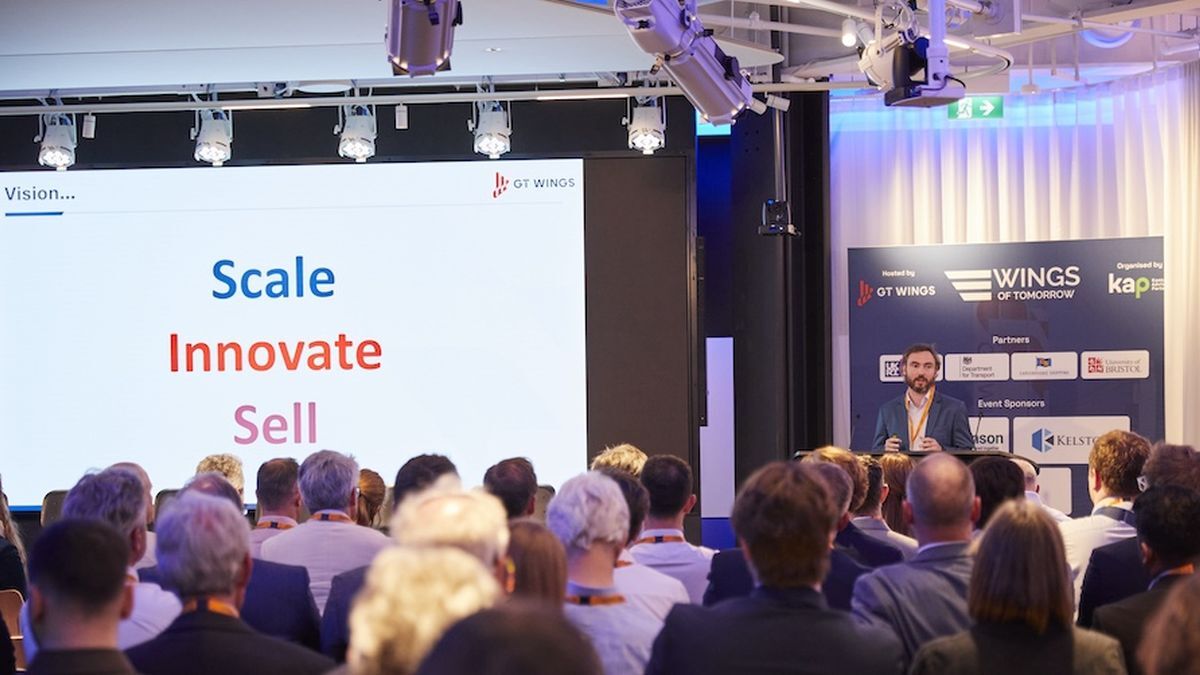
GT Wings founder and chief executive George Thompson told a packed auditorium at international law firm Norton Rose Fulbright, that its technology delivered 5%-8% fuel savings on a Carisbrooke Shipping test vessel over three transatlantic voyages.
Elaborating on the technology’s origins in aeronautical applications Mr Thompson said, "I have done a lot of research previously on suction and blow systems for aircraft wings applications, and we’ve adapted it to be used on a ship. "The system’s primary advantage is in its ability to generate substantial thrust from a minimal deck footprint, a critical consideration for vessels with limited installation space."
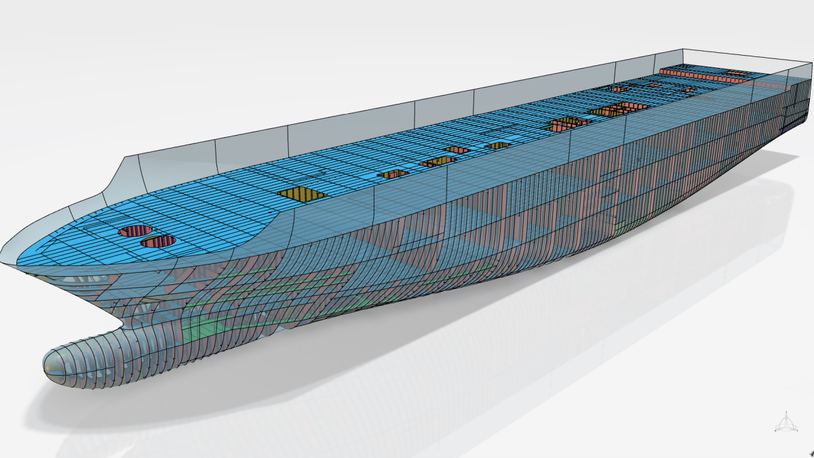
The event featured operational feedback from Carisbrooke Shipping’s Captain Simon Merrit, whose vessel has been testing the AirWing technology. "We had to do a lot of cross-operational stability verification diagrams (COSVD) and look for the worst-case scenarios to ensure the ship was safe," he told delegates.
COSVD are specialised engineering visualisations that map vessel stability parameters across multiple operational conditions, accounting for factors such as wind force, direction, cargo distribution and sea state – and are essential for assessing how modifications such as the AirWing affect vessel safety margins.
Capt Merrit reported while computational fluid dynamics calculations indicated potential savings of "8.3% on our particular trading pattern," operational data showed figures were "regularly around 5.0%". Comprehensive, independently verified performance data will be made available to the market shortly.
Product director at GT Wings, Martin Harrop, outlined the accelerated development timeline. "We’ve finished CMDC 2, which was generating a concept," he said, referring to the second round of the Clean Maritime Demonstration Competition - a multi-phase UK government funding initiative to accelerate maritime decarbonisation technology. CMDC 2, which ran from May 2022 to August 2023, allocated £12M across 31 projects specifically for feasibility studies and predeployment trials of innovative clean maritime solutions. The programme represents a structured approach to advancing maritime technologies from concept to commercial deployment through sequential funding rounds.
Cofounder and director of One Planet Capital and an investor in GT Wings, Anthony Chant, emphasised his firm’s investment decision hinged on rigorous third-party validation, underscoring even for sustainability-focused investors such as One Planet Capital, commercial viability remains paramount over environmental benefits alone.
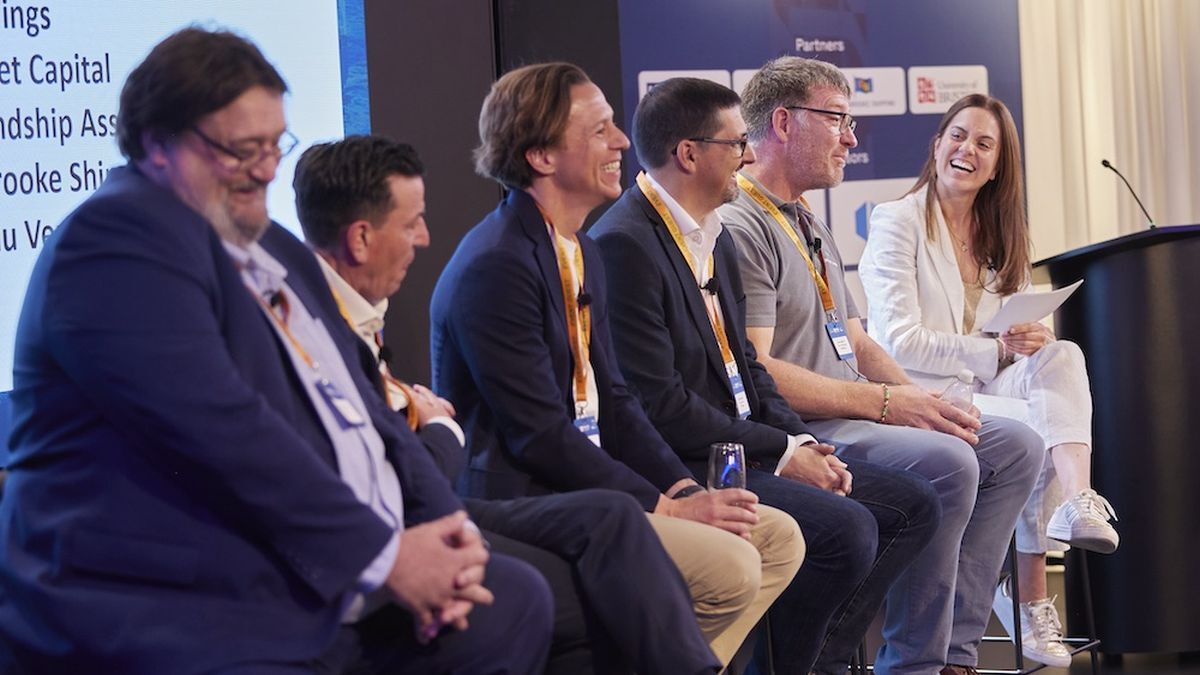
Secretary general of the International Windship Association, Gavin Allwright, provided market context, stating "62 large vessels over 400 gt are installed with some form of wind propulsion" with "over 100 orders in the pipeline." Figures that simultaneously denote growing interest – and the size of the prize – given the several thousand vessels in the global commercial fleet.
Attendees probed several critical implementation challenges. Capt Merrit acknowledged integration required substantial vessel modifications including "7.5 tonnes of additional steel under the focal depth" and relocation of navigational equipment.
Mr Allwright suggested the supply chain resembles that of wind turbines, noting, "The actual management is very doable with an existing supply chain in the UK and Europe." He identified regulatory frameworks as a greater barrier, emphasising current policies "look at ships above 5,000 gt," potentially disadvantaging smaller vessel applications where retrofit opportunities may be more numerous.
When questioned on what differentiates AirWing from established competitors, Mr Harrop referenced superior thrust-to-footprint ratio allowing installation on "a vessel very constrained from a deck layout perspective."
Addressing certification, Bureau Veritas’ Yannis Calogeras said, "There is huge innovation going on very rapidly, and we often don’t have a clear regulatory framework and approach to fall back on." He explained as a classification society, Bureau Veritas must maintain safety standards while facilitating innovation, noting classification societies possess "knowledge, experience, tools, procedures and processes that can overcome the challenges of sometimes dealing with new technology when not having a purely defined approach." Mr Calogeras also emphasised the importance of "true collaboration" across the industry, stating, "The projects that are moving forward are those where there is collaboration" and stakeholders are "sharing the risks."
Looking forward, Mr Harrop predicted wind propulsion systems would "become standard technology," while Mr Allwright forecast market expansion, "We’re doubling every year, and that will be exponential. Probably 2026 is when we really hit that S-curve."
The UK maritime sector appears well-positioned in this developing market. Mr Allwright highlighted the UK as "one of the few hotbeds of innovation and development" with "a number of companies developing exciting technology." The Department for Transport’s UK SHORE programme has reportedly leveraged "£100M in private investment" according to the organisation’s head of maritime environment energy and sustainability strategy, Alexandra Beaumont.
As GT Wings moves from demonstration to commercialisation, Mr Thompson emphasised the importance of "reliability and performance" while scaling operations and predicted with three Atlantic crossings completed and comprehensive operational data being independently verified, order announcements and new product announcements can be expected.
Sign up for Riviera’s series of technical and operational webinars and conferences:
- Register to attend by visiting our events page.
- Watch recordings from all of our webinars in the webinar library.
Related to this Story

Events

Maritime Regulations Webinar Week
 16 Dec 2025
 GMT - ONLINE
Floating energy: successfully unlocking stranded gas using FLNGs and FSRUs
24 Feb 2026GMT - ONLINE
© 2026 Riviera Maritime Media Ltd.


