


Business Sectors
Business Sectors
Events
Contents
Register to read more articles.
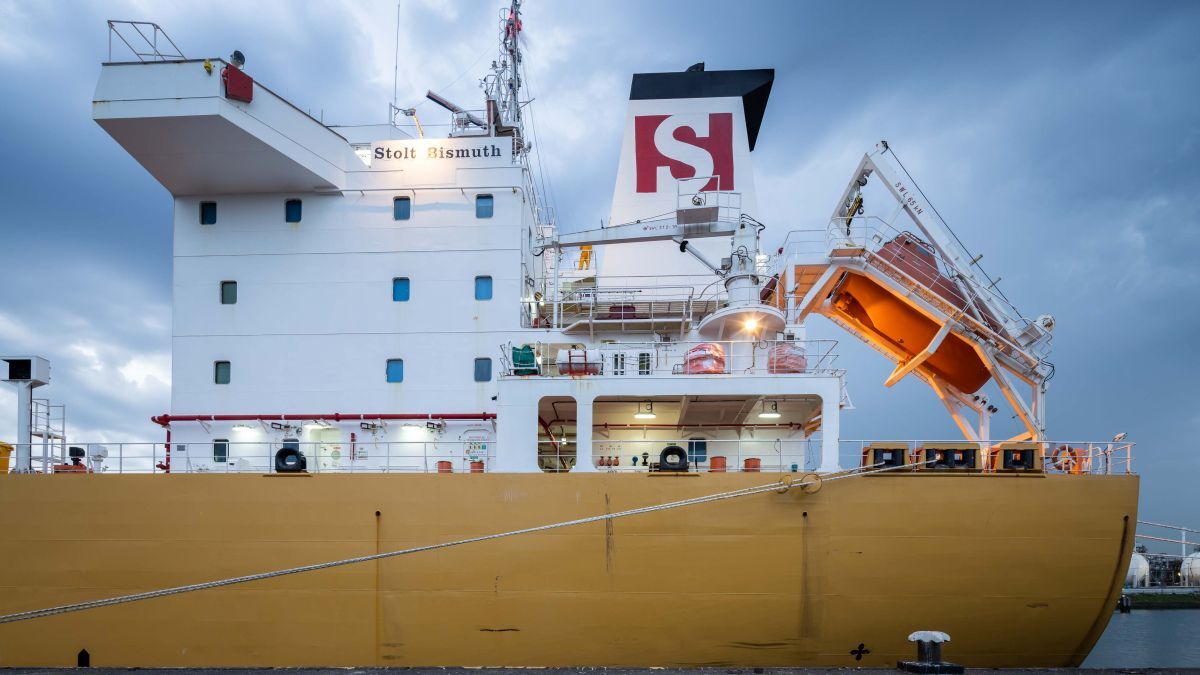
Stolt's 2030 strategy melds fleet renewal, biofuel adoption
Stolt Tankers reports its energy efficiency measures and fleet modernisation programme have helped the company substantially reduce its annual efficiency ratio (AER) by 36% from 2008 levels, significantly outperforming International Maritime Organization (IMO) mandates


"Fleet renewal over the next decade will have a significant impact and already has," says Stolt-Nielsen Group ESG manager Bharat Nayar. "Fuel efficiency and environmentally sustainable ship technology have advanced considerably in the last five to 10 years, so our latest vessels are positively affecting our AER." Recent deliveries include several advanced super-segregator vessels built at Hudong Zhonghua Shipbuilding, and there are six 38,000-dwt super-segregator vessels on order at China’s Wuhu Xinlian Shipbuilding, scheduled for delivery between 2026 and 2028.
The ambition is to achieve a 50% reduction in AER by 2030, leaving a 14% gap to bridge through a combination of fleet renewal, biofuel deployment and energy efficiency measures. This strategic approach has already yielded significant results across the fleet.
"In Europe, all of Stolt Tankers’ inland barges were running on biofuel in December," notes Capt Nayar, adding Stolt is continuing to trial biofuel for its deepsea fleet.
As part of the energy efficiency measures being implemented across the fleet, graphene coating technology has been applied to 25 vessel propellers. This initiative has yielded promising results, achieving efficiency gains of 1- 2% and showing minimal coating deterioration during routine inspections.
In evaluating emerging technologies, Capt Nayar says the company has taken a measured approach based on rigorous feasibility studies. Wind-assisted propulsion, for instance, was deemed unsuitable for the company’s operational profile, with vessels spending approximately 45% of their time in port, resulting in negative return on investment calculations.
From a regulatory perspective, Capt Nayar acknowledges reporting Scope 3 emissions presents specific challenges, particularly in categories 1 and 2, which cover capital goods and purchased services. "Many suppliers globally, including those in Europe, are not yet measuring their carbon emissions," he explained. This lack of measurement complicates the reporting process, as companies often rely on data from their suppliers to accurately account for these emissions.
To tackle this issue, the company has adopted a hybrid approach that primarily employs spend-based methodologies aligned with the Greenhouse Gas Protocol. This method calculates emissions based on the financial value of purchased goods and services, using emissions factors derived from industry averages. While this approach simplifies data collection, it may not provide the most accurate emissions estimates for specific contexts. The company supplements this method with actual emissions data where available to enhance accuracy.

Looking ahead, Stolt Tankers expects minimal impact from the inclusion of methane and nitrous oxide emissions in the EU ETS in 2026, as its fleet does not currently include LNG-powered vessels. The company is well-positioned for the potential expansion to smaller vessels in 2027, with only a small portion of its fleet below the current threshold of 5,000 gt.
Capt Nayar echoes many others when he highlights the availability of sustainable fuels as a critical strategic concern. "The key question isn’t about technology. Today there are ships that can run on LNG, methanol and ammonia. It’s about whether these fuels will be available in sufficient quantities for commercial shipping, especially given the competition from other industry sectors."
"I’m optimistic but also a realist," he says before adding, "Regulations also need to catch up and safety implications also need to be addressed."
Riviera’s International Chemical & Product Tanker Conference will be held in London, 22-23 April 2025. Click here for more information on this industry-leading event.

Related to this Story



Events

Maritime Regulations Webinar Week
 16 Dec 2025
 GMT - ONLINE
Floating energy: successfully unlocking stranded gas using FLNGs and FSRUs
24 Feb 2026GMT - ONLINE
© 2026 Riviera Maritime Media Ltd.


