


Business Sectors
Business Sectors
Events
Contents
Register to read more articles.
Sun Ferry: a ‘stepping-stone’ approach
Ho Sun Ferry is future proofing with its fleet of new vessels


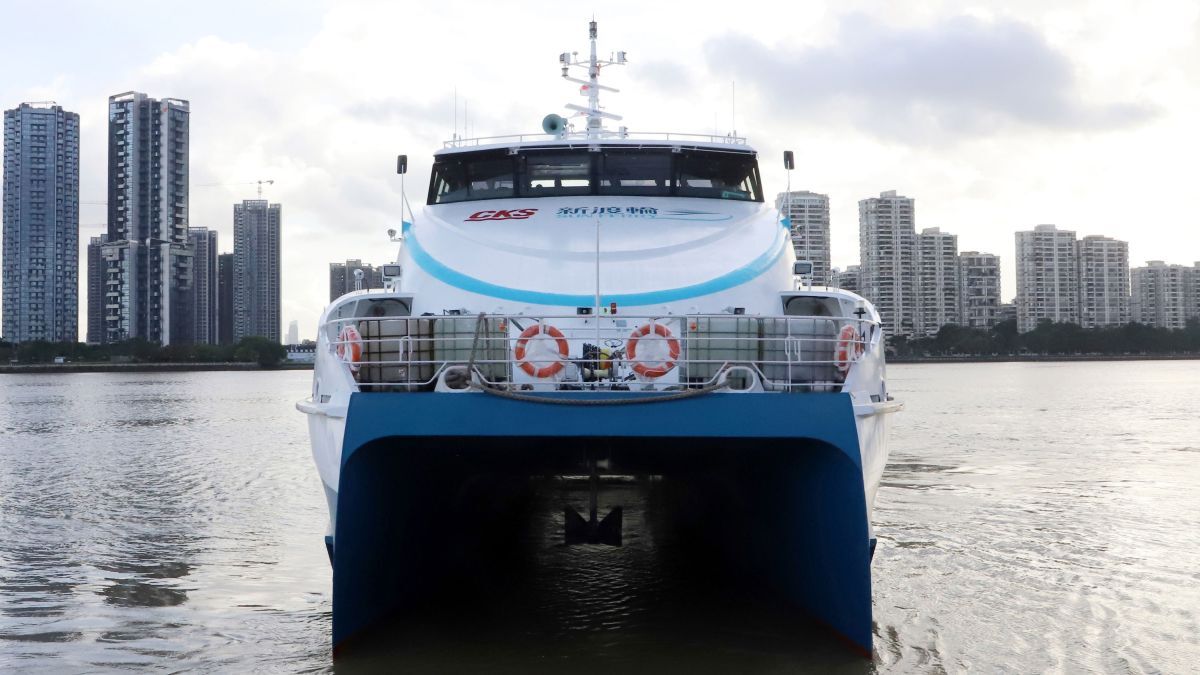
Hong Kong-headquartered Sun Ferry has added a third vessel from a fleet of seven newbuild vessels that boost operational efficiency and allow the ferry operator to future proof.
Incat Crowther technical manager Sam Mackay says, “Xin Ming Zhu 30 is the third vessel in a fleet of seven we have designed for Sun Ferry. This vessel stands out due to its diesel-electric propulsion system, which is unique among the fleet. What was critical in the design of Xin Ming Zhu 30 was ensuring this vessel delivered the same world-class customer experience while maximising operational efficiency for the inclusion of the diesel-electric propulsion system. In addition, we needed to ensure this vessel, like all others in the fleet, is capable of berthing at pre-existing infrastructure such as commuter piers on inter-island routes.”
He explains the optimisation of Xin Ming Zhu 30’s hull form for the diesel-electric propulsion system required detailed design work by Incat Crowther’s team. “Sun Ferry are incredibly pleased with the outcome, with Incat Crowther’s proven design process helping to create a successful solution,” Mr Mackay says.
Sun Ferry chose the diesel-electric propulsion system for this vessel at the outset of the project. Mr Mackay says, “It is clear the operator was after a future-proofed solution and this arrangement allows for the simple incorporation of battery technology in the future. In addition, the vessel’s generators can be run at a constant load at their most efficient operating rpm to reduce wear and maintenance while additional generators can be brought online to meet the power demands of the vessel.”
Highlighting the future-proofing aspect, he adds, “Xin Ming Zhu 30 is future proofed as the vessel’s design allows Sun Ferry to take a stepping-stone approach to converting the vessel’s propulsion system to lower and zero-emissions technology in the future. For example, Sun Ferry has the option of adding more batteries to the vessel in the future or removing the diesel component completely and moving to a fully electric propulsion system.”
With a diesel-electric arrangement, the incorporation of batteries into the system in the future is simplified as the propulsion motor is already electric, as opposed to a conventional propulsion train where the electric motor would need to be added.
The vessel has been fitted with 72 solar panels providing 7.5 kW of onboard power. The solar panels feed into the vessel’s DC circuitry to assist powering inhouse equipment.
In addition to the adoption of diesel-electric propulsion and the solar panel system, Incat Crowther has optimised its Generation IV hull form for the vessel’s propulsion system and structure. This will enhance hydrodynamic efficiency by reducing wave-making drag and improving the vessel’s performance across a range of loading conditions.
Highlighting the importance of collaboration, Mr Mackay says, “Incat Crowther’s end-to-end digital shipbuilding service ensures our team of naval architects partner with our clients from the very beginning of projects, from design right throughout the shipbuilding process. On this project, the project’s lead naval architect was regularly on the ground in Guangzhou working with shipbuilders AFAI Southern Shipyard to ensure the build process was successful.”
Sign up for Riviera’s series of technical and operational webinars and conferences:
- Register to attend by visiting our events page.
- Watch recordings from all of our webinars in the webinar library.
Related to this Story
Events

Maritime Regulations Webinar Week
 16 Dec 2025
 GMT - ONLINE
Floating energy: successfully unlocking stranded gas using FLNGs and FSRUs
24 Feb 2026GMT - ONLINE
© 2026 Riviera Maritime Media Ltd.


