


Business Sectors
Business Sectors
Events
Contents
Register to read more articles.
Svitzer plans first Australian electric-powered harbour tugs
A major tug owner plans to deploy battery-electric tugs in one of Australia’s largest ports to reduce emissions from ship handling and docking


Svitzer Australia aims to introduce electric-powered tugboats to one of Australia’s main ports after signing a memorandum of understanding (MoU) with the harbour authority. Port of Melbourne would then build quayside infrastructure to recharge battery-electric tugs operated by the Danish shipowner within the next three years.
The tug owner and port will partner with Plexar Energy and Copenhagen Infrastructure Partners (CIP) to assess the feasibility of introducing two fully electric TRAnsverse 2600e tugs in Melbourne. These 26-m tugs, designed by Robert Allan Ltd, would have sizeable energy storage systems to enable zero-emissions towage and ship manoeuvring in the Port of Melbourne, recharging from a dedicated berth in the harbour.
Svitzer Australia managing director, Videlina Georgieva, said the partnership with Port of Melbourne and CIP represents an important step in bringing the next generation of sustainable towage to Australia.
“Towage is critical to the performance of any port, and our biggest challenge for decarbonisation is reducing emissions without compromising safety, capability or reliability,” she said.
“At Svitzer, we are investing in the technologies that will help solve this challenge, and it is exciting to see Melbourne leading the way, through this collaboration, to make sustainable towage a working reality in Australia.”
Svitzer has an agreement with a shipyard in India to build a series of TRAnsverse design tugs with battery modules on board for delivery in 2027 and 2028, of which two could be deployed in Melbourne.
Port of Melbourne chief executive, Saul Cannon, said the collaboration with Svitzer reflects a shared ambition to improve port efficiency while accelerating the sector’s transition to lower‑emissions operations.
“Efficient, reliable towage services are critical to the smooth functioning of the port, and electrification offers the potential to improve both operational performance and environmental outcomes,” he said.
“Through this MoU, we are exploring what it will take to bring the next generation of electric towage to Melbourne in a way that benefits port users, reduces emissions and supports a more sustainable future.”
Plexar chief executive and a partner at CIP, Karsten Plauborg, said the partnership with Port of Melbourne and Svitzer could involve micro power grids and artificial intelligence to optimise energy use and support electrification.
“We are grateful to our visionary partners and look forward to demonstrating how Plexar’s solutions, electrical engineering expertise and the direct use of onsite electricity generation can both optimise costs and increase power availability,” said Mr Plauborg.
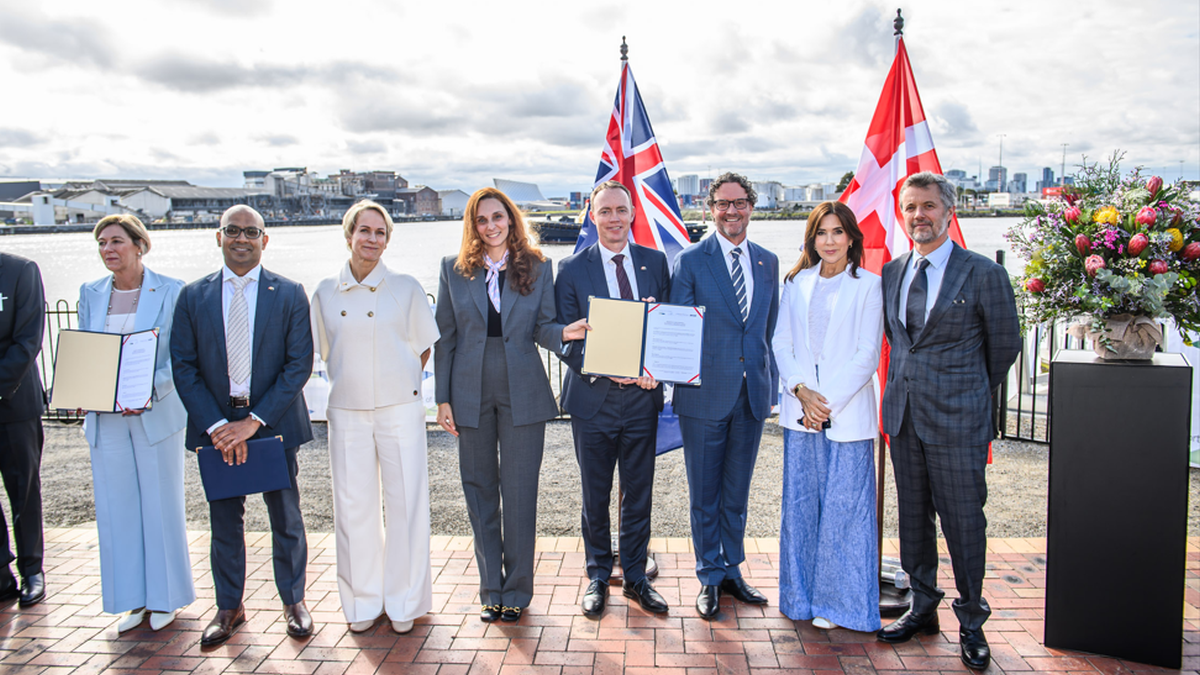
The MoU was signed at the Port of Melbourne in the presence of the king and queen of Denmark, who were on a state visit to Australia.
“Transitioning port operations to cleaner, more efficient technologies is a shared challenge,” said Mr Cannon. “Collaborations like this help us build the partnerships and capability needed to deliver meaningful progress for the sector and for Victoria.”
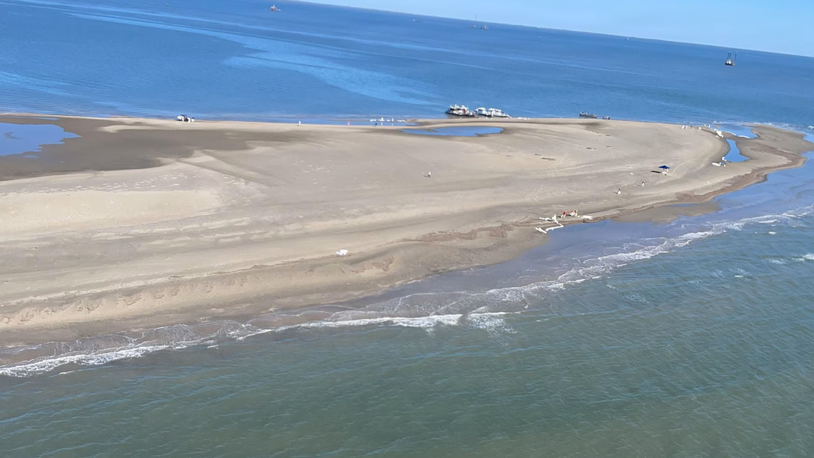
Svitzer already operates tugs with hybrid propulsion involving battery modules in Australia, with a fleet of escort tugs supporting gas carriers at Chevron’s Gorgon LNG production and export plant. In 2025, Svitzer replaced the batteries on four 33-m azimuth stern-drive tugs to provide higher capacity and faster charging, enabling increased electric propulsion at the terminal in Barrow Island in Western Australia.
The 28th International Tug & Salvage Convention, Exhibition & Awards will be held in Gothenburg, Sweden, in association with Caterpillar, 19-21 May 2026. Use this link for more details of this industry event and the associated social and networking opportunities.

Related to this Story

Events

Maritime Regulations Webinar Week
 16 Dec 2025
 GMT - ONLINE
Floating energy: successfully unlocking stranded gas using FLNGs and FSRUs
24 Feb 2026GMT - ONLINE
© 2026 Riviera Maritime Media Ltd.


