


Business Sectors
Business Sectors
Events
Contents

Register to read more articles.
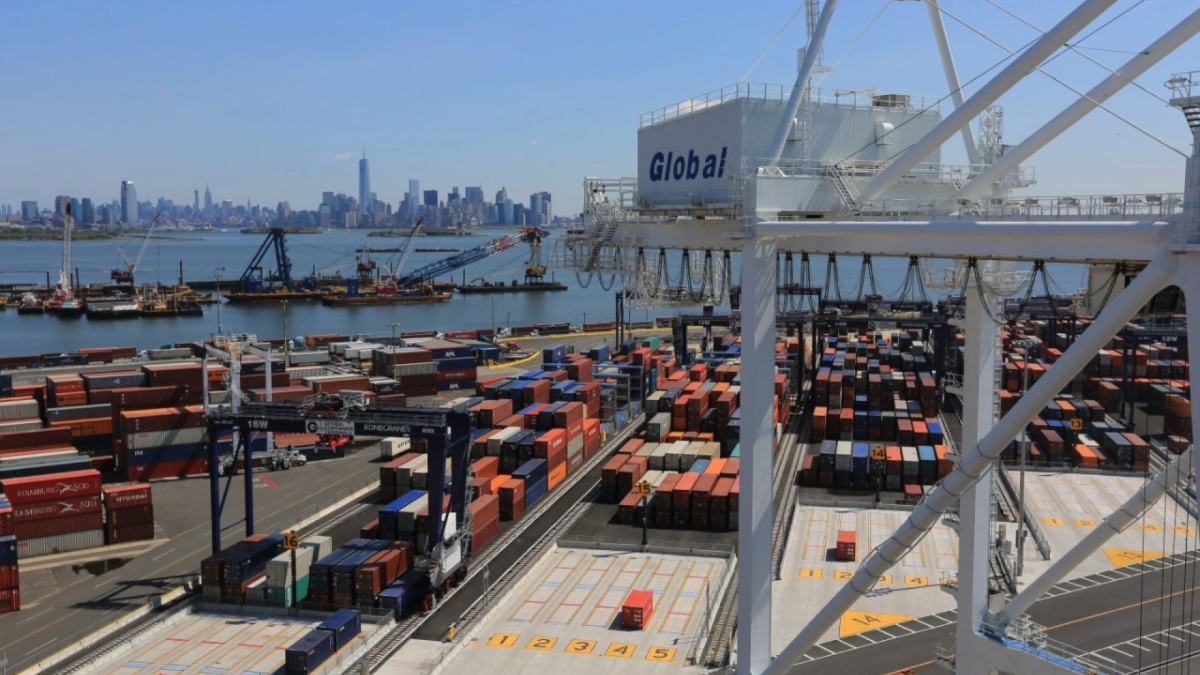
Tariff saga reignites trade tensions amid disruption across global shipping
The tariff saga has once again moved to the forefront of the shipping industry as the US administration targets 60 economies during an exceptionally volatile period for global trade, with key shipping routes already under severe strain


The Office of the US Trade Representative (USTR) has announced tariffs ranging from 10% to 12.5% on 60 trading partners "for their failure to impose and effectively enforce a prohibition on the importation of goods produced with forced labour." The targeted economies account for 99.4% of US imports.
According to the official text, the 10% tariff applies to economies that already impose, or have committed to imposing, a prohibition on imports produced with forced labour. These include Argentina, Bangladesh, Cambodia, Canada, Ecuador, El Salvador, Guatemala, Honduras, India, Indonesia, Jordan, Malaysia, Mexico, Pakistan, Sri Lanka, Trinidad and Tobago, and the United Kingdom.
Exemptions apply to raw materials whose inclusion could lead to shortages in domestic supply, products whose tariffs could cause economy-wide disruptions, goods that cannot be produced in sufficient quantities or at competitive prices in the US, or sourced from alternative suppliers.
The measures, first proposed in June, follow two rounds of public hearings and consultations with trading partners.
"Today’s action will begin to correct what is both a human rights abuse and a distortive trade practice to improve the welfare of workers everywhere," US Trade Representative Jamieson Greer said.
Several trading partners have already criticised the new policy. EU foreign policy chief Kaja Kallas described the tariffs as a "negative surprise" and rejected the forced labour allegations.
Brazil also rejected the tariffs and reiterated its call for reciprocity, while Mexico said it does not expect any change to the effective tariff currently paid by its exporters. Australia likewise opposed the move, describing the tariffs as "completely unjustified."
Persistent trade volatility
Analysts said the measures came as little surprise.
"Everyone knew that Trump was going to rebuild his tariff wall after the Supreme Court of the United States shot down his previous versions, so this isn’t adding any additional disruption to the container market – it was already baked in," Drewry senior manager for container research Simon Heaney told Riviera.
He said importers have been bringing forward orders to mitigate shifting trade policies, contributing to an "early peak season" and creating tighter market conditions than would otherwise have been the case, supporting freight rates.
"There are likely to be more twists and turns in this saga, so this development is unlikely to bring any permanence, or an end, to trade volatility," Mr Heaney said.
BRS Shipbrokers head of dry bulk research Wilson Wirawan shared a similar view, saying he expects the US administration to continue seeking new ways to impose tariffs following the Supreme Court ruling.
"It simply means that trade tensions will likely continue alongside other geopolitical events in the Middle East and the Black Sea for the rest of 2026, creating uncertainty over when markets will regain some semblance of normality and allow trade fundamentals to be properly assessed for 2027 and beyond," he told Riviera.





Related to this Story


Events

Maritime Regulations Webinar Week
 16 Dec 2025
 GMT - ONLINE

Floating energy: successfully unlocking stranded gas using FLNGs and FSRUs
24 Feb 2026GMT - ONLINE
© 2026 Riviera Maritime Media Ltd.


