

Contents
Survey’s/Polls (coming soon)
Special Reports (coming soon)
Business Sectors

Business Sectors
Business Sectors
Business Sectors
Events
Contents
Contents
Survey’s/Polls (coming soon)
Special Reports (coming soon)
Read the views of the experts:
You are viewing 2 of your 10 articles this month.
Register to read more articles.
Three dead, more ill after suspected viral outbreak on Dutch expedition ship
04 May 2026by Naida Hakirevic
An international medical response is underway off Africa’s western coast following a fatal outbreak of a rodent-borne virus on a Netherlands-flagged expedition cruise vessel


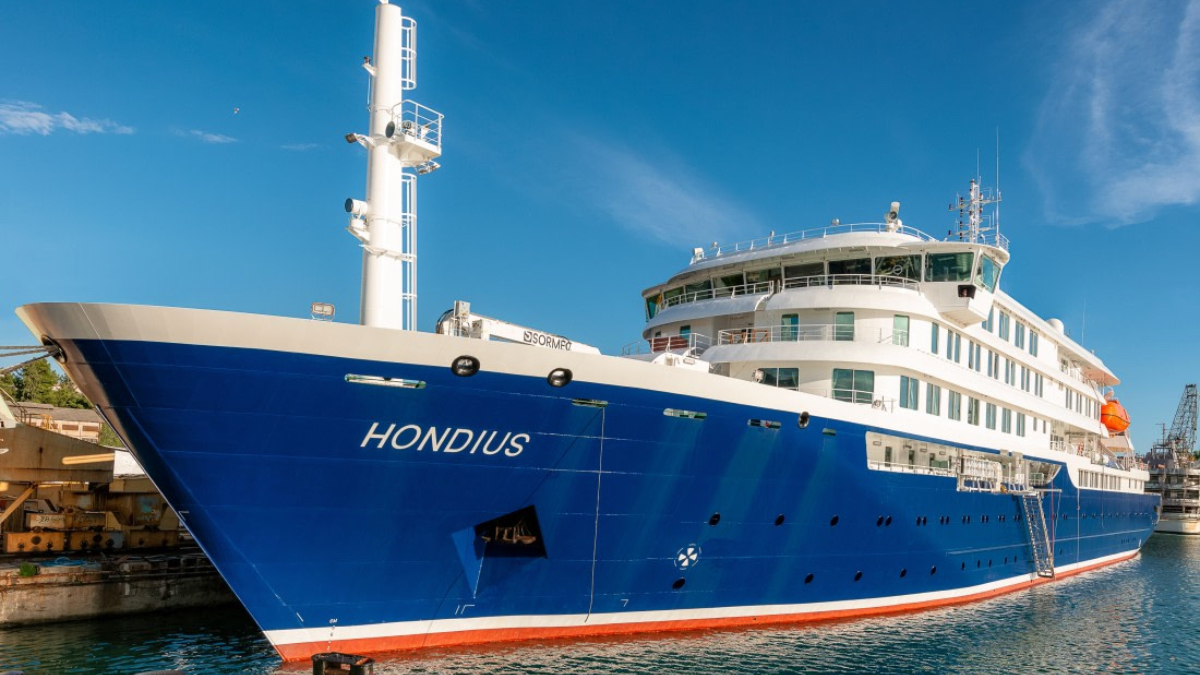
Three people have died, and another three have fallen ill following a suspected hantavirus outbreak on Hondius, an expedition cruise vessel in the Atlantic.
The deceased were of Dutch and German nationality.
Owned and operated by Dutch firm Oceanwide Expeditions, the 2019-built Hondius is located off the coast of Cape Verde. AIS data shows that the ice-strengthened polar ship was en route from Ushuaia, Argentina, to the Canary Islands, Spain, as part of a multi-week expedition.
The vessel is carrying 147 passengers and crew, representing 23 different nationalities. According to the company, two crew members – British and Dutch nationals – require urgent medical care on board, while a British passenger is undergoing intensive treatment in Johannesburg, South Africa.
A local health team boarded the 6,300-gt vessel to assess the affected individuals, confirming their condition is currently stable. However, citing precautionary measures and in compliance with international health regulations, Cape Verdean authorities denied the vessel permission to dock at the Port of Praia on 3 May to disembark those requiring medical care.
In a formal statement, the Ministry of Health of Cape Verde explained that the decision was made "after a technical and epidemiological evaluation... with the aim of protecting national public health."
The company, meanwhile, said, “The priority of Oceanwide Expeditions is to ensure that the two symptomatic individuals on board receive adequate and expedited medical care,” emphasising that it remains in “close contact” with those affected and their families.
Oceanwide Expeditions confirmed that Dutch authorities are coordinating the repatriation of the two symptomatic crew members from Cape Verde to the Netherlands. The remains of a deceased individual, alongside an accompanying guest, will also be returned as part of this operation.
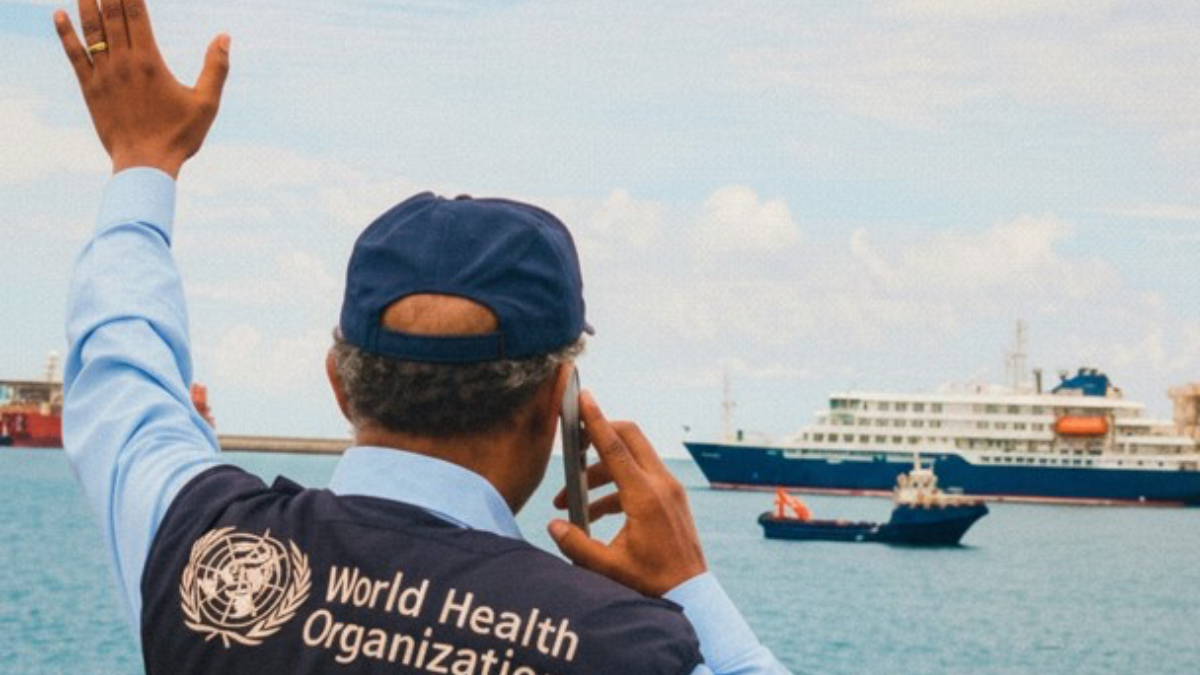
The company noted it is working closely with local and international authorities, including the World Health Organization (WHO), the Dutch National Institute for Public Health and the Environment (RIVM), relevant embassies, and the Dutch Ministry of Foreign Affairs.
WHO/Europe said in a separate statement it is working with the countries involved to support medical care, evacuation efforts, investigations, and public health risk assessments.
“I am in close contact with our teams to ensure a coordinated, science-based response. I thank the South African authorities for their rapid support, including care for a UK patient,” said Dr Hans Henri P. Kluge, WHO regional director for Europe.
Addressing the risk to the public, Dr Kluge added: "Hantavirus infections are uncommon and usually linked to exposure to infected rodents. While severe in some cases, it is not easily transmitted between people. The risk to the wider public remains low. There is no need for panic or travel restrictions."



Related to this Story
Events

Maritime Regulations Webinar Week
 16 Dec 2025
 GMT - ONLINE
Floating energy: successfully unlocking stranded gas using FLNGs and FSRUs
24 Feb 2026GMT - ONLINE
© 2026 Riviera Maritime Media Ltd.


