


Business Sectors
Business Sectors
Events
Contents
Register to read more articles.
Under pressure: as complexity of emissions compliance builds, costs of decarbonisation rise
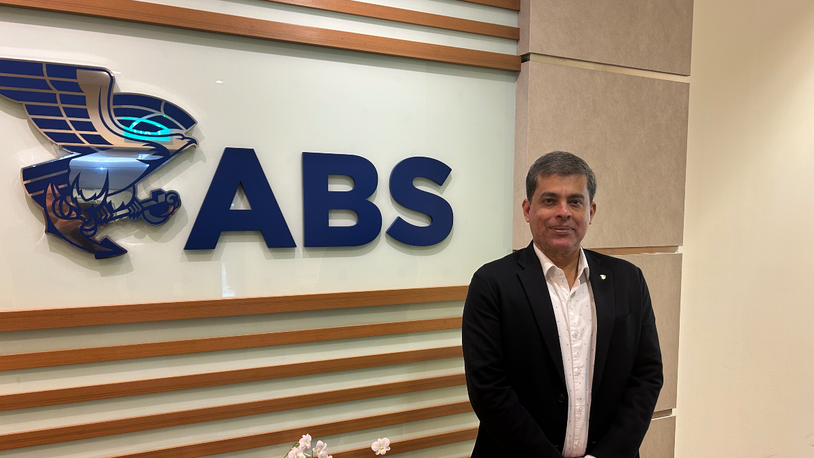
An ageing fleet, high newbuild costs, low charter rates and increased regulatory burdens require owners to carefully plan their decarbonisation steps, says ABS vice president, South Pacific regional business development, Arnab Ghosh


When it comes to decarbonisation, shipowners are faced with a conundrum created by an ageing fleet, high newbuilding prices, low charter rates and an increasingly complex web of emissions regulations mandating more energy-efficient ships. The decisions around how to improve energy efficiency, lower a ship’s carbon intensity and remain commercially competitive are daunting, points out a leading classification society executive.
“The crude, product and chemical tanker fleet is ageing in general – more so in some segments than others,” observes ABS vice president, South Pacific regional business development, Arnab Ghosh. Newbuilding prices at shipyards began to ’creep up’ about 5 years ago, and over the last 2 years have gone up substantially, he says.
At the same time, Mr Ghosh notes there are additional emission regulations like the Energy Efficiency Existing Ship Index (EEXI) and Carbon Intensity Index (CII) for international shipping, and new regional regulations such as including maritime transport activities in the EU Emissions Trading System (EU ETS), including additional greenhouse gases (GHGs) like methane and nitrous oxide in the scope of the EU MRV Regulation and FuelEUMaritime. These mandate a progressive reduction of GHG energy intensity, requiring shipowners to take swift actions to lower the carbon-intensity of their fleet.
Pressure on owners to decarbonise
“There is a pressure on the owners to do something now. But how do you order a ship at such a high cost?” says Mr Ghosh. He points out charter rates can fluctuate from profitable to paltry over the 30-year lifespan of a ship. “It’s hard to take that chance unless you have deep pockets,” he says. Describing MR and LR tankers as “the real haulers of oil around the world,” Mr Ghosh says the global tanker fleet is ageing. “And the VLCC fleet is even older,” he adds.
By contrast, he says the container ship sector has fared much better with fleet renewal, placing orders at “ever-expanding” Chinese shipyards. Underpinning decarbonisation of investments in the container ship and car carrier segments is that they are business-to-consumer (B to C) type ships. “It is easier for a B-to-C-type ship rather than a B-to-B-type ship, like a tanker or bulker,” he observes, “since the extra cost is being distributed across unit products being shipped, where the difference may be few cents in case of commodities such as shoes being shipped in a container.”
As B-to-C-type ships, Mr Ghosh says “the container ship and car carrier owners may more easily afford the extra cost of decarbonisation” when building a new ship much easier than bulk carrier and tanker owners. “Less than 20% of tanker or bulker tonnage can use alternative fuel, compared with about 60% or more of container ships of the newbuild orderbook (by gt). That’s a big difference,” he says.
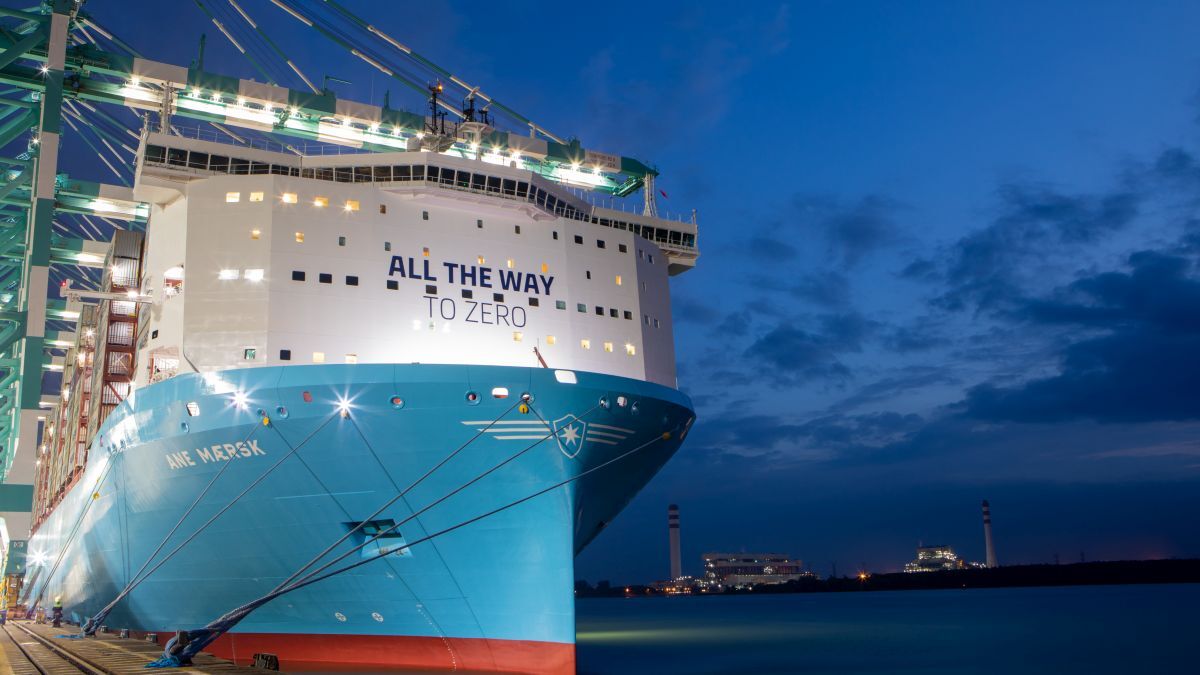
ABS has classed a significant share of ultra-large container vessels using alternative fuels, including the first methanol dual-fuel-powered box ship, Ane Maersk.
Charterers, focused on reducing their Scope 1, 2 and 3 GHG emissions, are also driving the uptake of alternative fuels in the container ship sector, says Mr Ghosh.
“Container ships, the liner trade, works differently than bulk carrier and tanker sectors. Big names in container shipping typically own about 40 to 50% of the tonnage they require to shift the boxes and charter the rest. The tonnage they own will go dual fuel because they are going to pay out of their pocket,” he says. Mr Ghosh says any tonnage they charter might be split between conventional and alternative fuels depending on where the ships are trading.
“If you are trading in southeast Asia, you can manage without a dual-fuel vessel today. You can operate with conventional fuel. But if you are trading to the EU, you will need dual-fuel capability for the extra tax burden on the vessel,” says Mr Ghosh.
And when it comes to alternative fuels, LNG is available at most major ports, he says, naming Rotterdam, Marseille, Barcelona, Singapore and Hong Kong as examples. “So, if you are going to use alternative fuels, LNG is not a problem.” He says, however, there are some questions in the industry about ‘green’ methanol’s scalability, affordability and availability.
“You will be able to find methanol in different ports. But is it going to be green and cheap enough for the owner to operate on or available in bulk to bunker? That’s the question,” he says. Mr Ghosh says he believes this is why some owners “shifted away quietly” from methanol to LNG in the last half of 2024.
Newbuild container ships equipped with alternative dual-fuel engines ordered from a Chinese shipyard can cost up to 30% more than conventionally powered ships.
“If you are paying 30% extra on the cost of a new ship, you have to do some really careful thinking before you commit,” he says. He says once again it is important to consider where the vessel will operate. “Why would someone order a ship that is more expensive, if they can use a conventionally powered ship?” Opting for ship with dual-fuel engines doesn’t make sense if the alternative fuel is not available.
For conventionally fuelled vessels, Mr Ghosh says scrubber-equipped newbuilds are still being ordered in significant numbers.
“When an owner orders a scrubber on a ship, more than a technical decision, it is a commercial decision. I was a ship’s engineer in my previous life. While I don’t think it is the best (or simplest) solution, it is a workable solution,” he says.
The decision to use exhaust gas scrubber technology is also influenced by where the ship will trade.
“If the vessel is using a scrubber, it may have a lower opex as there are cost savings on fuel compared with a conventionally fuelled vessel.”
Mr Ghosh says one could also argue for ordering an LNG dual-fuel-powered container ship with scrubber technology. If, for example, the ship operates on a route between Hong Kong and Hamburg, it could burn less expensive high sulphur fuel oil (instead of more expensive low sulphur fuel oil) in the open ocean during voyages when LNG is not available and use LNG when it is available for the remaining part of the voyage.
“If you can use cheaper fuel, you may recover the cost of scrubber in 3 to 5 years’ time. In a new ship, if you can recover your investment within 5 years it makes sense because the ship’s lifespan, especially for container ships, is 25 years plus,” he concludes.
To address the carbon-intensity of existing ships, Mr Ghosh advises owners to undertake retrofits, but cautions shipyard capacity, project complexity and cost require careful planning. “Some retrofits take more time than others,” he says. If a ship is going in for a short 10-day drydock, it could be retrofitted with a propeller boss cap fin, for example. But if you plan on installing air lubrication, shaft generators or wind sails, it could take up to a month or more,” he says.
Riviera’s Maritime Decarbonisation Conference Asia, will be held in Singapore, 15-16 April 2024. Use this link for more information and to reserve your place.
Related to this Story


Events

Maritime Regulations Webinar Week
 16 Dec 2025
 GMT - ONLINE
Floating energy: successfully unlocking stranded gas using FLNGs and FSRUs
24 Feb 2026GMT - ONLINE
© 2026 Riviera Maritime Media Ltd.


