


Business Sectors
Business Sectors
Events
Contents
Register to read more articles.
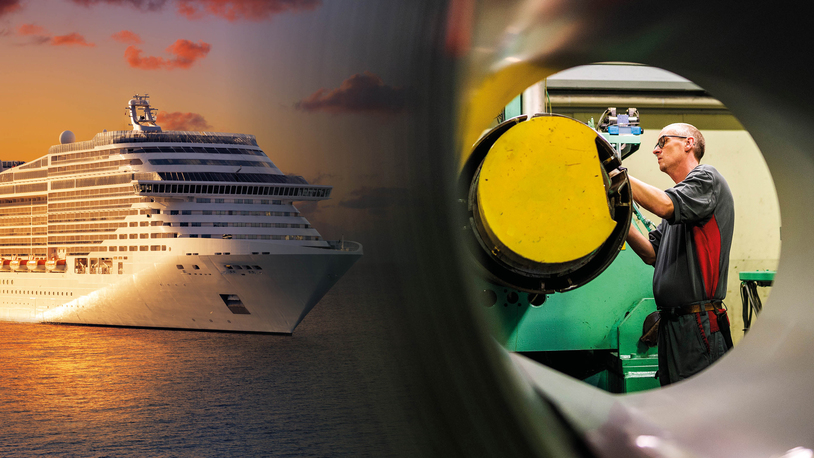
Unveiling fuel options for MSC’s container fleet
MSC Group’s Bud Darr singles out what the fuels of choice might be for the container sector – and what the company’s container line is doing in this domain


A global regulatory framework that is fit for purpose and a global fuel standard, with an accompanying carbon price and economic element, are the two basic building blocks the shipping industry needs to help it get to net zero by 2050, MSC Group executive vice president, maritime policy and government affairs, Bud Darr emphasises.
He spoke as part of a wide-ranging interview where he also underlines the importance of a multi-fuel future, and of being flexible and creative.
He says, “It would be much simpler for us if it was obvious which fuel to use and which regulations govern it. But there is no one obvious solution and the availability of future fuels is almost nil. It is important to not focus on one type of molecule as we would be unlikely to have enough. There is a lot of room for companies to take different strategies.”
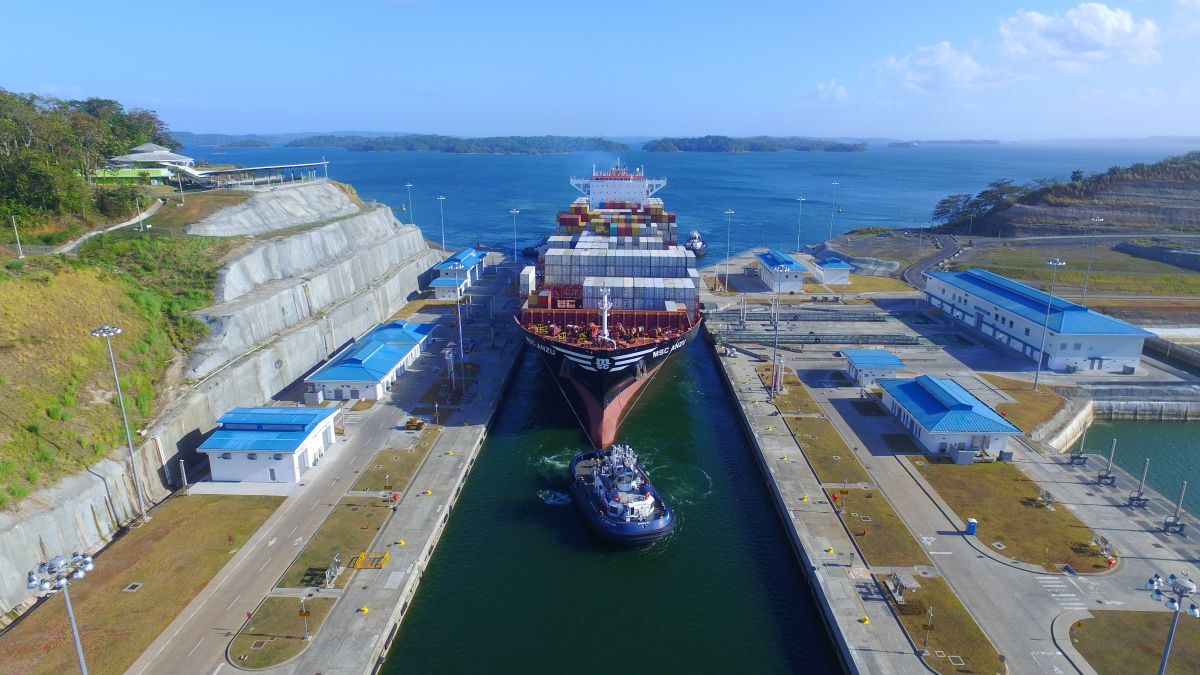
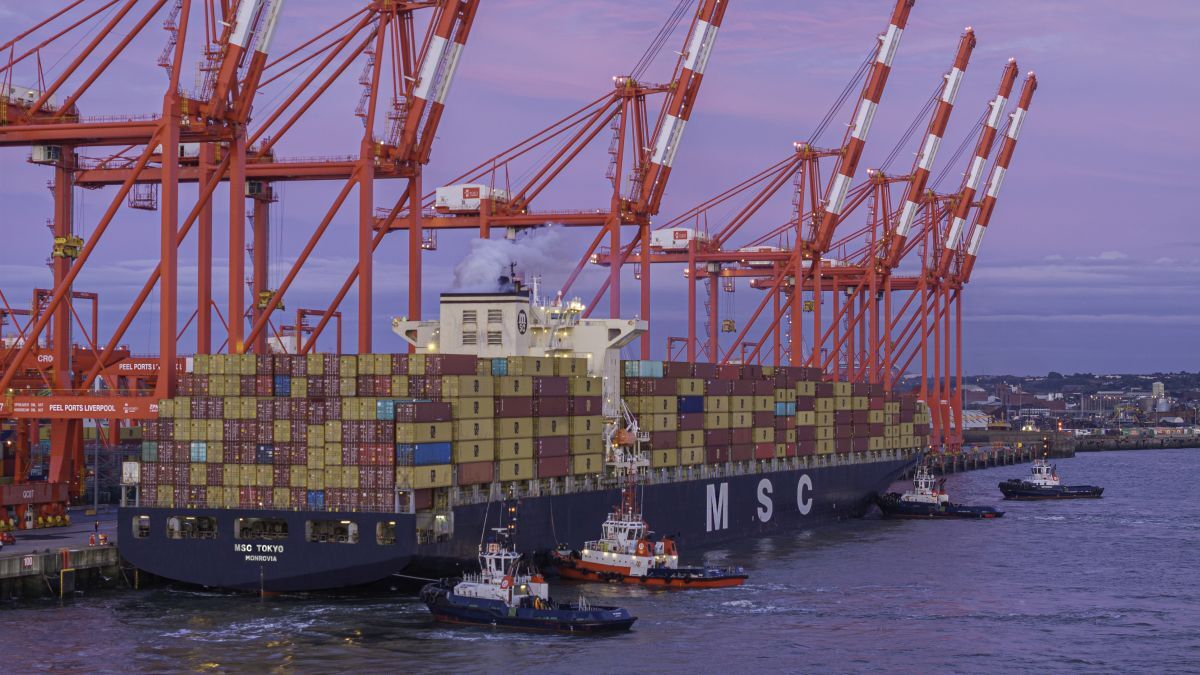
For MSC’s container fleet, synthetic LNG and green methanol are options, although as he points out “green forms don’t exist in the market at any sort of meaningful scale right now”. In contrast to the operator’s cruise ship fleet, he explains the cargo fleet is going to be more receptive to green ammonia.
“There is much more tolerance for that fuel in the cargo sector. Once it enters the marketplace in a green form it will be very valuable,” Mr Darr says.
MSC Group has a wide and diverse fleet ships, from container and cruise ships, to high-speed ferries and ropax, and car carriers and towage. Therefore, it is looking at “every fuel option you can imagine”.
Mr Darr expands, “Our fleet is like a microcosm of the whole industry, so it means examining all the fuel options.”
As well as providing fuel for newbuilds, MSC is also looking at retrofit options for the current fleet. “Methanol could play a suitable role for retrofitting ships. The capex and engineering involved in methanol conversions are less challenging than LNG on a lot of ships.”
He singled out container ships as being an especially feasible option here.
“We have ships over 20 years old and then some, like our forthcoming cruise ship MSC World America, that are as modern and sophisticated as they could be, and ships in between, so it is going to take a very flexible, creative approach to find just the right fuel at the right time. Depending on the lifecycle, there could be a different answer in the future, and flexibility is the key to making it work,” Mr Darr emphasises.
Mr Darr singles out hydrogen as of particular interest. “Hydrogen has two potential uses,” he explains, “As a niche marine fuel it has potential. It could take the form of short duration voyages where ships refuel quickly in the same place. But it is not very dense and takes up a lot of space. It could be used as a supplemental fuel source, for example if the engineering is right, it could be used for zero carbon emissions in port.”
But he says the more important role of hydrogen, in his opinion, is not directly as a marine fuel but as a critical fuel stock for synthetic forms of methanol, methane and green ammonia.
While green hydrogen is starting to develop, with substantial progress, Mr Darr says the amount needed is huge and there is a big gap between what we have today and what maritime will ultimately need, not only for shipping, but for society as well. This means the shipping sector will have to compete against society.
Mr Darr says, “We are looking at various technologies that might allow us to produce hydrogen as needed. One project in our cargo division we are developing with a partner is where they have a cracker that turns ammonia into hydrogen as you need it, and theoretically you could do that on a ship. Ammonia could be the primary fuel, the cracker would turn it into nitrogen and hydrogen, and the hydrogen could be used as a pilot or principle fuel.
“Whether we can do it at full scale remains to be seen, but we have to begin somewhere.”
MSC Group is also looking at LNG as a fuel and converting it to hydrogen on board, although currently this is not a complete solution as the ship is left with carbon that needs to be dealt with. “This technology applies to cruise or container ships,” Mr Darr says. “We have a strategic partnership with Shell on decarbonisation and we have a lot of involvement from both cruise and cargo ships in this.”
But as a background to all this, Mr Darr underlines the need for a global regulatory framework that is fit for purpose, which includes a global fuel standard. “These are the two basic building blocks that are essential,” he says, “And part of the end solution is a global fuel standard that may resemble something like FuelEU Maritime, coupled with an economic element and carbon price that is connected with it. Exactly what that will be like is as much a political decision as a technical decision, but the most important thing is to have something which works that governments agree to, rather than focusing on the specific form it takes. Those two elements must be present, and we need it to level the playing field and accelerate the transition beyond the normal market conditions.”
Mr Darr was deeply involved with the development of the International Chamber of Shipping’s proposal and World Shipping Council’s proposals for a Green Balance Mechanism.
“Both have merit and both are good proposals. For early adopters there is probably more incentive within the GBM, but ICS’ proposal has also found favour. However, I don’t think it is realistic to believe 176 governments are going to choose an industry proposal for the final solution. Success for the industry will see the best ideas of those two proposals carried over into something governments can embrace as their own solution.”
Asked his thoughts on whether the shipping industry can meet the 2050 net-zero target, he says, “I think we will get there. I am optimistic. But a couple of things must happen –as well as a fit for purpose regulatory framework, energy providers must step up and jump into producing the molecules we need. Without the fuel, none of this matters. If the molecules are not available, we haven’t got anywhere.”
Mr Darr says there are three important factors going forward, “We must remain optimistic, be creative - for example looking at alternate feedstocks - and be open minded. There is a real danger of trying to focus on the ‘right’ answer today as it might be totally wrong, and then you walk down a dead-end corridor you can’t get back out of. It is unlikely the vision we might have today is exactly what the future will look like, and we need to be able to adapt to those developments as they come.”
Sign up for Riviera’s series of technical and operational webinars and conferences:
- Register to attend by visiting our events page.
- Watch recordings from all of our webinars in the webinar library.
Related to this Story

Events

Maritime Regulations Webinar Week
 16 Dec 2025
 GMT - ONLINE
Floating energy: successfully unlocking stranded gas using FLNGs and FSRUs
24 Feb 2026GMT - ONLINE
© 2026 Riviera Maritime Media Ltd.


