


Business Sectors
Events

Floating energy: successfully unlocking stranded gas using FLNGs and FSRUs
 24 Feb 2026
 GMT - ONLINE
Contents
US asking courts for more warrants to seize 'dozens' of tankers in forfeiture claims
After seizing a fifth Venezuela-linked tanker in the Caribbean Sea on 9 January, US President Donald Trump’s administration is looking to secure US court approvals to confiscate ’dozens’ more vessels, according to unnamed Washington, DC, sources


Washington insiders cited in a Reuters report say the Trump administration is filing numerous confidential petitions asking US courts to grant warrants for the seizure of tankers deemed ’subject to forfeiture’ to the US.
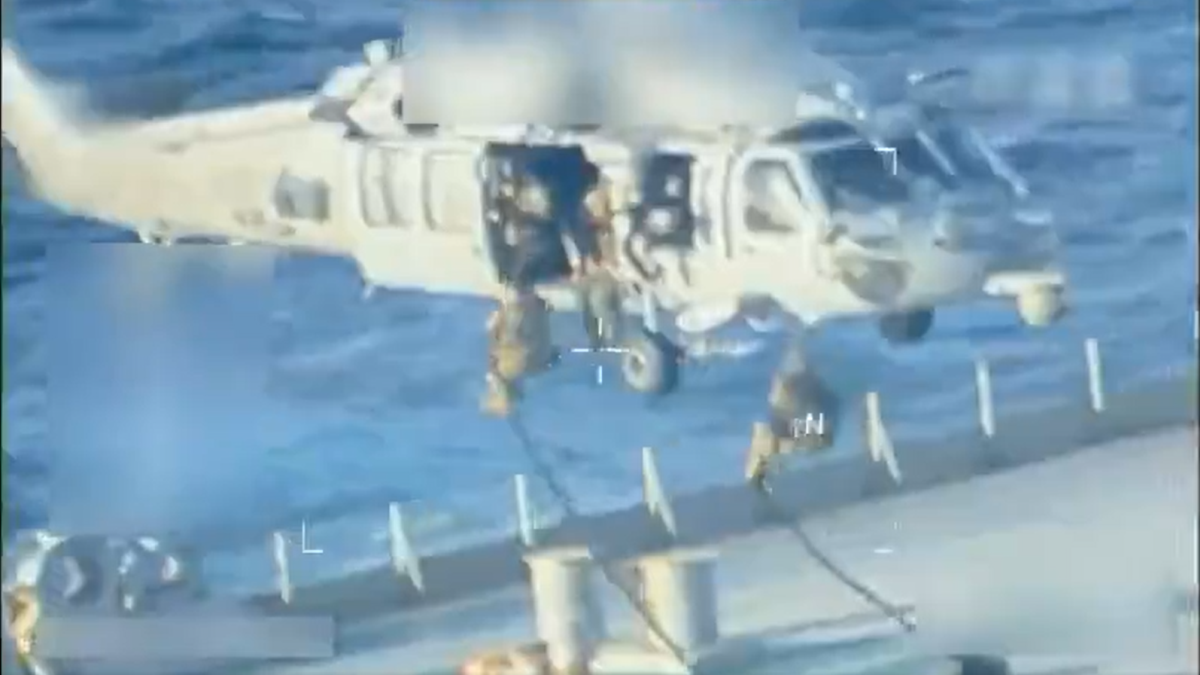
With a US buildup of forces in the Caribbean Sea off the coast of Venezuela in late 2025 and the capture and extradition of the country’s disputed leader Nicolás Maduro in the early days of 2026, US military agencies have engaged in combined efforts to stop and seize tankers with a history of involvement in trading sanctioned Venezuelan oil.
In its procedures to justify the interdiction of merchant ships, the US appears to have been consistent thus far, filing requests asking US federal district courts to issue seizure warrants for targeted vessels based on civil forfeiture, a process under US domestic law that allows law enforcement officers to strip assets from people or entities suspected of involvement in crime or illegal activity. Under civil forfeiture, the suspected person or entity does not have to be charged with a criminal offense for assets to be seized.
The sources cited in the Reuters report indicated that US seizures of sanctioned vessels are unlikely to stop soon, with warrants issued for ’dozens more tankers linked to the Venezuelan oil trade’.
Which vessels and how many requests for seizure warrants are in process in US courts is not known because the filings are kept private and offline based on US federal court policy passed down in standing orders to courts in January 2021 and September 2025. Citing the threat of cyber attacks, the standing orders cover filing, updating and general management of court documents, preventing open publication and public access to files that are deemed highly sensitive or restricted. The rationale for the policy to restrict access to documents, including those requesting seizure of sanctioned vessels, according to the Executive Committee of the Judicial Conference of the United States, is to "protect highly sensitive documents that, if obtained without authorisation and improperly released, could cause harm to the United States," and other related parties.
Despite maintaining secrecy around government warrant request filings, the US District Court for the District of Columbia in Washington, DC, has made public two redacted court orders approving seizures of tankers later carried out by US forces.
Under the order of US Magistrate Judge Zia M Faruqui, the court unsealed a redacted version of Case No. 25-sz-50, ’In the Matter of the Seizure of the M/T Skipper with International Maritime Organization Number 9304667’. In the document, Judge Faruqui ’commanded’ ’any authorized law enforcement officer’ to seize the vessel, the first Venezuela-linked tanker seizure that US forces undertook.
According to the judge’s summary, the seizure was authorised on 26 November, 2025 and took place on 10 December in international waters, just before the two-week deadline for action imposed in the order expired.
"You are commanded to execute this warrant and seize the property on or before [10 December 2025] at any time in the day or night because good cause has been established," the judge’s order said.
Part of the order requires ’an officer present during the execution of the warrant’ to prepare an inventory ’of any property seized’. The inventory pages of the order for Skipper’s seizure are blank, but trade intelligence firm Kpler said in a post on its LinkedIn social media page that the operation to seize the tanker followed "satellite evidence that it covertly loaded 1.1M barrels of sanctioned Merey crude from Venezuela’s Jose terminal". Similarly, ship-tracking software firm TankerTrackers surmised on social media platform X that "all in all, the US Coast Guard has seized 5 tankers and 6.15M barrels in the span of a month, with the oil valued at over $300 million".
In the case of VLCC Skipper’s seizure, a supplementary 27-page ’Affidavit in support of seizure warrant’, which would be a written set of evidence or rationale from law enforcement or government attorneys to establish a probable cause for the seizure of the vessel, is entirely redacted.
The seizure of vessels and their cargoes represents an escalation as compared to actions taken by the US and its allies in recent years against vessels alleged to be carrying sanctioned Iranian crude.
Another expansion of previously uncrossed political boundaries has been seen in the first seizure of a Russia-linked vessel in a joint operation involving UK airbases and reconnaissance flights. The seizure took place after the vessel sought to protect itself by claiming to have reflagged under a Russian registry while transiting the North Atlantic, a move prohibited under the UN Convention on the Law of the Seas.
The seizure of the 318,500-dwt VLCC tanker Bella 1, after it had purportedly reflagged and renamed itself Marinera, on 9 January 2026, is the other US military operation addressed in redacted documents released by the US federal district court in Washington, DC.
In the unsealed documents of Case No 25-sz-56, US Magistrate Judge Matthew J Sharbaugh set a deadline for execution of the warrant for seizure of Bella 1 of 13 January 2026, which the US government actioned following a lengthy chase from the Caribbean to the North Atlantic to capture the vessel.
The name-changing VLCC was captured by US forces in the North Atlantic following an initial attempt by the US Coast Guard to board the vessel, according to ship tracking databases, after taking a U-turn to avoid Venezuela in the wake of a US military buildup in waters around the Central American country.
The US military’s European Command said on social media platform X (formerly Twitter) that the seizure of VLCC Bella 1 was due to the vessel violating US sanctions.
Again, in the court documents on the seizure, the inventory was blank and the affidavit in support of the granting of a seizure warrant for the vessel has been redacted in full. The vessel was reportedly not carrying oil at the time of its capture.
Prior to Bella 1’s capture, US Attorney General Pam Bondi claimed on X that the vessel had carried sanctioned oil cargoes from both Venezuela and Iran as part of a "sanctions evasion network responsible for supporting foreign terrorist organisations" and that crew members could be subject to criminal charges.
"As a consequence of failing to obey the Coast Guard’s orders, members of this vessel are under full investigation and criminal charges will be pursued against all culpable actors," she wrote.
Ms Bondi said the Department of Justice is monitoring ’several other vessels for similar enforcement action’.
"Anyone on any vessel who fails to obey instructions of the Coast Guard or other federal officials will be investigated and prosecuted to the fullest extent of the law," the US Attorney General’s post said.
Pentagon spokesperson Sean Parnell said on X on 10 January that several ’dark fleet oil vessels’ have rerouted away from Venezeula "to avoid interdiction".
"The Department of War, alongside our interagency partners, will hunt down and interdict ALL dark fleet vessels transporting Venezuelan oil at the time and place of our choosing," Mr Parnell’s post said.
While US forces have been commandeering vessels, US President Trump first used the Department of the Treasury’s Office of Foreign Assets Control (OFAC) to expand sanctions on Venezuela-linked VLCCs. The US President then used social media to announce a blockade on oil exports from Venezuela. Later, upon removing Venezuela’s head of state, Mr Trump said the US “would run Venezuela ‘for a period of time’” while keeping elements of the Maduro regime in power and promising to work with the country and oil majors to develop Venezuela’s ageing oil infrastructure. Shortly after, the US began marketing Venezuela’s oil resources on global markets.
Sign up for Riviera’s series of technical and operational webinars and conferences:
- Register to attend by visiting our events page.
- Watch recordings from all of our webinars in the webinar library.
Related to this Story

Events

Maritime Regulations Webinar Week
16 Dec 2025GMT - ONLINEFloating energy: successfully unlocking stranded gas using FLNGs and FSRUs
24 Feb 2026GMT - ONLINE
© 2024 Riviera Maritime Media Ltd.


