


Business Sectors
Events

Floating energy: successfully unlocking stranded gas using FLNGs and FSRUs
 24 Feb 2026
 GMT - ONLINE
Contents
Translating first-mover advantage into market dominance
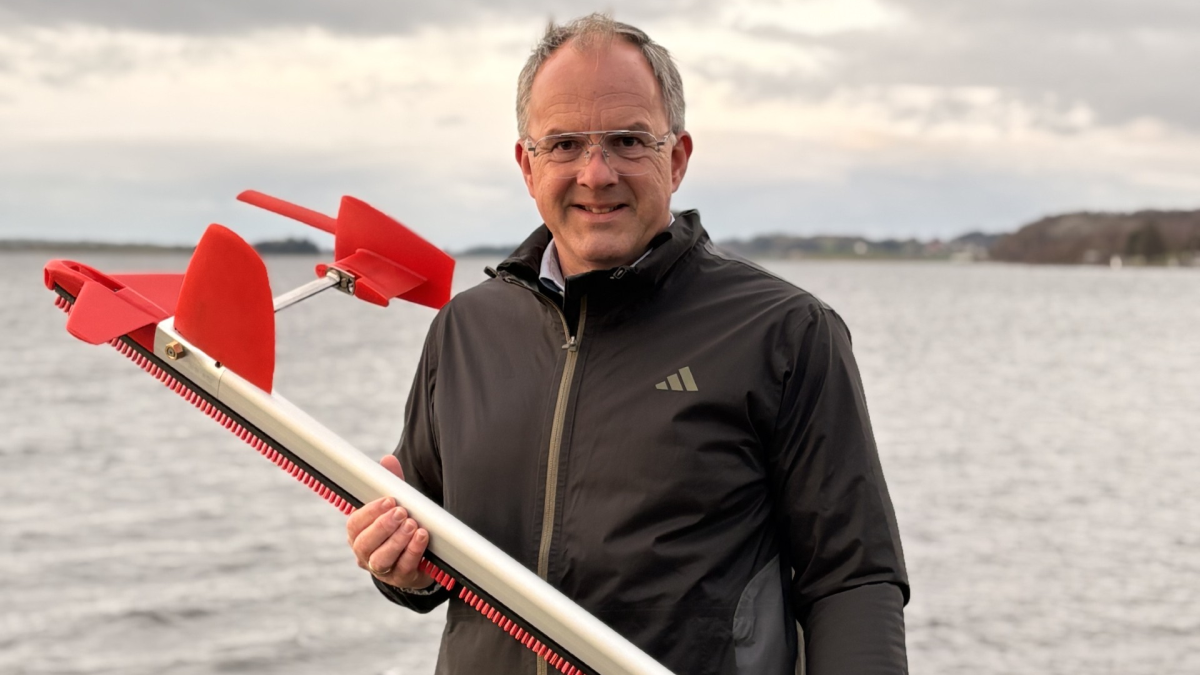
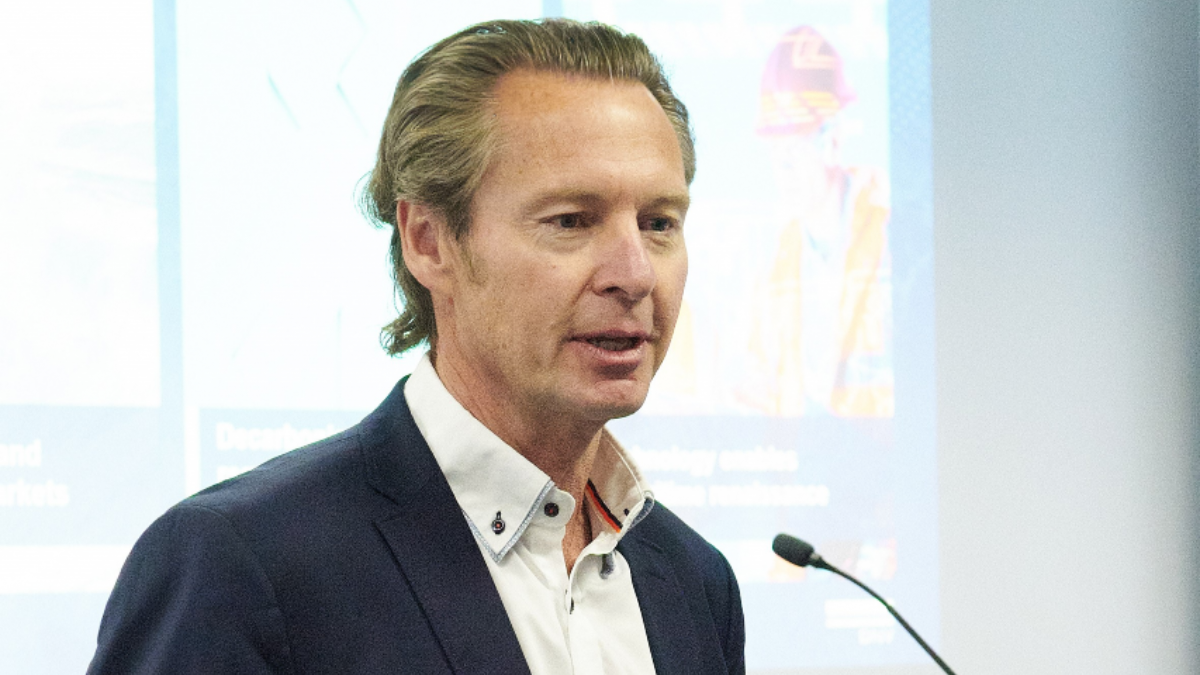
Six months into his role as chief executive of Stavanger-based Shipshave, Kim Diederichsen is driving an ambitious expansion of the company’s innovative hull-cleaning technology


Shipshave is the company behind the ITCH system, a semi-autonomous robot that cleans ship hulls while vessels are in transit. With 150 systems deployed and having reached Technology Readiness Level 9, Mr Diederichsen fervently believes the timing is right to transition from first mover to market leader.
He brings serial scale-up credentials to the challenge. As chief executive of Anemoi Marine Technologies, he grew the wind propulsion specialist from a conceptual prototype to a market leader, relocating production from Britain to China while establishing global agent and partner networks. Previously, he shepherded Danish company Bawat from early-stage water treatment technology to a Nasdaq OTC listing, securing SEED, venture capital and EU grants supporting technology development, type-approval and business growth. He also spent six years in the United States commercialising Remora, a deepwater dynamic positioning technology.
Shipshave’s technical proposition centres on crew-operated proactive fouling management rather than reactive port-based intervention. The semi-autonomous ITCH system is launched from a portable forecastle winch and uses water pressure to stay in contact with the hull as it moves along vertical sections, where fouling most often builds up and reduces vessel performance. An integrated camera enables monitoring and post-operation inspection, with operations viable in sea states up to 3 m.
"The whole point is that it can be operated directly by the ship’s crew, unlike other technologies that require specialised personnel for deployment," Mr Diederichsen explained, drawing on his master mariner background. Deploying equipment over the side while underway can trigger some initial hesitation. But according to Mr Diederichsen, this is quickly overcome thanks to the system’s user-friendliness and robust support. Shipshave also deploys five-person operations teams to deliver onboard training, hands-on demonstrations and remote support.
Typical cleaning takes place every two to three months, adjusted for hull coating, operations and environment. This avoids operational burdens while halting slime before it hardens into barnacles that demand mechanical removal. For vessels with existing fouling, added barnacle rollers crush growth before standard brush cleaning. A growing number of paint manufacturers are endorsing Shipshave’s in-transit method.
"Vessel operators are now moving ahead with fleet installations, signalling that we’ve reached a real inflection point," said Mr Diedrichsen. Documented performance data from major implementations demonstrates compelling economics. Hapag-Lloyd’s DNV-verified assessment covering 17 months across an 8,749-TEU and 18,800-TEU vessel showed fuel savings reaching up to 16% on one unit (8.4 tonnes daily) with ROI under one month. Klaveness Combination Carriers reported 2%-5% efficiency improvements across fleet pilots, while Stolt Tankers expanded wider fleet uptake following fuel savings of more than 10% from initial trials on a few vessels.
Operational expenditure compares favourably with drydock diversion, off-hire deviation to approved ports, or any ROV-based alternatives requiring stationary vessels or specialist mobilisation, he added. For example, the system can cater for a Handysize bulker’s vertical area in five-hour operations while underway, eliminating scheduling disruption while maintaining CII compliance without reducing speed.
Shipshave’s scaling strategy prioritises immediate system availability. Production operates to stock rather than order, enabling same-day fulfilment from Norwegian headquarters. Inventory is also held in Singapore and Athens. System supply relies on partners and inhouse production, with the company maintaining several hundred square metres of Stavanger facilities housing R&D facilities. Recent agent agreements in Germany, Cyprus and Hong Kong now complement its direct presence in Singapore, Greece and the Philippines.
Version 3 of the system launches mid-2026, with longer-term programmes targeting challenging hull geometrics, niche areas and further data handling. The company’s founder, Rune Freyer, a Norwegian serial entrepreneur, remains actively engaged in supporting technical and operational aspects. “We’ll eventually face direct competition, but the barriers to entry are high,” said Mr Diederichsen. “The challenge, or rather opportunity, for us, is using our first-mover advantage and positioning ourselves as the preferred go-to partner."
Sign up for Riviera’s series of technical and operational webinars and conferences:
- Register to attend by visiting our events page.
- Watch recordings from all of our webinars in the webinar library.
Related to this Story

Events

Maritime Regulations Webinar Week
16 Dec 2025GMT - ONLINEFloating energy: successfully unlocking stranded gas using FLNGs and FSRUs
24 Feb 2026GMT - ONLINE
© 2024 Riviera Maritime Media Ltd.


