


Business Sectors
Events
Offshore Support Journal Conference, Middle East 2025
 09 Dec 2025
 DUBAI
DUBAIContents
Register to read more articles.
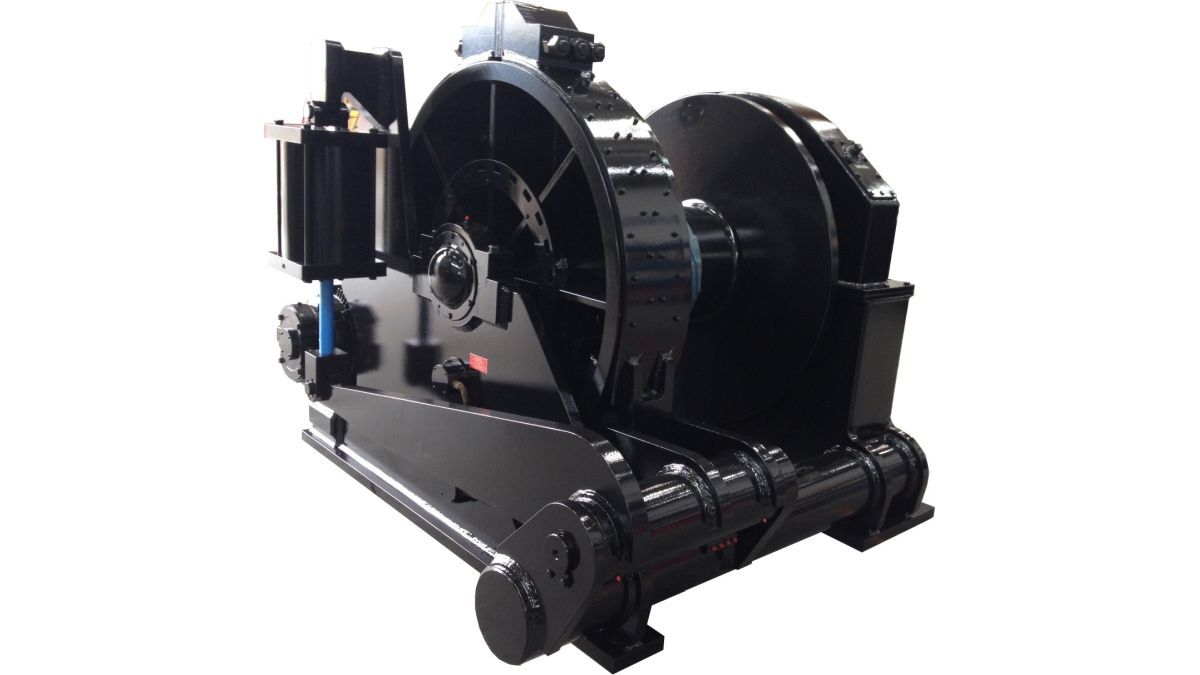
Winch design becomes crucial to towage safety
In close-quarter ship escorting, having flexibility in the towing angle reduces the probability of an accident, while electric winches have environmental benefits over hydraulic winches


When selecting a winch, its position and power system is important for safer handling, towage and escort of vessels.
Choosing the wrong type of tug or towing system, or operating them incorrectly, has led to numerous accidents over the years with the loss of tugboats and damage to ships, coastal and port infrastructure and the environment.
A tragic case occurred on the River Clyde in Scotland on 24 February 2023, when twin-screw conventional tug Biter girted and capsized while attached to the stern of passenger vessel Hebridean Princess, which was making its approach to James Watt Dock, with the loss of two crew members.
The UK’s Marine Accident Investigation Branch discovered the passenger vessel’s speed placed a significant load on the tug’s lines, causing the gob rope to render, the tug to girt and then rapidly capsize.
In another recent example, towing vessel Baylor J Tregre sank on 13 May 2024 when severe weather in the Galveston area of Texas placed a greater strain on a towing line, leading to this 1997-built, 20-m tugboat capsizing and sinking, with enough time for crew to be rescued.
According to Markey Machine president Peter Roney, close-quarter ship escorting and having flexibility in the towing angle reduces the probability of an accident. This involves using escort tugs in a designed tether to prevent an avoidable accident and increasing an escort tug’s ability to produce more steering force.
Optimally positioning the winch and tug enables a master to gain mechanical advantage and reduces the moment between the tug’s tow point and pressure point.
This means a master can use less tug power and energy to achieve the same results compared with using a conventional system.
President of Markey Machine’s JonRie division, Brandon Durar, says optimally positioning the escort winch and a flexible angle enables the whole tugboat to work together for enhanced safety.
Ensuring a maximum rotation angle of the towing line from the winch means masters can select the safest angle for ship escort.
“The safest way to assist tankers and large container ships is by tethering the tug to the stern of the vessel so the escort tugs could act quickly with emergency steering in case of a rudder failure,” says Mr Durar.
The two most popular modes used to steer a tanker are indirect towing and powered-direct towing. In indirect towing, the escort tug is dragged through the water, generating steering forces, while in powered-direct towing, the tug actively applies force to assist vessel manoeuvring. “Both methods introduce a heeling risk, which must be mitigated through design improvements,” Mr Durar says.
While the conventional placement of an escort winch remains aft of the tug’s staple, new designs, such as the carrousel system, shift the pressure and tow points. “This prevents excessive heeling, increases steering forces and enhances safety by distributing forces more effectively,” says Mr Durar.
JonRie developed a patented escort winch system that enhances tugs using a two-plane mechanical advantage with the tug’s bow winch as the tow point. “This auto-position escort winch system increases line pull and steering force, enhances safety in restricted waters, and rotates towards the line of force for optimal efficiency,” Mr Durar explains.
Other advantages are the winch turns towards the line of force, the moment decreases, reducing the heel angle for the same line pull, and when the staple moves to the side of the tug, the line angle will create a lift on the tug which increases stability.
In addition, the whole winch and staple, or tow point, rotate on the bow of the tug, thus reducing the side loading on the winch and level wind.
“Based on conceptual calculations, this system will increase towline forces by 25% and reduces a tug’s heel angle by as much as 40%,” says Mr Durar. “This system works along with the tug and enhances the tug’s performance and safety.”
Sign up for Riviera’s series of technical and operational webinars and conferences:
- Register to attend by visiting our events page.
- Watch recordings from all of our webinars in the webinar library.
Related to this Story

Events
Offshore Support Journal Conference, Middle East 2025
09 Dec 2025DUBAI
Maritime Regulations Webinar Week
16 Dec 2025GMT - ONLINE
Maritime Decarbonization Conference, Americas 2026
22 Jan 2026HOUSTON
Offshore Wind Journal Conference 2026
02 Feb 2026London
© 2024 Riviera Maritime Media Ltd.


