


Business Sectors
Business Sectors
Events
Contents
Maritime Hybrid & Electric 2025: turning problems into profits


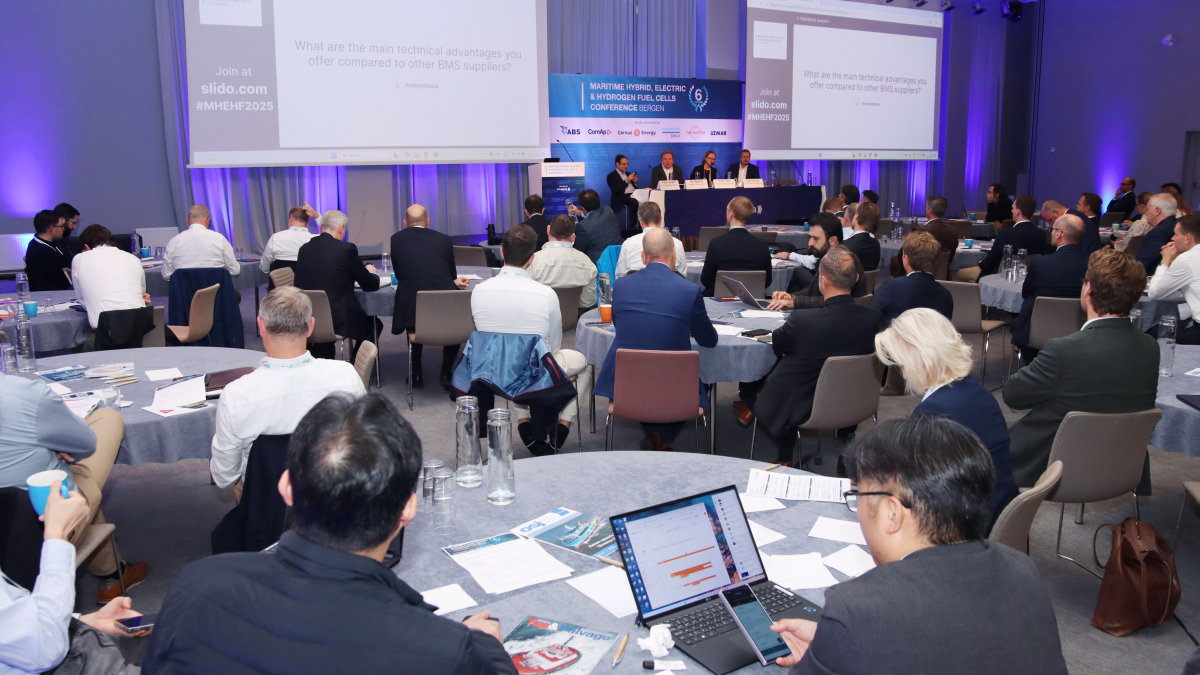
A clear picture of a sector poised for transformation emerged at Riviera’s Maritime Hybrid & Electric 2025 conference in Bergen.
DNV’s Arnstein Eknes outlined an ambitious trajectory for maritime fuels. Complementing this, Jan Emblemsvåg of NTNU spotlighted nuclear propulsion’s unique power potential for long-distance vessels, offering solutions beyond green ammonia’s reach.
There was valuable insight on early infrastructure‑vessel co-ordination from RINA Germany’s Andreas Ullrich, and a noteworthy case of first mover resolve from Gavin Forward of Bibby Marine, which is constructing an electric offshore service operation vessel with a 24.4-MWh battery. Bibby’s phased deployment strategy is already yielding crucial operational data to accelerate future investments and break through industry inertia.
Onshore infrastructure progress featured prominently. Plug chief executive Maria Bos highlighted €55M (US$64M) invested to connect 210 vessels in Norwegian and UK ports, exemplifying scalable shore power deployment and capacity planning. Ports echoed the call for shipping lines to lead with clear, timely demand forecasts, enabling optimised, network-wide investments rather than duplicated spending. The importance of regional collaboration and the ‘bunkering hub’ model were emphasised by experts from Oslo, Bergen and the High Ambition Climate Collective, illustrating how ports worldwide are advancing even amid political headwinds.
The conference progressed from presentations to active problem-solving. Case studies such as Fjordstrand’s Ampere ferry, delivering 10 years of reliable zero-emissions operation, underpinned learning for ambitious projects such as Incat Tasmania’s 41-MWh Francisco ferry targeting 50–75 nautical mile battery ranges. Demonstrating regional momentum, Singapore’s Yinson GreenTech detailed electrification plans for 1,600 harbour vessels completing 50,000 annual port calls.
Arne Brathole from the Norwegian Maritime Authority presented dual-mode suppression proposals, combining inert gas to reduce oxygen below 8% with water-based cooling for batteries exceeding 20-kWh capacity. The proposal generated divergent views with Syb ten Cate Hoedemaker of the Maritime Battery Forum emphasising that differences in approaches allow for the essential discussions needed to find the perfect solutions. In this spirit, the Maritime Battery Forum unveiled a practical co-ordination tool at the conference: an AI-powered EU Battery Passport query platform.
Networking was a fundamental conference pillar. Sponsored breaks and VIP receptions facilitated the crucial multi-stakeholder engagement required to co-ordinate technology, policy and investment. As port leader Nils Møllerup argued, “Someone has to take the leading role”. And pioneers at this event decisively stepped up.
The concluding panel delivered a powerful consensus: technology readiness is no longer the key limiter; co-ordination is. Clarity in fuel demand signals allows ports to invest smartly, enabling classification societies to refine safety and operational rules, which in turn accelerates approvals for new vessels and infrastructure. This virtuous cycle heralds the transition from isolated innovation toward sectorwide transformation.
Delegates left armed with knowledge of deployment timelines, escalating cost efficiencies and partnership prospects crucial to unlocking electrification at scale. For those who missed it, this conference was more than a knowledge exchange. It was the industry’s collective turning point toward commercial-scale maritime electrification and safety advancement.
The next conference will build on this forward momentum. For information on early registration, exhibition and sponsorship opportunities please contact Indrit.Kruja@rivieramm.com.



Comms Navigation






Comms Navigation
© 2026 Riviera Maritime Media Ltd.


