


Business Sectors
Business Sectors
Events
Contents
The APAC CCS value chain is in motion


The scale of the opportunity is staggering
DNV’s Dr Thomas Koller opened with the headline number: to achieve net zero, the APAC region alone needs to capture and store 222 million tonnes of CO2 per year. Of that, 153 million tonnes will need to cross borders by ship. Malaysia, he noted, is positioned to absorb around 90% of that transported volume. That is not a niche market. That is a generational infrastructure opportunity.
Dr Koller was also honest about what is holding it back. "Policy is the single biggest barrier we face today, not technology," he said. Carbon pricing, mandated emissions reductions and long-term demand certainty are the instruments that unlock private capital. Without them, even the most technically ready projects stall at the starting line.
But here is the reframe that matters: the policy gap is closing. Japan has enacted CCS legislation. Malaysia and Indonesia are advancing regulatory frameworks. Australia is operating large-scale projects. The direction is clear. The speed is the variable.
Hard-to-abate industries are ready
Dr Arvind Bodhankar, Chief Sustainability Officer at ArcelorMittal Nippon Steel, brought the industrial emitter’s perspective with rare candour. Steel, cement and petrochemicals produce emissions that cannot be eliminated through electrification or fuel switching alone. CCS is not optional for these sectors. It is the only viable path.
His consortium comprising seven companies including JSW Steel, BHP, Hyundai Steel and Tata Steel, has commissioned a two-phase study mapping twenty potential storage hubs across APAC, with India alone offering an estimated 600 to 620 billion tonnes of storage capacity. The conclusion of phase one is unambiguous: the capture technology is mature, the storage geology exists, and the economic case becomes bankable as carbon prices rise and capture costs fall.
"Capture is not that difficult a technology," Dr Bodhankar said, drawing on four decades experience across fertilisers, steel and cement. What the industry needs now is not more proof of concept. It needs connected infrastructure and a transparent pricing framework. Both are within reach.
The vessel question is close to being answered
The afternoon’s shipping panel was where the day’s most commercially significant detail emerged. Low temperature, low pressure has consolidated as the preferred architecture for deep-sea APAC routes. Japan CCS Managing Director Takashi Kawabata confirmed the world’s first successful CO2 transportation at minus 50 degrees Celsius and 0.7 megapascal, validating the technology that APAC’s long-haul routes require.
The outstanding variable, DNV’s Erik Mathias Sørhaug explained, is not vessel physics. It is CO2 composition specification. Impurity tolerance limits vary between projects and between pressure regimes, and until the industry agrees a common standard, every project risks bespoke, expensive solutions. DNV’s CO2 Spec JIP, launching imminently, is designed to close exactly that gap.
On vessel timelines, the panel was candid. First large-scale APAC newbuilds are realistically a 2028 to 2029 story, not because yards lack capacity, but because emitter FIDs are the prerequisite. As Knutsen NYK Carbon Carriers Chair Anders Lepsøe put it: "We haven’t met any limitations on delivery targets from the yards. It’s the other problem that has the delay." The ships will come when the contracts come.
The floating injection unit changes the offshore equation
MODEC’s Boyd Howell introduced a concept that captured the room’s attention. The Floating Storage and Injection Unit, developed jointly with MOL and awarded approval in principle by the American Bureau of Shipping in 2025, offers something the APAC value chain urgently needs: flexibility.
Unlike fixed onshore terminals, an FSIU can be repositioned between reservoirs as injection sites evolve. It can receive CO2 from multiple carriers simultaneously. It targets an operational cost of five dollars per tonne from reception through to injection. And it requires no large onshore hub, removing one of the most complex planning and permitting challenges from the equation entirely.
For a region where storage sites are offshore, dispersed and still being characterised, that flexibility is not a convenience. It is a commercial enabler.
On-board capture is already working
Shanghai Qiyao’s Dr Harrison Yang delivered what was arguably the day’s most compelling proof point. The world’s first full commercial on-board carbon capture system is not a prototype. It is operating on an Evergreen 14,000 TEU container vessel, capturing CO2 at 99.5% purity, with successful offloading trials completed at Rotterdam, Shanghai and Yangshan Port.
The implication is significant. LCO2 carriers are not merely transport vessels in this value chain. They are potential capture assets in their own right, generating cargo from their own emissions while delivering cargo from shore-based emitters. The economics of that proposition, particularly on long APAC routes where vessels would otherwise return empty, warrant serious commercial modelling.
What the networking produced
Attendees left with named contacts from leading companies actively seeking partners across the full value chain right now. The anonymous digital Q&A platform surfaced questions that would never have been asked with a microphone in hand: injectivity comparisons between depleted reservoirs and saline aquifers, yard-level delivery slot availability, the capital cost differential between tank types at scale.
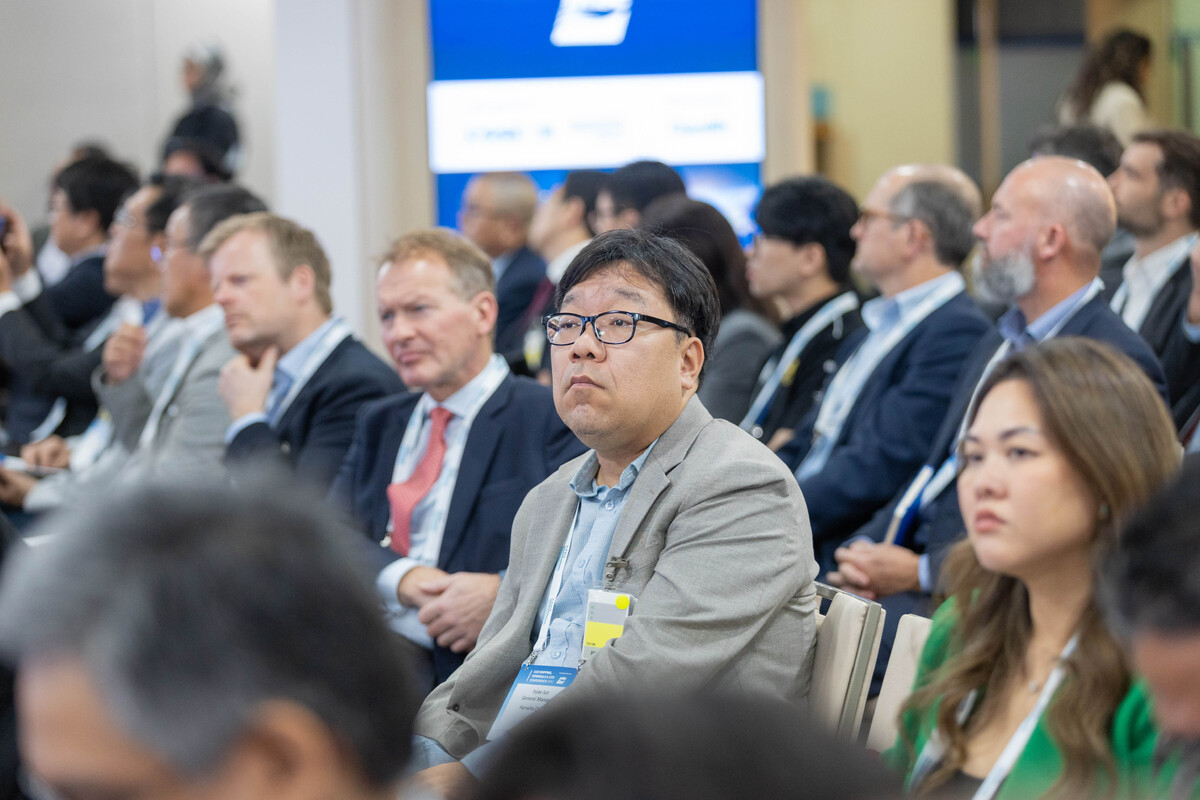
The companies that were in that room on 30 March 2026 left knowing things that their competitors do not about project timelines, preferred vessel specifications, storage site risk profiles and the contractual structures that are emerging to bridge the chicken-and-egg deadlock.
The path forward
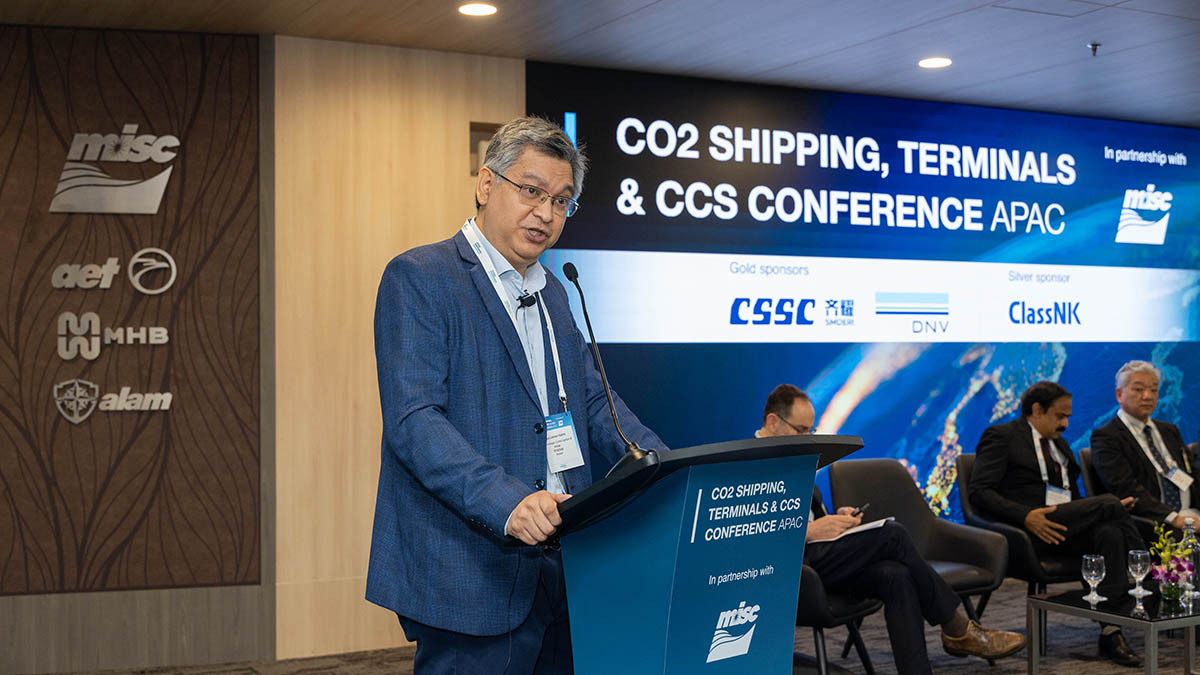
What this industry needs now is exactly what the Kuala Lumpur conference provided: a space where the people responsible for each piece of the jigsaw sit in the same room and talk honestly about what they need from each other.
The next opportunities to join us in that room are fast approaching so register early. The conversations that unfold there will shape the projects defining this decade.
Our CO2 Shipping and Terminals London event takes place on 16 June 2026 from 09:00 to 19:30 at The Tower Hotel in the Tower 2 & 3 Room on St Katharine’s Way London E1W 1LD United Kingdom.
Meanwhile the Ammonia & CO2 Shipping & Terminals Summit follows on 14 September 2026 from 14:00 to 18:00 in Bangkok Thailand in partnership with DNV.
For more information on participation please email ian.pow@rivieramm.com and kym.tan@rivieramm.com



Comms Navigation





Comms Navigation
© 2026 Riviera Maritime Media Ltd.


