


Business Sectors
Events

Floating energy: successfully unlocking stranded gas using FLNGs and FSRUs
 24 Feb 2026
 GMT - ONLINE
Contents
Register to read more articles.
2026 in passenger shipping: a buoyant, multi-fuel orderbook
2026 looks set to be positive for the passenger ship industry – new deliveries, a relaunch of the cruise refurbishment sector and growing demand are all set to be seen this year. Against this backdrop, the cruise and ferry sectors are driving towards decarbonisation, with methanol, solid oxide fuel cell technology and battery power all options


A boost in newbuilds, retrofits and orders
It has taken time for the cruise industry to get back on its feet after the pandemic, but now the orderbook is growing fast, and large retrofit orders are back to pre-Covid levels. As of January 2026, the global cruise ship orderbook consists of 70-75 oceangoing vessels scheduled for delivery over the next 10 years, with a total estimated investment value of US$63Bn. This year will see 14 new ships scheduled to enter service. On the refurbishment side, there has been a growing trend of large interior refurbishments. Cunard has drawn on the design of its newest ship, Queen Anne, launched last year, as inspiration for the revitalised Queen Elizabeth. The 90,400-gt vessel, which launched in 2010, underwent a three-week makeover at Seatrium’s Admiralty Yard in Singapore. Add to that many other refits, including Windstar Cruises’ Wind Surf’s transformation of its common spaces and suites, and there is a trend to ensure older ships keep up with newer vessels. A buoyant demand for cruising will be seen from this year onwards, as according to CLIA figures, 38M passengers are expected for 2025 and 42M by the end of 2028.
The future is electric
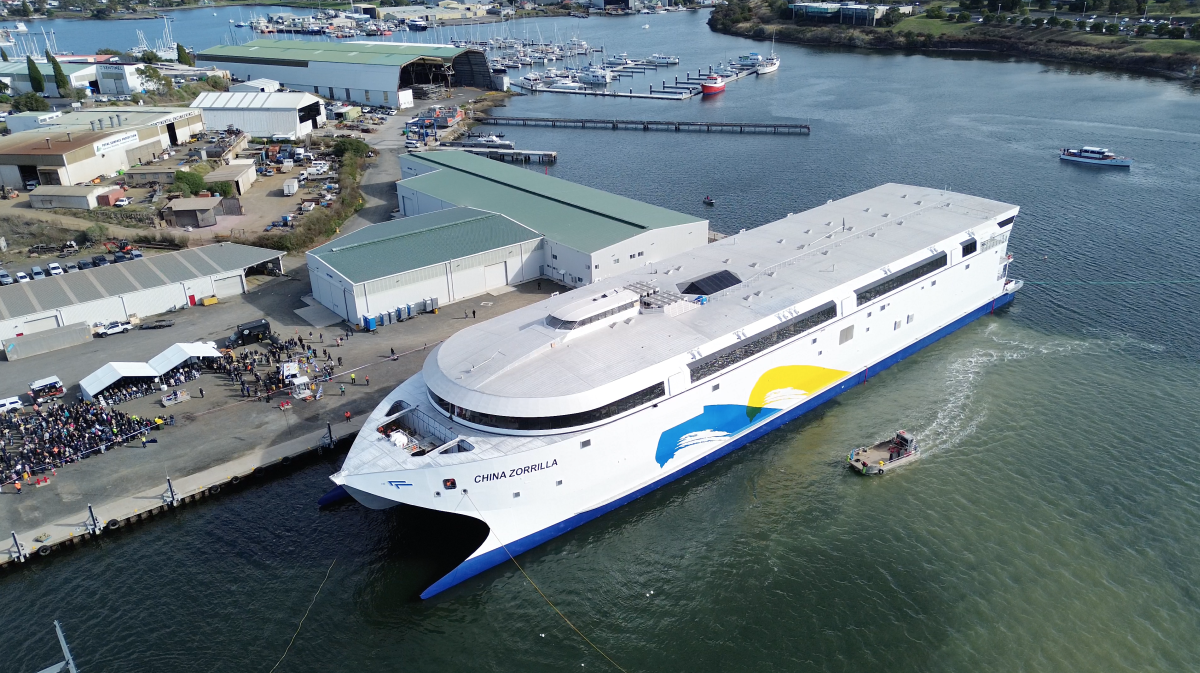
The rise of battery propulsion within the passenger ship industry is gathering pace by the month and is set to be a huge theme for 2026 and beyond. As Interferry chief executive Mike Corrigan told PST recently, batteries are the number one way for the ferry sector to decarbonise. A huge and growing list of projects highlights this, from the world’s largest all-electric ferry currently being built for Buquebus at Incat Tasmania, to Molslinjen’s order for two battery-powered catamarans. And BC Ferries’ large fleet renewal programme is based on electric power. Things are also hotting up in the retrofit sector, with Wasaline undertaking the largest battery retrofit project to date on its hybrid-electric ropax ferry Aurora Botnia. The project will see the marine battery specialist AYK Energy install a 10.4-MWh battery on the vessel.
Enter e-foiling
E-foiling only burst onto the passenger ship scene recently, and there is already a fast-growing list of electric foiling passenger projects – something only set to continue. These include Washington State’s Kitsap Transit, which has received US$5.2M in grants for the design of an all-electric, hydrofoil fast ferry and its shoreside charging infrastructure; the launch of an e-foiler tourism service in New Zealand using a Vessev VS-9; and a nine-month pilot project using Nova, a Candela 100% electric P-12 model hydrofoil ferry. Candela has a fast-growing orderbook, including the first flying ferry in the US, for FlyTahoe; and Belfast-based Artemis Technologies has secured orders for pilot boats and ferries for European operators and the US. Combining speed, comfort and zero emissions, e-foiling technology is especially suited to commuter transport.
SOFC, LNG, carbon capture
Two recent innovative projects highlight the entry of solid oxide fuel cells (SOFC) into the cruise sector. GTT, Bloom Energy and Ponant Explorations Group have announced a joint innovation project to develop an integrated energy system combining SOFC powered by LNG, with marine carbon capture, designed to cover the vessel’s energy needs related to onboard consumption. Elsewhere, cruise operator Havila Voyages is participating in a project to develop technology to capture and store CO2 from LNG-fuelled solid oxide fuel cell power trains. These projects highlight several trends that are likely to further develop. It provides a pathway for LNG-fuelled ships to get to net zero. LNG is widely used by the cruise ship industry, and this could allow these ships to continue using this fuel and potentially reach zero emissions.
Methanol’s rise
The use of green methanol has been rapidly expanding within the cruise and ferry sector, with recent newbuild orders highlighting how important this fuel will be for decarbonising the sector. A major new order highlights this: Grimaldi has ordered nine ’methanol-capable’ ferries, meaning they are ready to use methanol straight away, as opposed to many newbuild orders that are methanol-ready. Of course, there are still issues with supply and distribution, but as more large orders are announced, this can only help the green methanol supply chain to develop. On the cruise side, NCL’s two Prima-plus vessels scheduled for delivery in 2027-28 will also have the option of using methanol; SunStone Ships’ new Boundless-class ships will be designed and prepared for green methanol; and there are seven newbuild orders for methanol-propelled ships on CLIA’s member orderbook.
Sign up for Riviera’s series of technical and operational webinars and conferences:
- Register to attend by visiting our events page.
- Watch recordings from all of our webinars in the webinar library.
Related to this Story

Events
Floating energy: successfully unlocking stranded gas using FLNGs and FSRUs
24 Feb 2026GMT - ONLINE
© 2024 Riviera Maritime Media Ltd.


