


Business Sectors
Events

Floating energy: successfully unlocking stranded gas using FLNGs and FSRUs
 24 Feb 2026
 GMT - ONLINE
Contents
Register to read more articles.

2026 in tug and salvage: electric and methanol-fuelled tugs arrive
Key trends impacting the design, construction and operation of tugboats and towage delivery in the coming years


Emissions reduction and sustainability have risen to top of the agenda in the towage sector, with more tugs being built with batteries for all-electric or hybrid propulsion to lower their environmental impact in ports.
Early adopters are investing in low-emissions tugs with a high bollard pull to secure additional business from environmentally driven shipowners, port authorities and terminal operators. These owners are influencing naval architects, tug builders, engine manufacturers and equipment suppliers to develop technology and designs for the next generation of tugboats.
Tug owners have turned to digitalisation technologies to remotely monitor operations to improve fleet management and safety, and gain experience from semi-autonomous operations, particularly with uncrewed enginerooms.
Meanwhile, owners of key shipping corridors and canals are investing in their fleets to ensure they can handle the larger ships and congestion at global trade choke points, while reducing emissions.
Here are the trends expected to impact the towage sector, tug design, construction and operation, pilotage and port operations in 2026.
Methanol-fuelled tugs enter service
Tug owners striving to reduce pollution from their port operations are exploring alternative fuels.
Biofuels from sustainable resources are a short-term solution for reducing net CO2 from ship handling and towage, with owners trialling biofuel blends with fatty acid methyl ester and using hydrogenated vegetable oil in ports as these emit less pollutants, such as NOx and particulate matter, and are viewed as sustainable.
But in the medium term, prices are rising and competition between vessel owners and other sectors, such as haulage and aviation, means availability will become increasingly limited.
LNG is an option in harbours and terminals where it is readily available, and owners have more experience with this fuels. But the challenges with acquiring and storing LNG may outweigh the environmental and commercial benefits, especially if prices fluctuate.
Methanol also has its challenges, particularly procuring green versions of this fuel. It has half the energy density of diesel, but can be stored as a liquid at ambient temperatures.
The first methanol-fuelled tugs are coming in 2026, with Kotug International and Svitzer awaiting deliveries and sea trials.
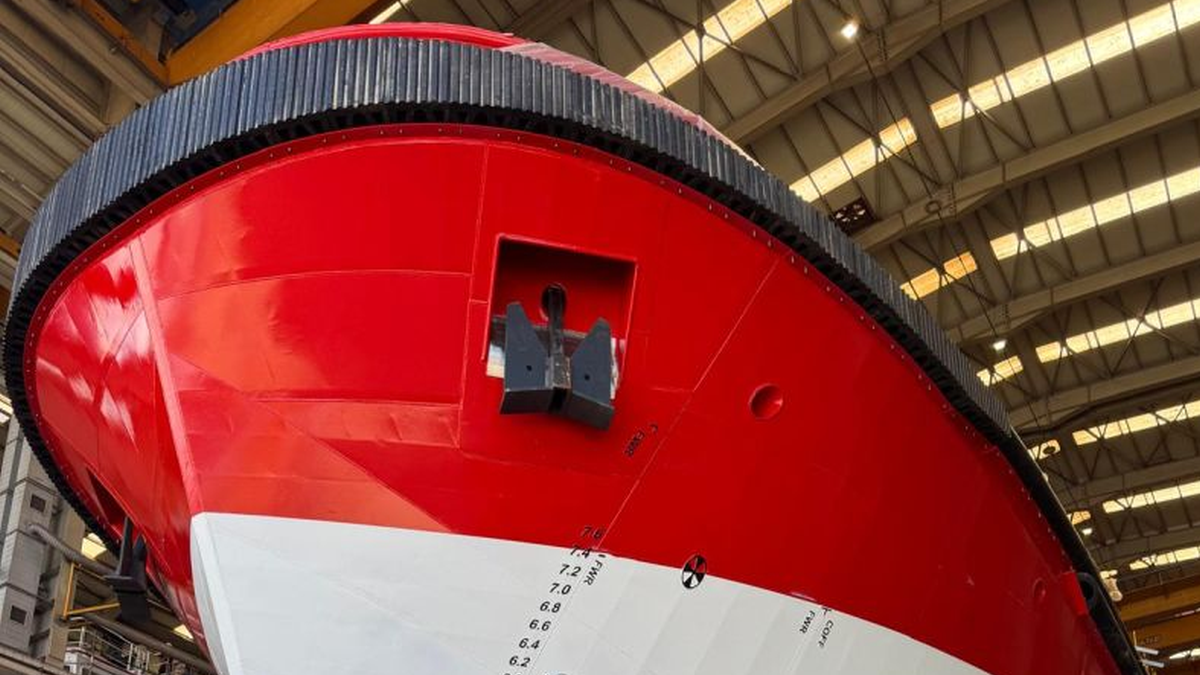
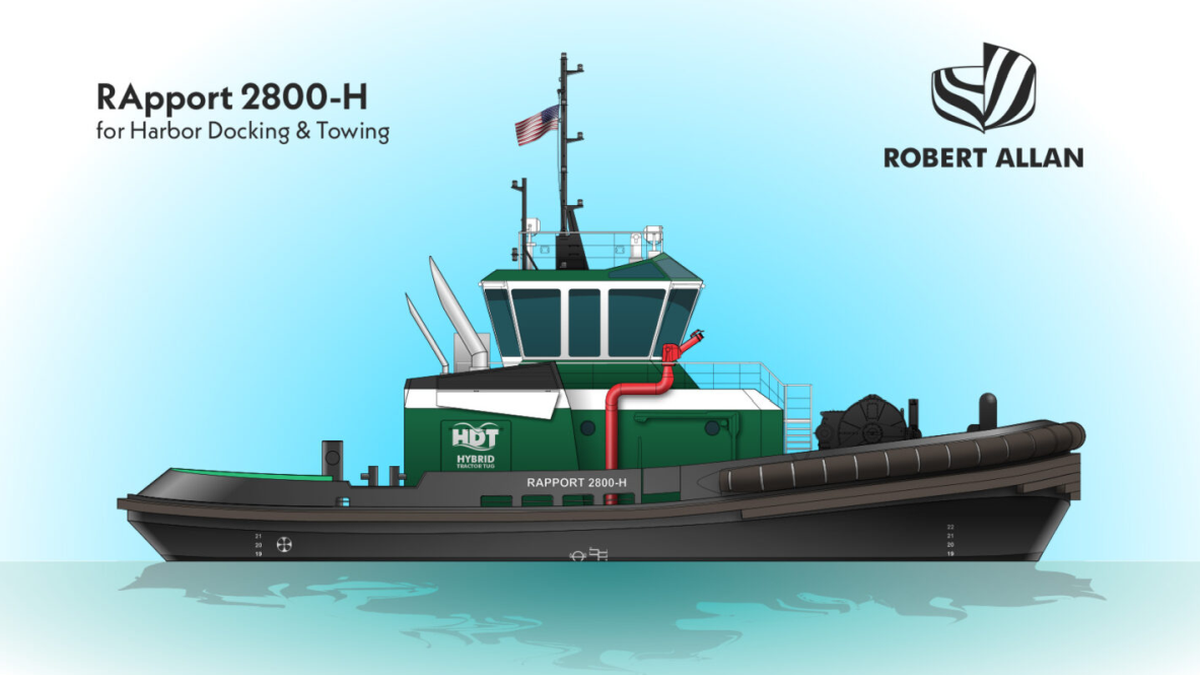
Kotug Canada will operate two newbuild methanol-fuelled escort tugs in British Columbia after their construction by Sanmar Shipyards in Turkey to Robert Allan’s RAsalvor 4400-DFM design.
Also in Turkey, Uzmar is completing the world’s first methanol hybrid-powered tugboat for Svitzer’s operations in the Port of Gothenburg, Sweden. Svitzer is hoping to demonstrate this vessel at Riviera’s 28th ITS Convention in Gothenburg, in May 2026.
If these tugboats demonstrate operational, environmental and commercial benefits, more could be ordered in 2026, but it will be a few years before methanol-fuelled vessel numbers match those using LNG.
Other options for owners are hydrogen and ammonia for zero-emissions towage. While there are two tugboats operating on each of these fuels, there are plans to build more hydrogen dual-fuel tugs, potentially by Damen Shipyards in association with CMB.Tech. Using alternative fuels could be regionalised with availability being a key factor, for example, in Brazil ethanol could become an important fuel.

Electric revolution accelerates
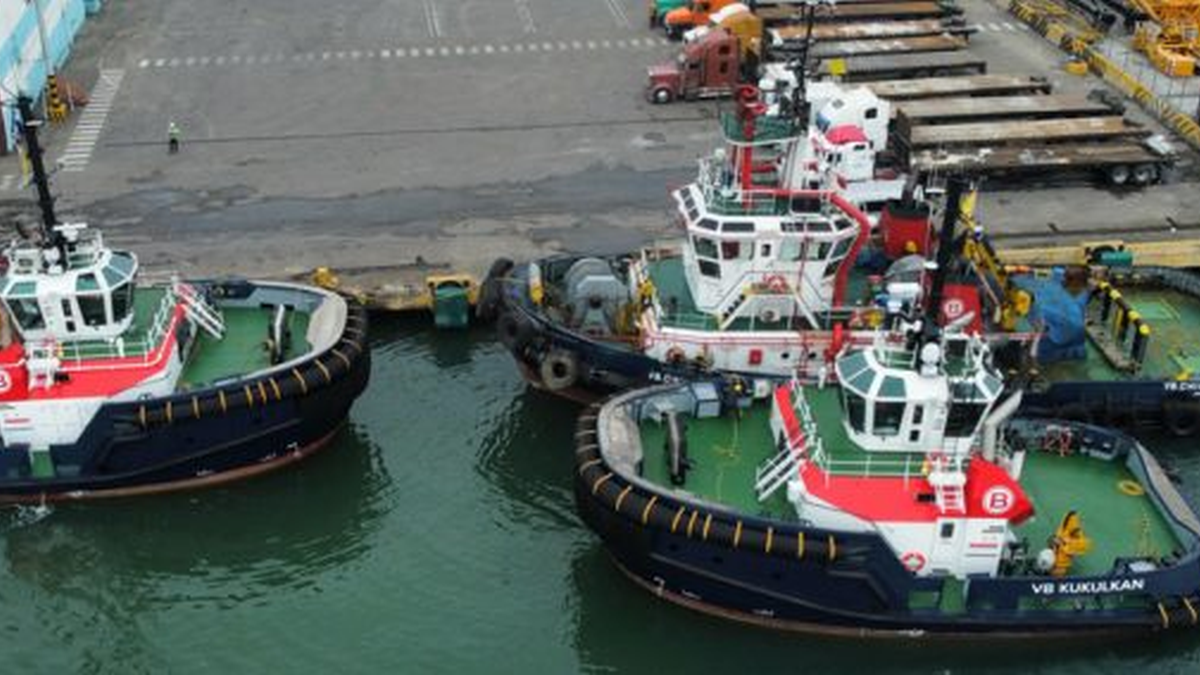
Tug owners are increasingly selecting an electrical pathway to decarbonisation, with new tugs being built with large batteries, and power connections installed on dedicated quaysides.
Shipyards are ramping up the production of electric tugs to provide green solutions to owners and operators of ports and terminals. Further all-electric and hybrid-electric tugs are expected to be built in 2026 as the operational and environmental benefits are further realised and technology developments introduce more efficient chemistries with a higher storage capacity.
In 2025, Sanmar Shipyards delivered several Dinamo-series tugs after their construction in Turkey to Robert Allan ElectRA designs and is completing several others.
Damen Shipyards increased its construction of battery-powered reverse stern drive (RSD) tugs in 2025 and expects to build more in 2026 and to introduce the first electric azimuth stern drive (ASD) tugs.
Armon is building tugboats with battery modules for the Panama Canal Authority, as Spain has become a hotspot for building vessels with hybrid propulsion.
India is emerging as a nation for building battery-electric tugs, with the first due to enter service either in 2026 or 2027. Electric-powered tugs are also expected to be delivered in China, Indonesia and South Korea and potentially Japan in the next two years.
Major powers start to fragment
Market consolidation had accelerated in the towage industry in the past few years, with major players competing to become the world’s largest fleet owner and using their scale to gain terminal support contracts and port concessions.
Boluda Towage’s tie up with Mediterranean Shipping Co and its acquisition of Smit Lamnalco’s Australian operations has pushed this group to the top. In 2025, Svitzer was again swallowed up by AP Moller after just one year of independence, being listed in Copenhagen, Denmark.
A stream of smaller mergers and acquisitions have been announced in regional markets, especially in North America, where there are expected to be more transactions in 2026 in a market consolidation trend.
Elsewhere, most of the big deals have been done and five or six owners hold the bulk of the fleet, contracts and concessions.
This could be the pinnacle of this trend. It is unlikely there will be any huge deals in 2026, although there could be more acquisitions of local actors by the larger groups.
It is more likely some big players will fragment, with local managers and operators taking control of small fleets in harbours or areas taken over by private equity.
AI and smart port technology
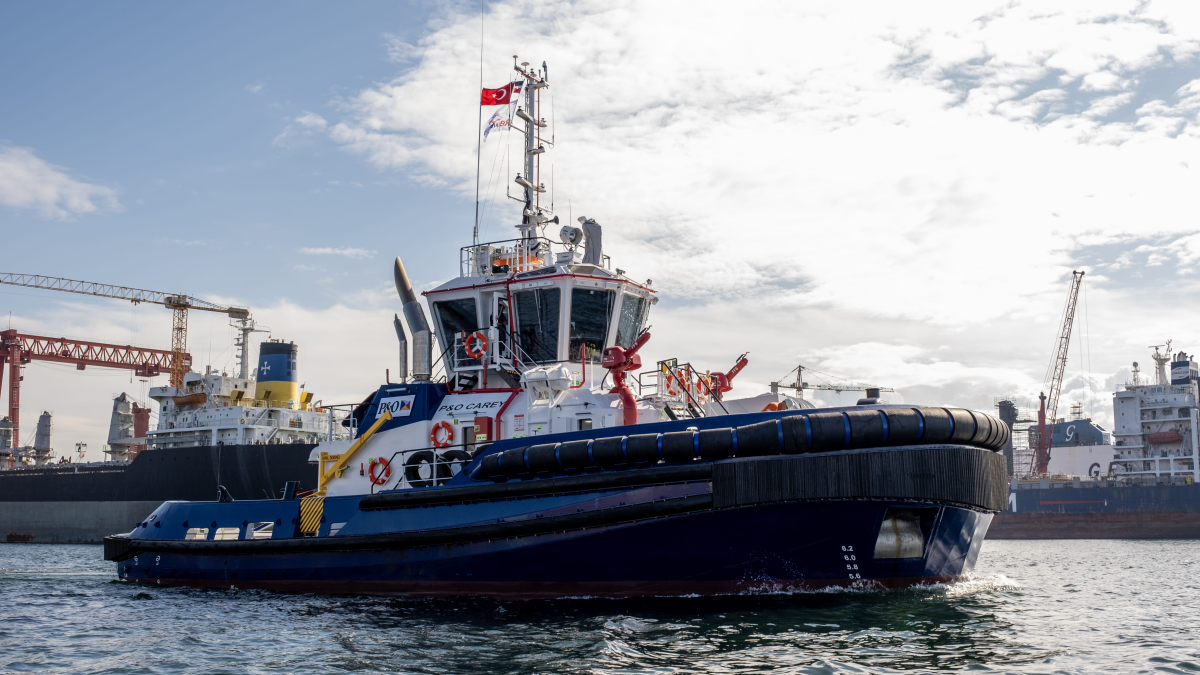
Optimised tug operations, improved fleet scheduling, rising port efficiency and fuel conservation are key benefits achieved by implementing digitalisation across the towage and harbour sectors.
Key to enabling these advantages is using digitalisation to monitor operations and artificial intelligence (AI) to manage and support vessel dispatch and positioning, maritime flow assurance and ship turnarounds, to optimise onboard maintenance and reduce emissions.
Tug owners are increasingly using AI to optimise scheduling, vessel management, cut risks and lower operating costs, with ports using algorithms and autonomous scheduling to tackle congestion by matching tugs and pilots to the exact needs of ships as they arrive and depart from harbours and terminals.
Tug owners are also using internet of things (IoT) platforms to monitor operations, performance, emissions and machinery condition on vessels. With this information, owners can undertake predictive maintenance, minimising the risk of downtime and preventing alerts becoming issues. This is particularly beneficial on battery-powered tugs, where energy management brings advantages.
The rise of low-latency connectivity, such as SpaceX’s Starlink since 2024 and Amazon LEO in 2026, enables tug owners to install satellite communications on vessels for the first time, providing welfare services to crew, and delivering pipelines for sensor data.
Satellite installations planned in 2026 will enable more tugs to become connected for IoT, AI and smart operations, but this also makes them vulnerable to cyber risks.
Canal owners bolster fleets
Infrastructure owners are renewing, modernising and expanding their fleets as they strive to ensure they are ready for two more decades of towage and ship-escorting while also ensuring they have capacity to deal with emergencies.
Authorities operating shipping canals in Egypt and Panama are in the middle of fleet modernisations and expect to take delivery of the bulk of these newbuilds in 2026.
Armon is building up to 20 tugboats in Spain with onboard batteries for hybrid propulsion for the Panama Canal Authority. At least four of these have been completed and are operating in Panama’s ports, with the rest anticipated in 2026. These 29-m tractor tugs have two diesel main engines, each with 2,331 kW of power, supported by a 445-kW battery pack, to drive two thrusters and generate a bollard pull of 80 tonnes.
Hybrid propulsion reduces the amount of CO2 emitted during transits and mobilisations and increases the available power for ship handling and towage. These tugs also have a FiFi1 system to fight fires and enhanced accommodation for crew.
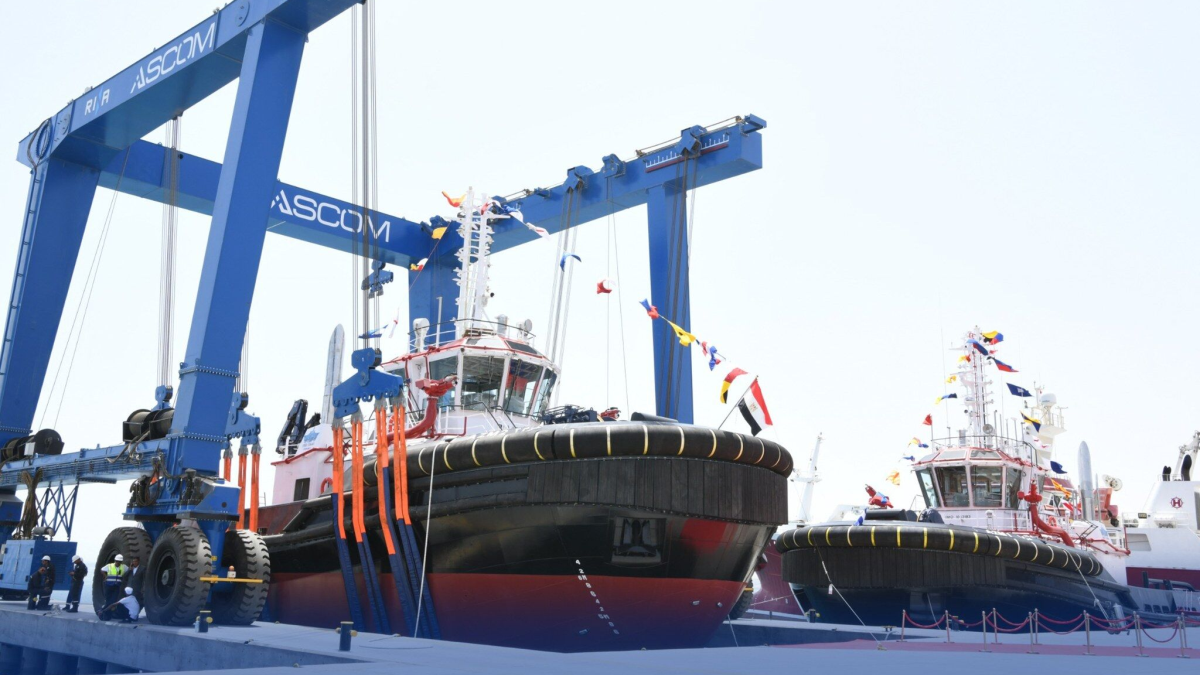
In Egypt, Misr Tugboats Factory, a joint venture between the Suez Canal Authority and the South Red Sea Shipyard, has built the first two tugboats in a major newbuilding campaign for the canal and terminals operator. These vessels represent a significant leap in Egypt’s shipbuilding capabilities and enable the Suez Canal Authority to meet the growing demand for ship escort in the shipping canal and its associated ports.
AZM 1 and AZM 2 are the first two of a 10-vessel building programme. Misr Tugboats Factory is making progress on four other tugboats – AZM 3, AZM 4, AZM 5 and AZM 6 – with hull construction and mechanical and electrical works completed, and commissioning underway. Misr expects to continue deliveries in 2026 and 2027.
Suez Canal Authority also has a large tugboat under construction at Alexandria Shipyard with a bollard-pull capacity of 190 tonnes, which will be the canal authority’s largest tug when delivered in 2026. It will be prepared for emergency response in Egypt.
The 28th International Tug & Salvage Convention, Exhibition & Awards will be held in Gothenburg, Sweden, in association with Caterpillar, 19-21 May 2026. Use this link for more details of this industry event and the associated social and networking opportunities.
Related to this Story

Retrofit fund ties lease payments to performance
Events

Maritime Regulations Webinar Week
16 Dec 2025GMT - ONLINEFloating energy: successfully unlocking stranded gas using FLNGs and FSRUs
24 Feb 2026GMT - ONLINE
© 2024 Riviera Maritime Media Ltd.


