


Business Sectors
Business Sectors
Events
Contents

Register to read more articles.
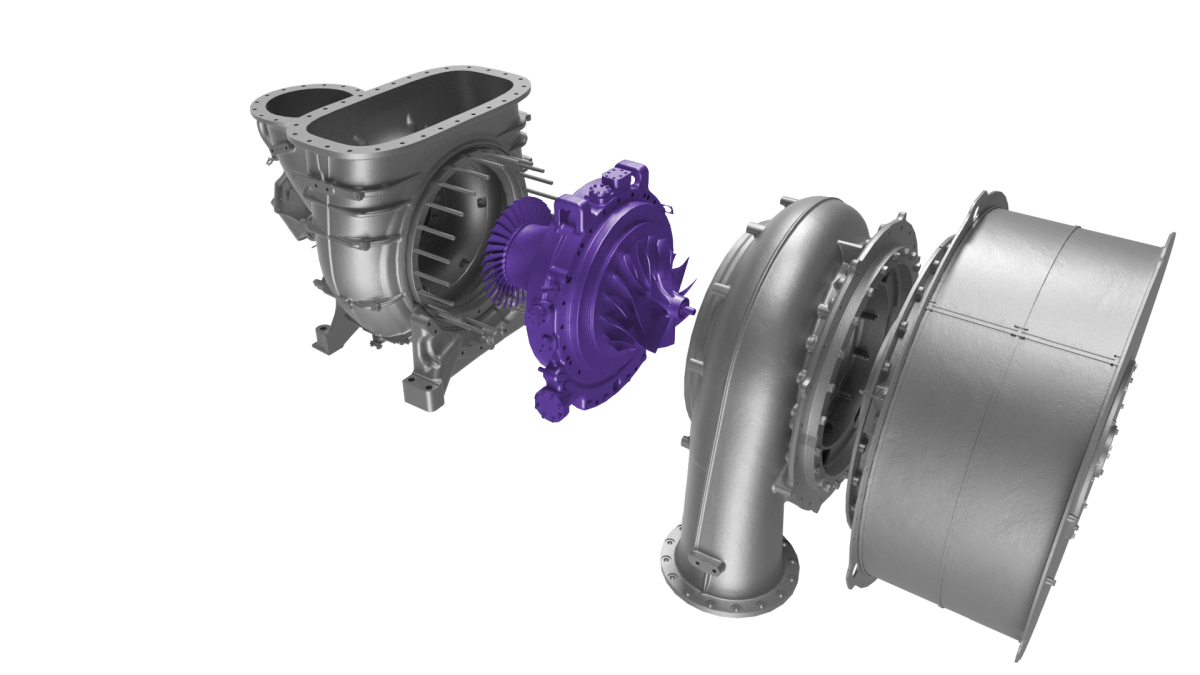
Accelleron targets longevity and flexibility, with removable cartridge
Accelleron aims to reduce maintenance costs with its ACCX300-L low-speed series, allowing owners to swap out cartridges in port to use the blower’s full bearing life


While shipping argues over which fuel will power the next generation of tonnage, Accelleron has concluded that for turbocharging, the question barely matters. The real battle is flexibility, and the Swiss group is redesigning its low-speed range around it.
Because engine builders have chosen dual-fuel rather than mono-fuel routes, the turbocharger is largely insulated from the fuel debate.
Christoph Rofka, president of Accelleron’s Medium and Low Speed Division said during a recent interview with WTG, “there’s no mono-fuel ammonia or mono-fuel methanol,” he continued “they take the diesel as a base concept and from there derive the ammonia or methanol concept. So, there is basically no impact on the turbocharger demand.”
Its turbochargers already run on heavy fuel, LNG, methanol and ammonia dual-fuel engines, and its new editions contain nothing fuel-specific. “So, there we don’t have to bet on something,” Mr Rofka said.
Fuel injection is a different story. Since 2023 the group has owned Turin-based OMT, and injectors must be developed for every fuel: ammonia, methanol, and the diesel pilot that ignites them. That accounts for a good portion of investment.
“When you have droplets, you destroy the wheel”
But demand has not followed. In fact, Mr Rofka puts ammonia injector demand at “almost zero”, and Accelleron is slowing capacity investment. The dual-fuel share of the orderbook, he adds, is falling. His reading of the market is blunt. “The ramp-up of these fuels will be delayed for many, many more years,” he said. “It’s the uncertainty. There’s limited investment right now in producing these fuels.”
Accelleron expects smaller vessels to stay on conventional fuel, with selected ship types choosing LNG dual-fuel. Worldwide bunkering infrastructure for anything more exotic is simply not there yet.
Laboratory tests of seals and bearing materials in very high ammonia and methanol concentrations found no issues, and early inspections on test and first commercial engines showed no impact. As a result, Accelleron has released its turbochargers for both fuels. The reason is straightforward: most of the fuel is burned in the engine. “Of course, you always have slip,” Mr Rofka said, “but the amount ending up in seals and bearings is really low.”
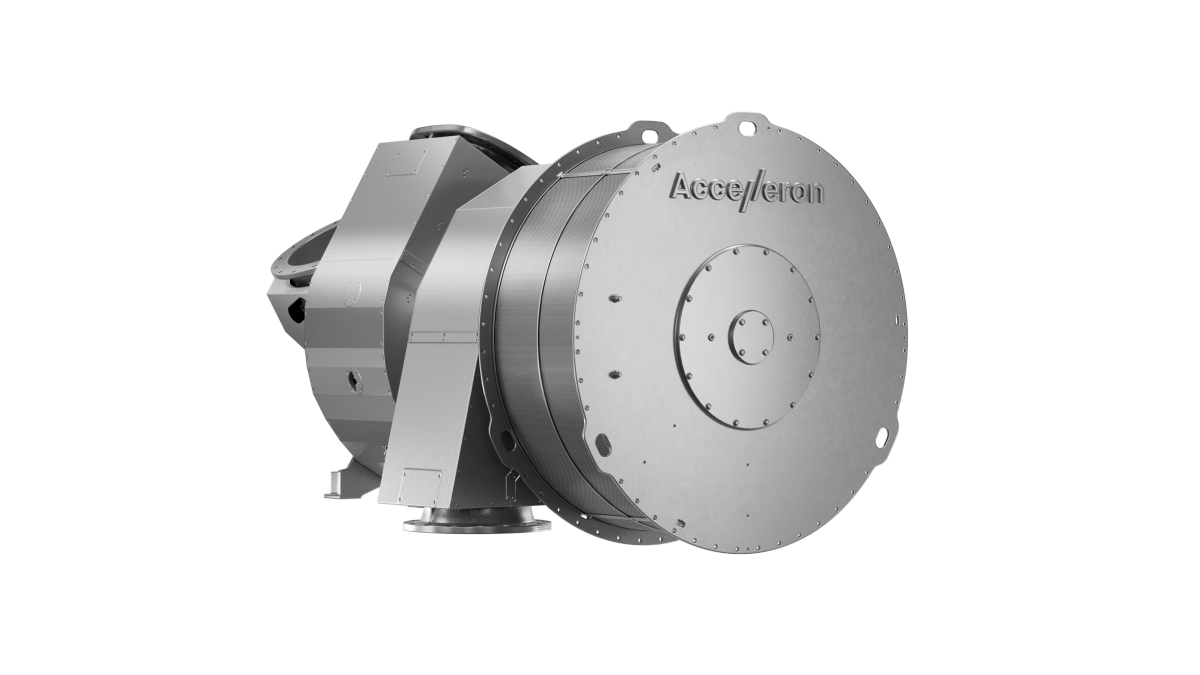
The more challenging problem is LNG dual-fuel engines with low-pressure exhaust gas recirculation, where cleaned, de-watered gas returns to the compressor. Any droplets left are lethal. “When you have droplets, you destroy the wheel,” Mr Rofka warned. Some corrosion appeared at early factory acceptance tests, where insulation and auxiliaries were often poorly installed. After corrective action, it has stabilised in normal service.
Contamination is a further issue. Recirculation in diesel as well as gas mode can result in lube oil residue in the exhaust. So, oil deposits can build on the compressor wheel and previously some rotors have seized. Accelleron is now introducing air sealing to keep critical areas clean.
On ammonia safety, Mr Rofka is clear about where responsibility sits. The safety concept belongs to the engine designer and, ultimately, the shipyard. “We are qualified for oil tightness, but we are not qualified for ammonia safety,” he said.
Early projects bear that out. Accelleron turbochargers are on the vast majority of the first ammonia applications, and the main delays were not down to combustion. “The combustion was great, emissions were great, fuel efficiency was as expected,” he said. “But when it came to leakages, that was a major challenge.”
The real innovation is in maintenance. The central idea of the ACCX300-L low-speed series, first announced in 2023, is a removable cartridge. Accelleron has secured projects involving more than 100 of these turbochargers in the first four months following the platform’s commercial launch in April 2026.
The cartridge combines the bearing casing, rotor and bearings, and is withdrawn from the cold side. Conventional low-speed designs, Accelleron’s included, need the turbine removed from the hot side and the compressor wheel from the cold side before the bearings can be reached.
That means waiting for a hot engine to cool, with the added risk of bolts breaking on the hot side. Mr Rofka estimates an overhaul outside drydock at up to 50 hours, which is why most owners leave it for the five-yearly docking.
“The ramp-up of these fuels will be delayed for years”
The cartridge changes the arithmetic. Bearings often outlast the first drydock interval but not the second. Swapping the cartridge in port lets owners use the full bearing life, reducing scheduled service events from four to three over a 25-year vessel life. The swap is simple enough for crew to carry out. The old cartridge returns to Accelleron’s workshop, where components are dismantled and inspected safely.
That underpins an exchange-pool service model. Overhauled cartridges can move between owners provided the specification matches, and owners may hold their own pools. Operating data, chiefly speed history, will decide whether a cartridge is good for another five to seven years. “Some of it is time fatigue. You don’t see this,” Mr Rofka explained. “You just have to know the exposure.” The approach is long established on large four-stroke V-engines. On low-speed engines it is new, and he says pre-design customer interviews were very positive.
There is a practical ceiling. According to Mr Rofka, port-swappable cartridges suit turbochargers serving up to around 14 MW of engine output. Beyond that, the units become too large to handle in port.
Accelleron is therefore exploring the potential for two smaller turbochargers in place of one large unit. “Historically, no one likes more turbochargers,” Mr Rofka admitted, “but nowadays they are so reliable that the response from end customers was quite positive.”
Twin units also make turbocharger cut-out easier, moving the auxiliary blower switch point to lower loads and delivering tangible fuel savings. That matters as air lubrication and wind-assisted propulsion stretch engines across a far wider load range. Some customers have seen engine load in a strong tailwind fall so low that the auxiliary blower ran continuously, then failed.
Two years ago, Mr Rofka expected mono-fuel ammonia and hydrogen engines to demand a radical turbocharger rethink, given their very different air-to-fuel requirements. He no longer sees that arriving by 2035. Instead, he expects a return to traditional priorities: higher efficiency, higher pressure ratios, greater power density and upgrades for the existing fleet. “Engine builders have spent years, the majority of their R&D budget, on alternative-fuel capability,” he said. “I think they will switch back now.”
Shipping may not yet know what it will burn. Accelleron has decided that the smarter bet is to simplify maintenance and change out!





Related to this Story

Events

Maritime Regulations Webinar Week
 16 Dec 2025
 GMT - ONLINE

Floating energy: successfully unlocking stranded gas using FLNGs and FSRUs
24 Feb 2026GMT - ONLINE
© 2026 Riviera Maritime Media Ltd.


