


Business Sectors
Business Sectors
Events
Contents
Register to read more articles.
Accident report: port engine failure causes US$3M towboat damage
A lack of structural fire protection on a towing vessel in the US was a factor in a catastrophic fire that swept through an engineroom causing US$3M in damage


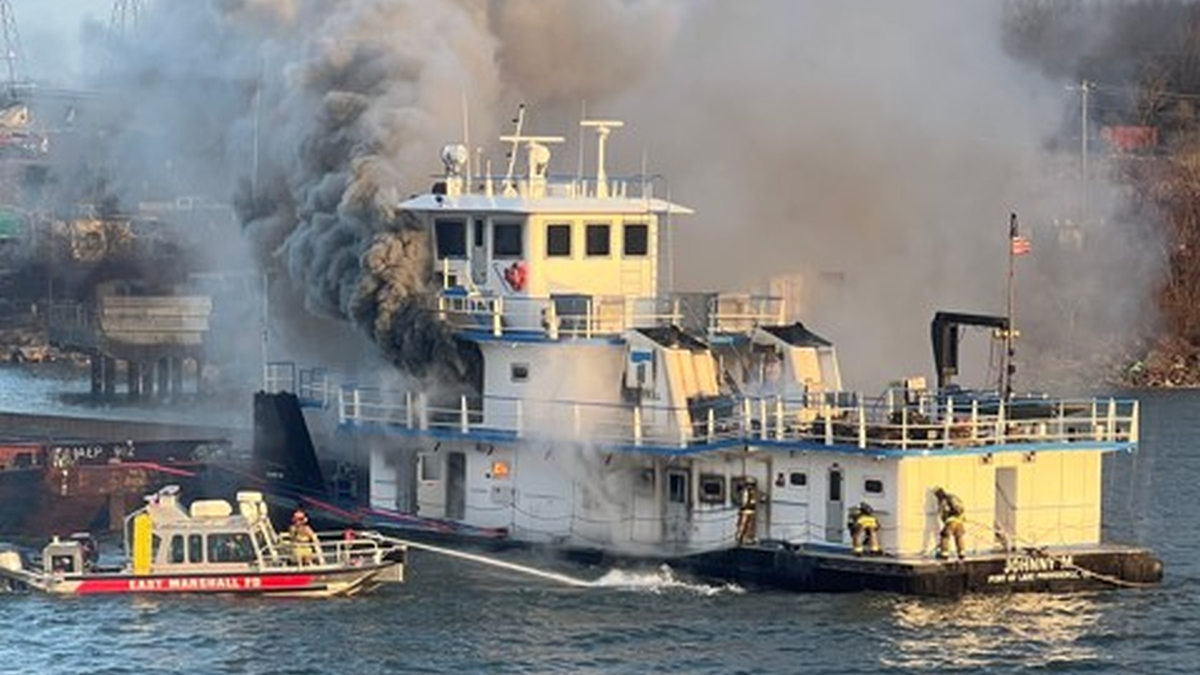
Engine failure led to a fire on a 2009-built towing vessel on the Tennessee River, USA, in January 2024 and caused US$3M in damage.
Accident investigators discovered there was too little protection from fire in the engineroom, leading to its rapid blaze through the machinery room and onto the other decks of the 27-m vessel owned and operated by Terral RiverService.
In its incident report, the National Transportation Safety Board (NTSB) highlighted the importance of ensuring vessels have sufficient structural fire protection on vessels to prevent small fires becoming major infernos. This followed its investigation into the fire, which started on the port engine on 326-gt towing vessel Johnny M on 30 January 2024 as it was transiting the Tennessee River near Grand Rivers, Kentucky.
Six crew members attempted to extinguish the fire in the early hours of the morning but flames, heat and smoke engulfed the engineroom and the CO2 fixed fire extinguishing system was ineffective. Crew abandoned ship to nearby towing vessel Clarence G Frame and fireboats were deployed by local marine fire-fighters. The fire was extinguished and damaged Johnny M was towed downriver to Paducah, Kentucky, for overhaul and investigation.
When US Coast Guard and NTSB investigators went on board they found extensive fire damage throughout all the decks.
In its accident report, the NTSB said its investigators found Johnny M was not outfitted with covers for the main engine combustion air intake openings.
“When the port main engine failed catastrophically, exposed ducting in the engineroom was consumed by the resulting fire, allowing oxygen in and CO2 from the fixed-fire-extinguishing system to escape,” the NTSB said.
The flexible ducting providing combustion air to the main engines on board Johnny M extended from the engine stacks on the main deck down to the engineroom. This ducting did not have any insulation or other barriers, known as structural fire protection, to prevent the passage of smoke, heat and fire.
“This type of unprotected ducting has the potential to provide a pathway for fixed fire extinguishing agents, such as CO2, to escape and air to enter the engineroom if the ducting is compromised by a fire within the space,” said the NTSB in its report.
“Identifying potentially unprotected openings and ducting into a fire-protected space and incorporating structural fire protection can ensure the effectiveness of a fixed fire-extinguishing system and prevent the spread of fire.”
Sign up for Riviera’s series of technical and operational webinars and conferences, including those covering ship communications, vessel optimisation and navigation and cyber security:
- Register to attend by visiting our events page.
- Watch recordings from all of our webinars in the webinar library.


Related to this Story

Events

Maritime Regulations Webinar Week
 16 Dec 2025
 GMT - ONLINE
Floating energy: successfully unlocking stranded gas using FLNGs and FSRUs
24 Feb 2026GMT - ONLINE
© 2026 Riviera Maritime Media Ltd.


