


Business Sectors
Business Sectors
Events
Contents

Register to read more articles.
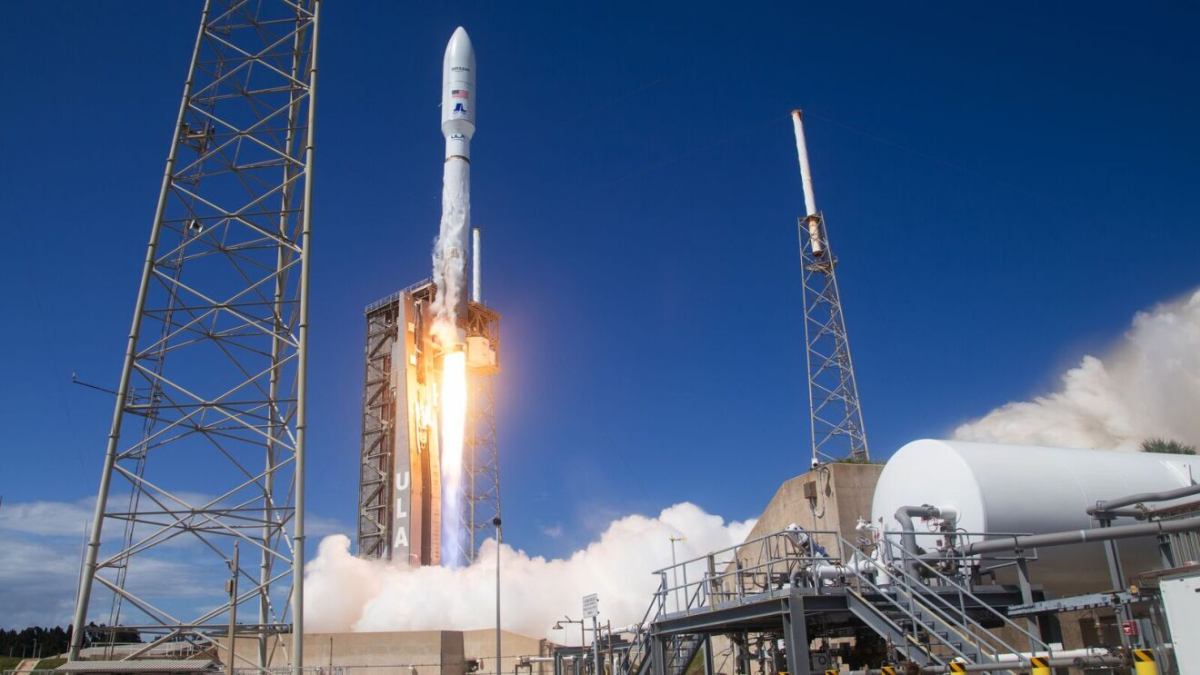
Amazon gains FCC approval, builds distribution network
A new low Earth orbit constellation will be constructed by 2035 after approval from the US Federal Communications Commission, to bring faster connectivity to ships


Amazon has gained approval to expand its planned constellation of low Earth orbit (LEO) satellites, as distributors are signed up to deliver connectivity to the global market.
The US media group has launched and commissioned 150 satellites for its LEO constellation to date, and plans to have 3,200 launched in the first phase. Global connectivity will be provided across the world’s oceans when this is completed.
On 10 February, Amazon secured approval from the Federal Communications Commission (FCC) for another 4,500 satellites, to bring its total to 7,700 orbiting assets.
Amazon said the additional satellites will enable it to deploy more frequency bands of radiocommunications and extend its geographic coverage.
The FCC stipulated that 50% of the approved satellites must be launched by February 2023 and the remaining half by 2035.
Amazon has until July 2026 to deploy 1,600 satellites according to an earlier FCC deadline, which it is struggling to achieve, leading to it requesting an extension from the commission.
It intends to rival other LEO satellite constellations, gain market share from SpaceX Starlink and Eutelsat OneWeb, and compete with geostationary satellites for shipping connectivity.
Arianespace is set to launch the next 32 Amazon LEO satellites into orbit, from Kourou in French Guiana, in mid February.
Each satellite is built at Amazon’s manufacturing facility in Kirkland, Washington, and shipped to a dedicated processing facility in Cape Canaveral, Florida, before travelling onward to Arianespace’s launch facilities.
Amazon is now preparing its distribution network for LEO connectivity in the maritime sector.
MTN and Elcome have been signed up as authorised resellers, enabling them to distribute Amazon LEO to the maritime, yachting, offshore, fishing, cruise and ferry sectors.
The low latency and fast speeds of Amazon LEO will enable real-time applications, telemetry, remote operations and hybrid network architectures.
Vessels will be able to communicate with these satellites when hardware, such as Amazon Leo Pro and Leo Ultra terminals, is installed.
“Customers on the open seas will have the ability to power critical technology, using our antennas designed to operate seamlessly in challenging maritime environments,” said Amazon LEO head of global business Trevor Vieweg.
“Amazon LEO technology will help transform how vessels communicate, operate, and integrate with their shoreside networks.”
Mr Vieweg added, “Using our low-latency satellite network, maritime customers will gain real-time communication capabilities that enable everything from enhanced crew welfare to advanced vessel tracking, remote diagnostics and seamless integration with shore-based operations."
Connect with industry leaders across the Asian and Middle Eastern maritime sectors through Riviera’s premium events. Located conveniently in Singapore, we provide unparalleled access to the heart of the Asian maritime market.




Related to this Story




Events

Maritime Regulations Webinar Week
 16 Dec 2025
 GMT - ONLINE
Floating energy: successfully unlocking stranded gas using FLNGs and FSRUs
24 Feb 2026GMT - ONLINE
© 2026 Riviera Maritime Media Ltd.


