


Business Sectors
Business Sectors
Events
Contents
Register to read more articles.
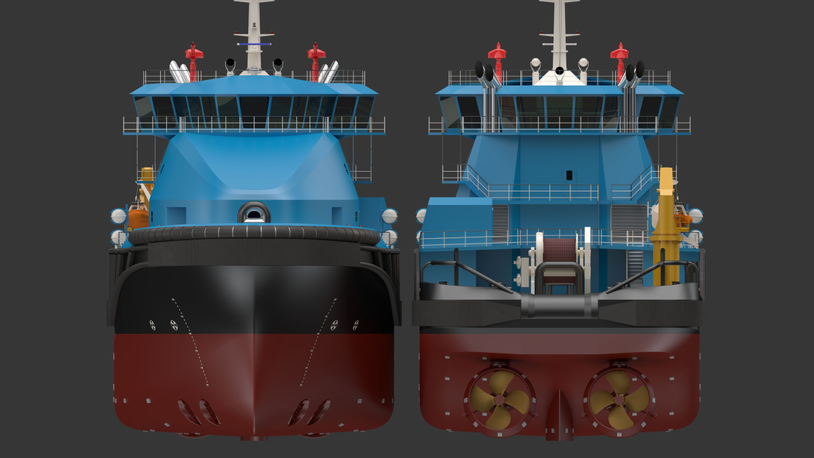
ASD, RSD tugs designed for low-emissions port operations
Naval architects consider stability, manoeuvrability, strength and reduced emissions when designing the latest harbour tugs


Tugboat naval architecture is being influenced by decarbonisation trends in the towage sector, with more vessels built with battery systems and a back-up generator on board. Tug stability, strength and manoeuvrability are core elements in their design, as is crew comfort and reduced underwater noise.
Damen Shipyards incorporates all this into its designs as well as owners’ requirements, considering bollard pull, winches, draught, additional onboard equipment and the environmental conditions where these tugs are expected to operate.
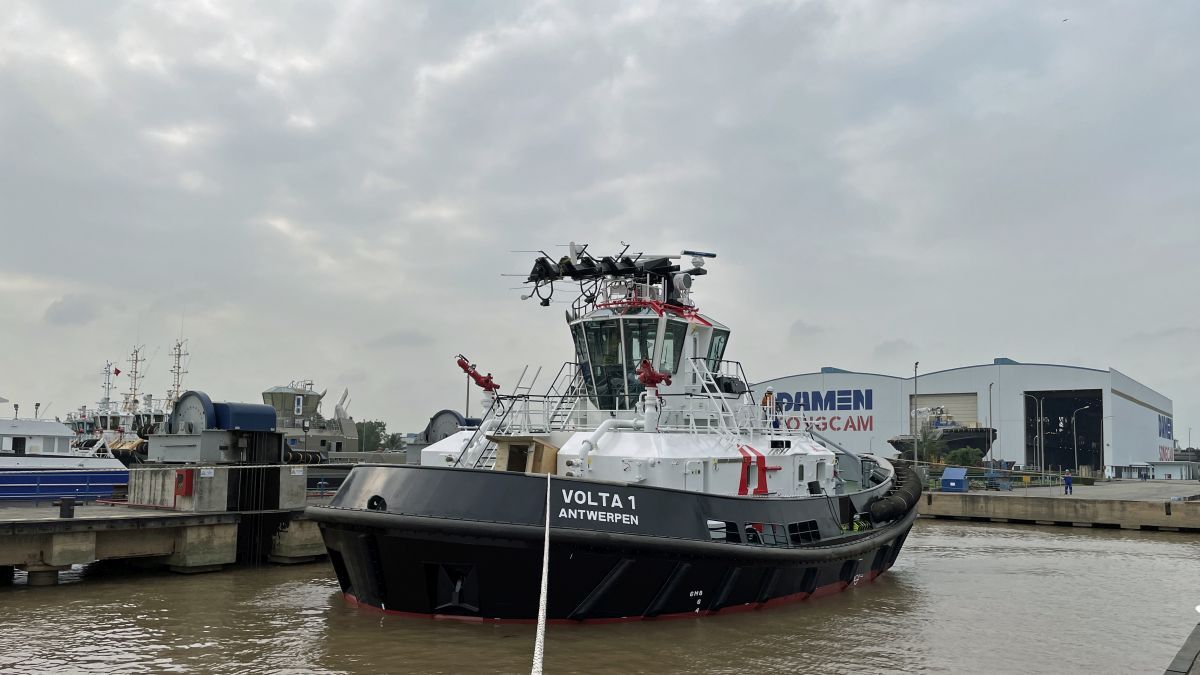
Covering the decarbonisation trends, Damen has designed electric versions of its reverse stern drive (RSD) tugs, with the first operating in New Zealand (Sparky), and others in the United Arab Emirates (Bu Tinah), Belgium (Volta 1) and its own fleet in northern Europe, currently in Rotterdam, the Netherlands.
These are built to Damen’s RSD-E 2513 design and classed by Bureau Veritas, with an overall length of 27 m, a beam of 13 m and a draught of around 6 m.
Bu Tinah was awarded a Guinness World Record as the most powerful electric tugboat in the world with its 2,782-kWh capacity energy storage system helping the 2024-built vessel to achieve an average high-peak bollard pull of 78 tonnes during sea trials.
Damen has also developed an electric version of its azimuth stern drive (ASD) tug, 2111. This 193-gt vessel features a patented twin-fin skeg, twin azimuth thrusters and an overall length of 21 m, a beam of 11 m and a draught of 5 m.
Depending on the onboard energy storage system, this tug could achieve a bollard pull of 50 tonnes ahead and 45 tonnes astern and a top speed of 11 knots. It would have accommodation for six crew members, an obstacle-free working deck and a covered winch which handles both forward and aft operations.
Damen is also building its first all-electric Multi Cat 1908 design vessel with an energy storage system at its facilities in Hardinxveld, the Netherlands. This 19-m vessel will have nearly 2-MWh capacity batteries, sufficient to sail for up to 10 hours on a single charge with speeds of up to 7 knots, or provide a bollard pull of 7 tonnes.
To charge these, Damen developed the B-Shore power converter that supports multiple voltage inputs and outputs and aligns with different grid frequencies, enabling vessels to connect to shore networks in any port.
For tugs with conventional propulsion, Damen introduced the ASD Tug 1810 design, with the first of these built at its shipyard in Changde in China in 2024, as its most compact, multipurpose tugboat. This 18-m tug has a 10 m beam, a 4 m draught, a bollard pull of around 30 tonnes, a full speed of 11 knots, and accommodation for four. It also has a twin-fin skeg, two azimuth thrusters, an obstacle-free working deck and a covered winch which handles forward and aft operations.
In Q3 2024, Damen delivered its first vessel to the new ASD Tug 2111 design, with Käthe Wessels built in Changde for owner Neue Schleppdampfschiffsreederei Louis Meyer and chartered to Emder Schlepp-Betrieb in Germany.
This 21-m tugboat has a beam of 11 m, a hull depth of 4 m and a draught of 5 m, enabling it to manoeuvre large vessels in shallow-water areas of the harbour.
For ice operations, Damen has its ASD Tug 3413 ICE design, featuring an ice-class strengthened hull, protected thrusters, paint designed for -50⁰ C and tank positioning that avoids the risk of freezing. These are optimised for the harshest ice conditions in harbours and open waters.
Riviera’s TUGTECHNOLOGY ‘25 will be held in Antwerp, 22-23 May 2025. Click here for more information on this industry-leading event.


Related to this Story
Events

Maritime Regulations Webinar Week
 16 Dec 2025
 GMT - ONLINE
Floating energy: successfully unlocking stranded gas using FLNGs and FSRUs
24 Feb 2026GMT - ONLINE
© 2026 Riviera Maritime Media Ltd.


