


Business Sectors
Events

Floating energy: successfully unlocking stranded gas using FLNGs and FSRUs
 24 Feb 2026
 GMT - ONLINE
Contents
Register to read more articles.
Charterers back use of e-ammonia, e-methanol through collaborative shipping tender
Through an innovative tender from freight buyer-backed ZEMBA, Hapag-Lloyd, NCL will use hydrogen-derived e-fuels to slash CO2 and greenhouse gas emissions on specific ocean routes


Over the past decade, shipowners have poured billions of dollars into constructing ships capable of burning low- and zero-carbon fuels to support IMO’s CO2 and greenhouse gas (GHG) reduction strategy. This trend has accelerated in 2025, with a record 30M gt – 43% of total shipyard output – capable of burning lower carbon intensity fuels, according to Clarksons.
But a lack of available e-fuels and tepid demand from charterers to pay higher rates for sustainable shipping transport will mean most of these ships will burn fossil fuels for the near future.
The Zero Emission Maritime Buyers Alliance (ZEMBA) – a group of ’brand name’ charterers and freight buyers – is trying to change that through a collaborative tender process. Dual-fuel container ships deployed by Hapag-Lloyd and North Sea Container Line (NCL) will use green hydrogen-derived e-fuels to offer low-carbon-intensity shipping routes starting 2027, after winning tenders from ZEMBA.
One of the world’s largest liner companies, Hapag-Lloyd will use e-methanol in box ships deployed on a trans-oceanic lane starting in 2027.
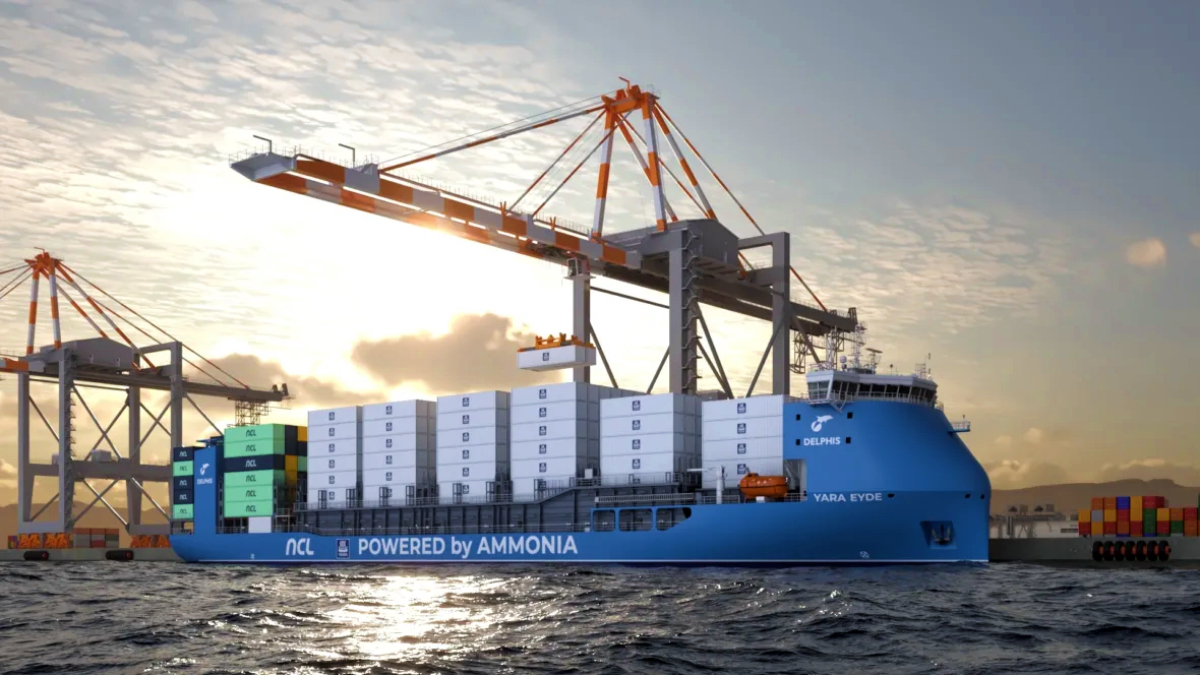
Meanwhile, NCL will deploy the world’s first e-ammonia-powered container ship, serving a northern European trade lane.
By striking this agreement with the liner companies, ZEMBA, which includes major retailers, freight buyers and charterers Amazon, Ikea, Nike and Patagonia, will collectively abate at least 120,000 tonnes of CO2e over a minimum of three years. Estimates indicate that most of those volumes will be contributed by ships operated by Hapag-Lloyd in its trans-oceanic trade.
“At a time when sourcing scalable e-fuels remains a major challenge for the entire industry, winning the second ZEMBA tender is a significant milestone for us,” said Hapag-Lloyd chief executive Rolf Habben Jansen. “Deploying e-methanol is an essential step in our journey to reach net-zero fleet operations by 2045.” And Hapag-Lloyd is not just betting on the e-methanol ’horse’ to meet its net-zero ambitions by 2045; it won ZEMBA’s initial tender for biomethane in 2024.
NCL president, Bente Hetland, added, “With a dedicated product for ZEMBA’s members who are ready to drive real change, NCL will continue to push the transition towards next-generation maritime fuels.”
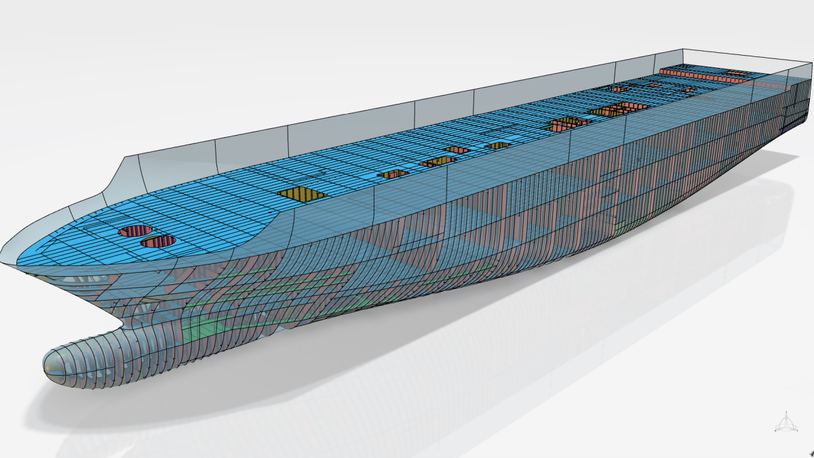
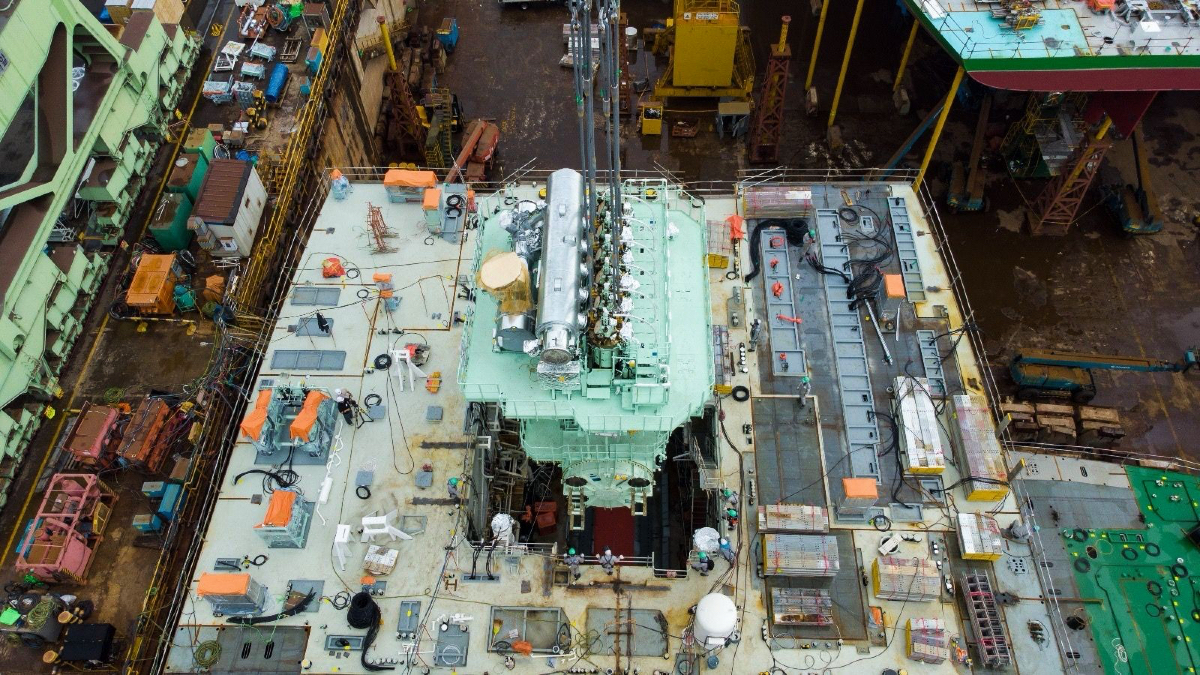
Steel was cut at Qingdao Yangfan Shipbuilding in September for Yara Eyde, a 1,400-TEU ice-class container ship that will be the world’s first ammonia-powered container vessel when it is delivered in mid-2026. Plans call for the coastal feeder ship to operate between Norway and Germany.
Yara Eyde is owned by Delphis, the container division of CMB.TECH and will be operated by NCL Oslofjord, a joint venture between North Sea Container Line and Yara Clean Ammonia.
ZEMBA president and chief executive, Ingrid Irigoyen, said, “Through collaboration across the maritime value chain, this partnership will enable rapid on-the-water deployment of vastly scalable, next-generation maritime fuels.”
Methanol-powered newbuilds
The tender win follows Hapag-Lloyd’s contract with Chinese shipbuilder CIMC Raffles to build eight 4,500-TEU methanol dual-fuel container ships. The newbuilds, representing an investment of US$500M, will be delivered between 2028 and 2029.
Expectations are that these methanol-powered box ships – the first of their type for the German owner – will be 30% more efficient than older generation similar size vessels, resulting in a reduction of 350,000 tonnes of CO2e per year when using methanol propulsion.
Overall, the owner has 37 LNG dual-fuel-propelled ships in operation or planned that can use biomethane.
In April 2024, Hapag-Lloyd agreed with Seaspan Corp to have five 10,100-TEU container ships converted to methanol dual-fuel propulsion in 2026 and 2027.
In November 2024, Hapag-Lloyd inked a deal for the annual supply of 250,000 tonnes of green methanol with Chinese energy producer Goldwind. The green methanol, which will consist of a mixture of biomethanol and e-methanol, will reduce GHG emissions by 70% or more.
Hapag-Lloyd also plans to long-term charter another 14 smaller (less than 5,000 TEU) box ship newbuildings between 2027 and 2029.
Sign up for Riviera’s series of technical and operational webinars and conferences:
- Register to attend by visiting our events page.
- Watch recordings from all of our webinars in the webinar library.
Related to this Story
Events

Maritime Regulations Webinar Week
16 Dec 2025GMT - ONLINEFloating energy: successfully unlocking stranded gas using FLNGs and FSRUs
24 Feb 2026GMT - ONLINE
© 2024 Riviera Maritime Media Ltd.


