


Business Sectors
Business Sectors
Events
Contents
Register to read more articles.
DNV and LISCR award AiP for liquefied CO2 carrier design
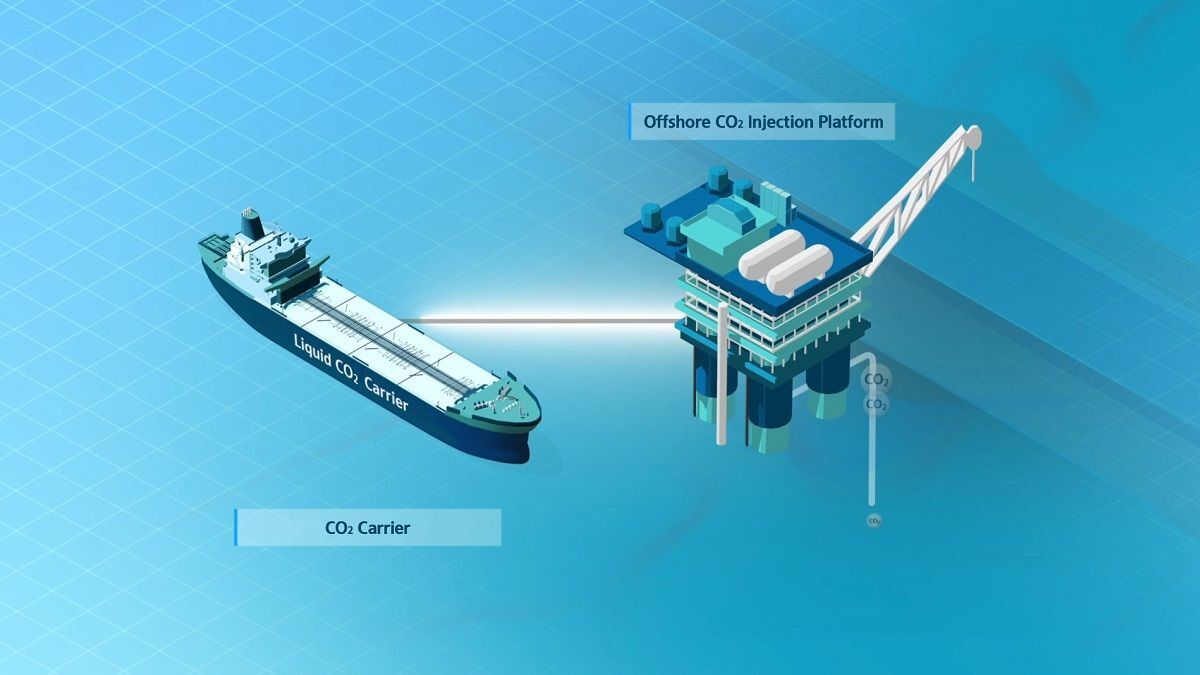
Classification society DNV and the Liberian International Ship & Corporate Registry have awarded an approval in principle to Hyundai Heavy Industries and Korea Shipbuilding & Offshore Engineering for a new 40,000 m3 liquefied CO2 carrier design


Liberian International Ship & Corporate Registry (LISCR) worked alongside DNV to produce an approval in principle (AiP) to Hyundai Heavy Industries (HHI) and Korea Shipbuilding & Offshore Engineering (KSOE) for a liquefied CO2 carrier design .
This design represents the other side of shipping’s decarbonisation process, which is mainly focused on reducing emissions, but carbon capture and storage (CCS) is gaining traction as a technology to reduce the impact of CO2 emissions.
Maritime transport will play an essential role in the CCS value chain, which is expected to lead to an increasing demand for liquefied CO2 (LCO2) carriers.
HHI’s and KSOE’s 40,000-m3 LCO2 carrier design is a milestone in this emerging vessel segment. The new design would be the largest in its class, with current carriers limited to less than 2,000 m3.
LISCR chief operating officer Alfonso Castillero said, “This is a ground-breaking project that is key to meeting the maritime industry’s greater goals of energy efficiency and decarbonisation. I am proud to have had Liberia working so closely alongside our partners at DNV and HHI on this project.”
“Obtaining the AiP for this innovative large-scale LCO2 carrier is a meaningful technological milestone. We believe our self-developed LCO2 carrier will contribute to global decarbonisation efforts by providing tailor-made designs according to each shipowner’s specific requirements,” said HHI senior executive vice president and chief technical officer Won-Ho Joo.
LISCR senior vice president of maritime operations Thomas Klenum led the review and approval process, “This project will be very important for the design and capabilities of the LCO2 fleet of the future. We are pleased to be at the forefront of this development,” he said.
"We are delighted to work with HHI, KSOE, and LISCR to approve this innovative LCO2 carrier design," commented DNV Maritime regional manager Korea & Japan, Vidar Dolonen. "Our role is to support bringing these ship designs to life for a safer and more sustainable future."
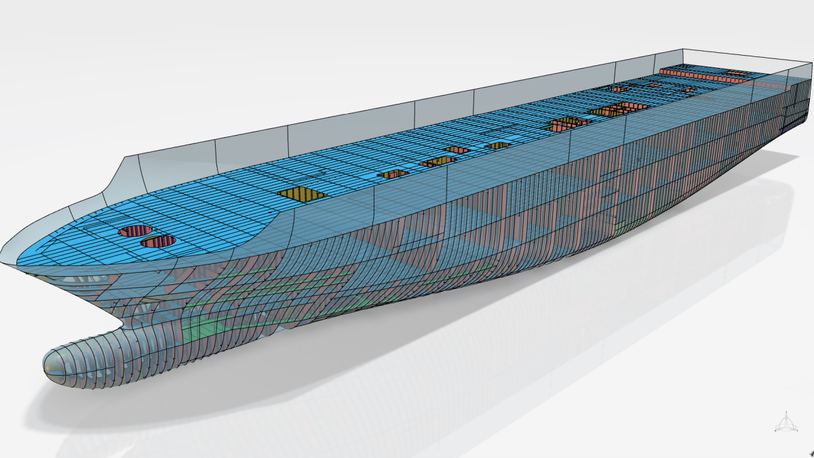
The 40,000-m3 LCO2 carrier is 239 m long, 30 m wide, and has a depth of 21 m and will be equipped with seven IMO type-C cargo tanks with a total capacity of 40,000 m3.
Designed to carry LCO2 cargo, multi-cargoes such as LPG or ammonia can also be considered.
Sign up for the live Marine Air Pollution Conference, Europe 2021, in Amsterdam from 12-13 October 2021.
Related to this Story

Events

Maritime Regulations Webinar Week
 16 Dec 2025
 GMT - ONLINE
Floating energy: successfully unlocking stranded gas using FLNGs and FSRUs
24 Feb 2026GMT - ONLINE
© 2026 Riviera Maritime Media Ltd.


