


Business Sectors
Business Sectors
Events
Contents
Register to read more articles.
Floating nuclear power plant: a ‘back to the future’ idea
CORE Power and Glosten to develop floating nuclear power plant concept to provide shoreside power to ships


Want to make massive amounts of zero-emissions shore power available at ports in the United States? An advanced nuclear power technology developer and a naval architectural firm believe they have a viable solution.
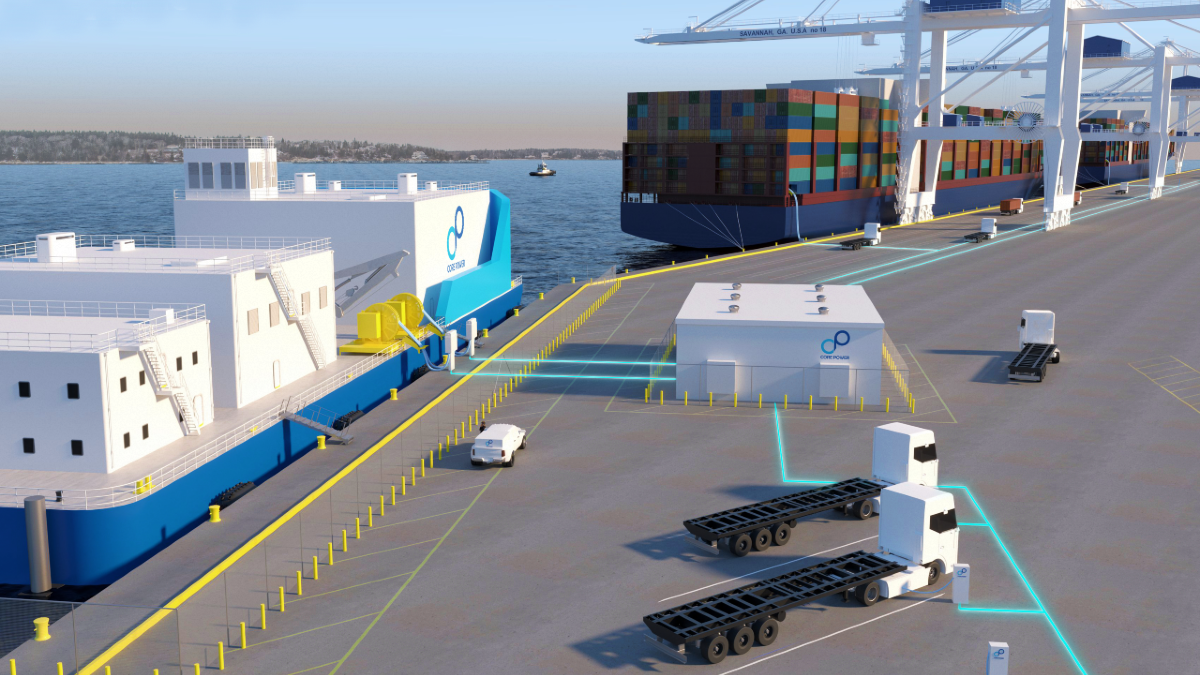
US-based CORE Power is teaming with Glosten to develop a floating nuclear power plant (FNPP) to supply electricity to ports in the United States.
As conceived by CORE Power, the FNPP is a barge-based nuclear power plant with barge support services, electrical grid integration and operational teams. Such a concept would offer flexible deployment, providing an estimated 175 GWh of zero-emissions electricity annually. Deployed at ports, the FNPP would provide shoreside electrical power to ships, terminals, e-cranes and equipment, and electric vehicles.
Glosten’s role in the project will be no small matter, requiring the Seattle-based naval architectural firm to establish a regulatory path for the barge, navigate site location approvals, and identify a potential supply chain network for the FNPP’s fabrication, assembly, integration, transport and installation.
“The marine industry has experienced a massive push to decarbonise, and CORE Power’s FNPP offers an effective and practical means to meet that demand,” said Glosten chief executive Morgan Fanberg. His firm’s goal is to develop “a design that demonstrates the practicality of providing reliable, zero-emissions nuclear power to port facilities and has a defined path to regulatory approval.”
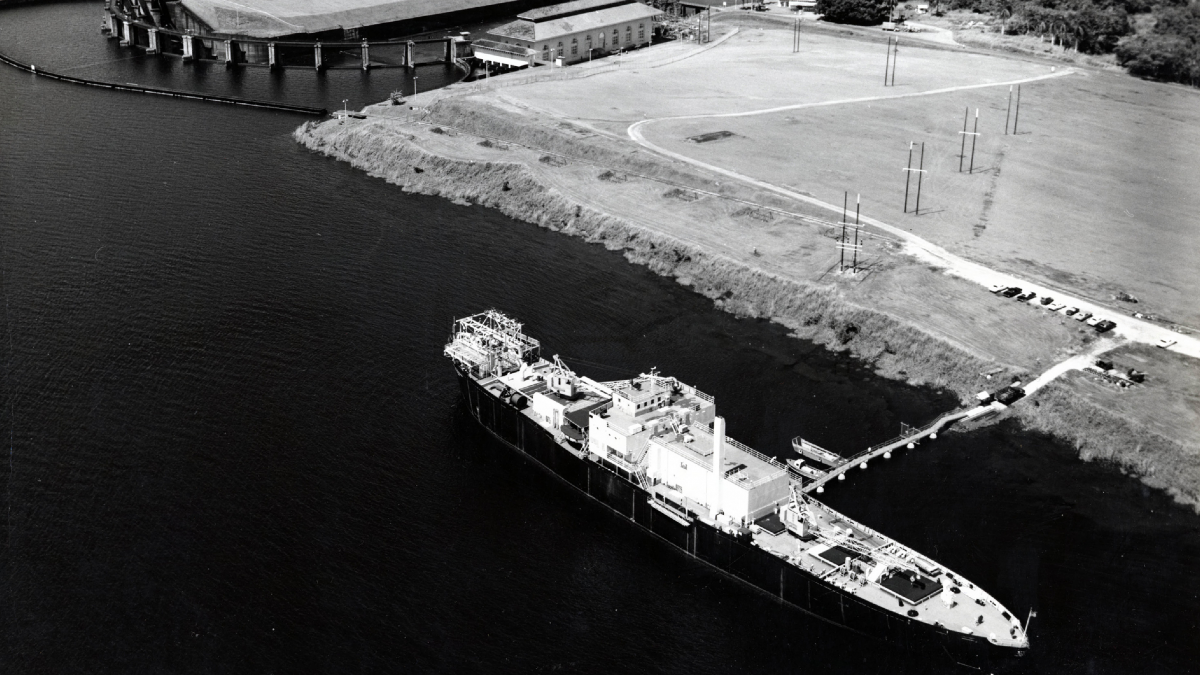
First FNPP
You might say a floating nuclear power plant is a ‘back to the future’ idea. Nuclear power has been used in ship propulsion for military and civilian vessels since the1950s, and the first floating nuclear power plant went in service in the US in the mid-1960s. The first FNPP, Sturgis, was built by the US Army consisting of a pressurised water reactor, MH-1A, installed in a converted Liberty ship. Initially used to provide power to Fort Belvoir in Virginia, Sturgis was deployed to the Panama Canal, where it generated power to supply 10-MW of electricity to the Panama Canal Zone from October 1968 to 1975 and shut down in 1976. According to the Army Corps of Engineers,the reactor was defuelled, decontaminated for long-term storage, and sealed before being towed to the James River Reserve Fleet at Joint Base Langley Eustis, Virginia for long-term storage and monitoring. The Corps of Engineers completed the complex decommissioning of the MH-1A nuclear reactor aboard Sturgis in 2018.
“Nuclear fission is a well-understood and practiced process. It allows us to access an enormous energy resource safely, reliably and on-demand without emitting greenhouse gases,” said CORE Power chief executive Mikal Bøe. “Over 80% of the cost of nuclear power on land is in civil construction, with reactors and power systems accounting for less than 20%. FNPPs will be shipyard-manufactured and mass-assembled, ensuring delivery speed and low costs,” he added.
Last year, CORE Power announced the design and development of an FNPP using eVinci microreactor technology in a deal with Westinghouse Electric.
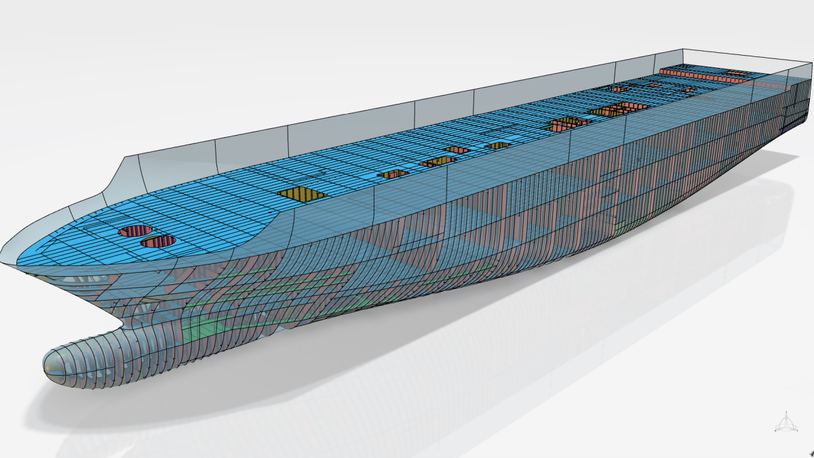
Still in the concept phase, the CORE Power-Glosten project is being designed with the intent to serve a non-specific port located in the southern United States. The partners are performing risk assessments and developing the general arrangements for the barge which will house the nuclear reactors.
“We’re taking a very thorough and deliberate approach, making sure we’re performing the necessary risk-based assessments to maximise safety as well as considering the practicalities of implementation,” said Mr Fanberg.
Sign up for Riviera’s series of technical and operational webinars and conferences:
- Register to attend by visiting our events page.
- Watch recordings from all of our webinars in the webinar library.

Related to this Story


Events

Maritime Regulations Webinar Week
 16 Dec 2025
 GMT - ONLINE
Floating energy: successfully unlocking stranded gas using FLNGs and FSRUs
24 Feb 2026GMT - ONLINE
© 2026 Riviera Maritime Media Ltd.


