


Business Sectors
Business Sectors
Events
Contents
Register to read more articles.
Brazilian owners bet on efficient tug newbuilds
In a thriving tug building industry in Brazil, shipyards constructed vessels for Wilson Sons, Sulnorte, Svitzer and Camorim


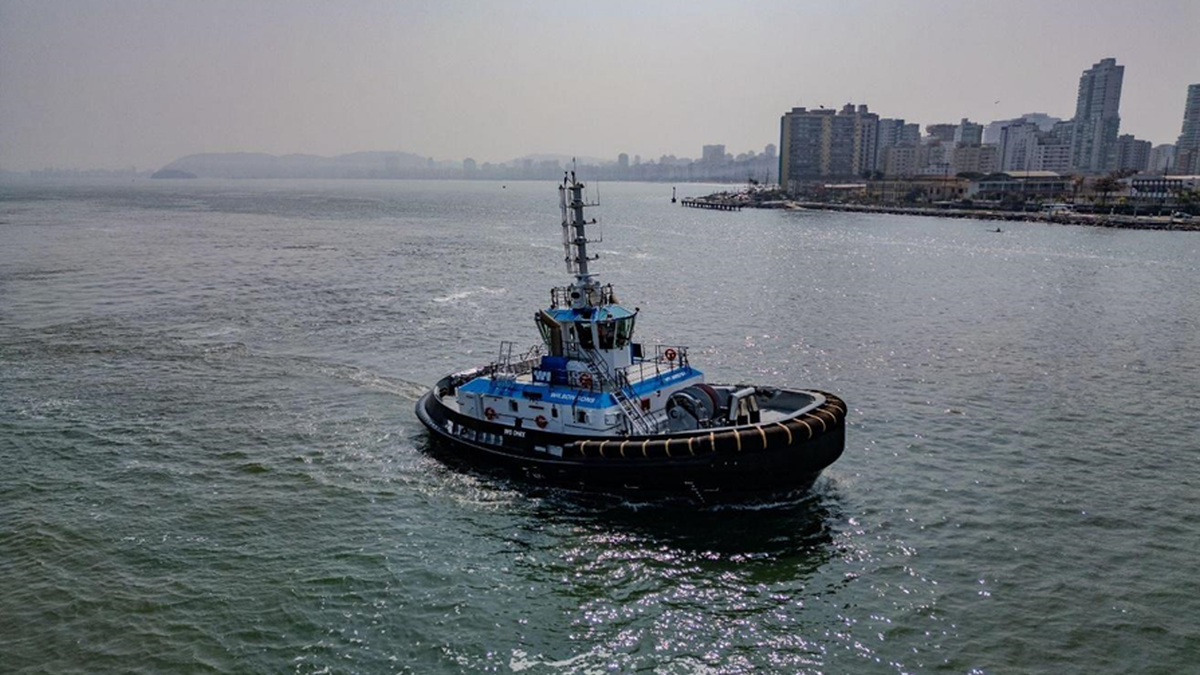
Wilson Sons is increasing the use of biofuels on its tugs and installing charging infrastructure on quaysides in key ports in Brazil, while it prepares for the arrival of newbuilds from its own shipyard.
It operates a fleet of 82 tugs, all in Brazil, and is in the middle of another tug newbuilding campaign.
Wilson Sons is now 56% owned by Mediterranean Shipping Co (MSC) after the Switzerland-headquartered shipping group’s subsidiary, SAS Shipping Agencies Services, acquired a shareholding from Bermuda-based investment group Ocean Wilsons for US$594M on 4 June 2025.
Reducing emissions from port operations and introducing more sustainable towage services are key strategies of the Brazilian port and tug operator, says Wilson Sons executive director of the towage business, Marcio Castro. He says Wilson Sons has started using hydrogenated vegetable oil (HVO) biofuel on its tugs in one of the largest ports in Brazil and is encouraging other harbours to introduce shore power.
“We are improving our efficiency, using shore power when our tugs are on standby, and we are spreading it along the Brazilian coast,” he explains to International Tug & Salvage. “It is very important to reduce our carbon footprint, so we are also starting a pilot using HVO in one of the biggest ports in Brazil.”
It is testing HVO on tugs in the Port of Açu, in São João da Barra, working with Efen and Vast Infrastructure at its TLA liquid bulk terminal. It is assessing the CO2 emissions reduction from using green diesel, which could be 80% compared with using marine gasoil.
“Our decarbonisation agenda does not only include building more efficient tugboats but also decreasing the environmental impact of our fleet of more than 80 vessels,” says Mr Castro.
“HVO is a promising solution as a drop-in fuel that does not require any adaptations to our equipment, representing an important choice for the port support industry.”
Wilson Sons is building azimuth stern drive (ASD) tugboats to a Damen design at its shipyard in Guarujá in the state of São Paulo, with the first delivery expected in November 2025, and the others in March and June 2026.
These newbuilds will be more efficient than conventional tugs and compliant with IMO Tier III emissions standards, with aftertreatment units removing around 70% of NOx from engine exhaust gas.
“We are just finishing a new series of tugboats at our own shipyard, and they will be IMO Tier III compliant and have 70 tonnes of bollard pull,” says Mr Castro.
These 23-m tugs will be built to Damen’s ASD 2312 design, with a twin-fin hull design, a beam of 12 m, a FiFi1 fire-fighting system and propulsion consisting of two diesel four-stroke engines linked to a selective catalytic reduction unit driving two azimuth thrusters.
According to Mr Castro, they will be powerful enough to support the berthing and undocking manoeuvres of 366-m ultra-large container ships in Brazil’s main ports, while reducing greenhouse gas emissions and fuel consumption by 14% compared with conventional tugs.
Its shipyard in Guarujá completed six reverse stern drive (RSD) tugs to another Damen design in 2024, with the last, WS Onix, beginning work in the Port of Santos in September. All six 25-m tugs were built to RSD 2513 design with a bollard pull of more than 90 tonnes and compliance with the IMO Tier III regulations.
Wilson Sons is also using digitalisation in Latin America, with a specialist centre managing fleet operations. It uses real-time operational data to gain insights and intelligence to improve maintenance and lower fuel consumption and emissions.
“Our operations centre takes care of all the fleet,” says Mr Castro. “We receive lots of data and we are adding intelligence to this for getting important information for our maintenance and operations. We are using internet of things on our tugboats to improve the efficiency of our operations.”
Rio Maguari newbuilds
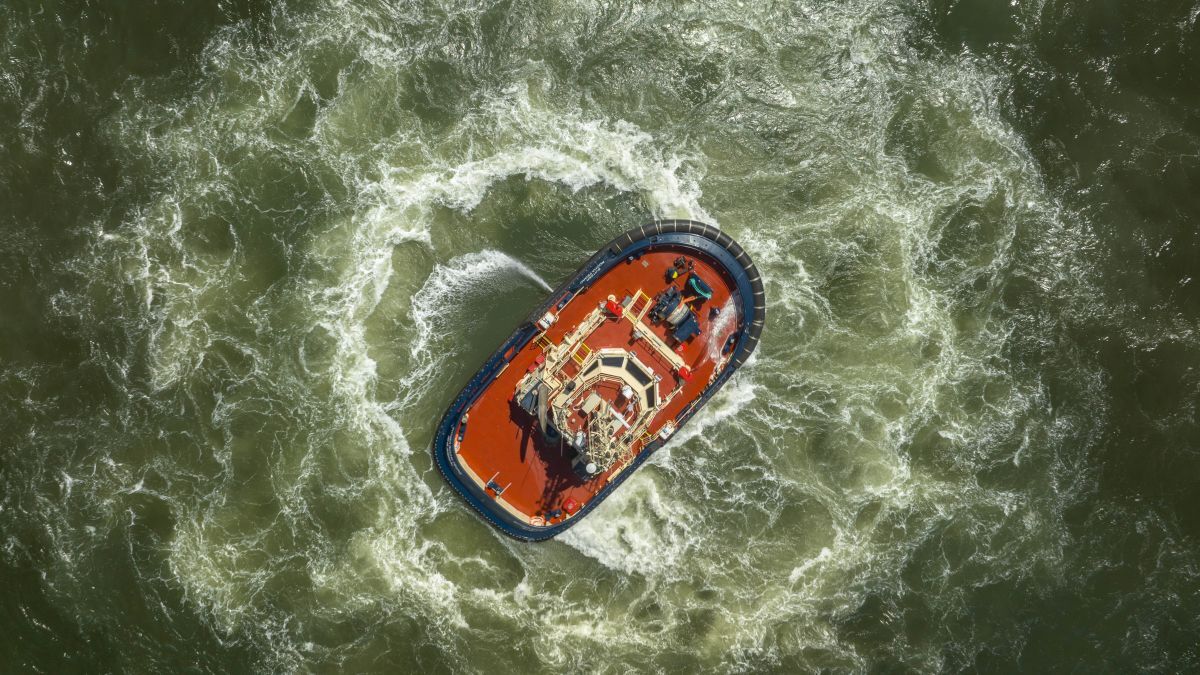
Sulnorte Serviços Maritimos is anticipating the delivery of newbuilds in H2 2025 and 2026 from Rio Maguari Shipyard after welcoming a new 298-gt ASD tug from the Brazilian shipyard in 2024.
Rio Maguari is scheduled to deliver SN Acarau and SN Caraiva to Sulnorte after their construction to ABS class and Robert Allan’s RAmparts 2300 design. These tugs will have a FiFi1 off-ship fire-fighting system, and 70 tonnes of bollard pull coming from a pair of Caterpillar 3516C diesel engines driving two Kongsberg Z-drives, while these tugs will also have a Krasival-supplied winch for ship towage.
Sulnorte took delivery of SN Cariri, a 23-m harbour tug built to ABS class and RAmparts 2300 design, from Rio Maguari in 2024 and it is operating in Madre de Deus, Brazil, according to automatic identification system (AIS) information.
This ASD tug has a moulded beam of 11 m, a hull depth of 4 m, a bollard pull of 63 tonnes and a free running speed of 12 knots. Its propulsion consists of two Caterpillar 3516C diesel engines, rated at 1,641 kW at 1,600 rpm, driving Kongsberg US205S Z-drives with 2,400 mm diameter fixed-pitch propellers. The electrical system includes two Caterpillar C4.4 diesel generators, each producing 99 ekW at 230 V, 3-phase, 60 Hz.
Rio Maguari commercial director Fabio Vasconcellos says the newbuild harbour tugs, offering modern designs and high performance, will enable the owner to extend its port services in South America and across the Atlantic.
“We are expanding our operations in the international market, with a focus on exporting high-performance tugs to operators in Latin America and West Africa,” he says.
Sulnorte is using crew training, digital tools and better planning to reduce fuel and contribute to more sustainable port services. Its tugs feature an efficient preventive maintenance and management system and “adopt responsible practices to ensure our operations are aligned with the highest standards of sustainability and environmental safety,” the tug owner says.
Its operations and technical teams work with shipmanagement systems to schedule tugboat dockings to maintain their class and performance and enable high availability.
Rio Maguari is also building three 23-m tugs to a RAmpart 2300 design, each with a top speed of 13 knots, a bollard pull of more than 70 tonnes and a Fifi1 fire-fighting system.
These are to be named Svitzer Copacabana, Svitzer Cassino and Svitzer Encintados and will be delivered from Q3 2025 to February 2026. They will have Rolls-Royce mtu 4000 series engines, Kongsberg azimuth thrusters, Caterpillar gensets and Ibercisa winches.
Detroit shipyard in Itajaí is constructing a series of harbour tugs for Camorim Serviços Marítimos, with the fifth and final vessel, C-Harpia, launched on 12 June.
It joins C-Condor, delivered in April, C-Albatroz (in March), C-Falcao (in January) and C-Fenix (in November 2024). All are 24-m ASD tugs built to Detroit’s DB-2470 design with a bollard pull of 70 tonnes, a forward winch for ship handling, tyre fendering and Marsis-delivered FiFi1 fire-fighting systems.
Sign up for Riviera’s series of technical and operational webinars and conferences:
- Register to attend by visiting our events page.
- Watch recordings from all of our webinars in the webinar library.



Related to this Story

Events

Maritime Regulations Webinar Week
 16 Dec 2025
 GMT - ONLINE
Floating energy: successfully unlocking stranded gas using FLNGs and FSRUs
24 Feb 2026GMT - ONLINE
© 2026 Riviera Maritime Media Ltd.


