


Business Sectors
Business Sectors
Events
Contents
Engines will remain key to tug propulsion for decades to come
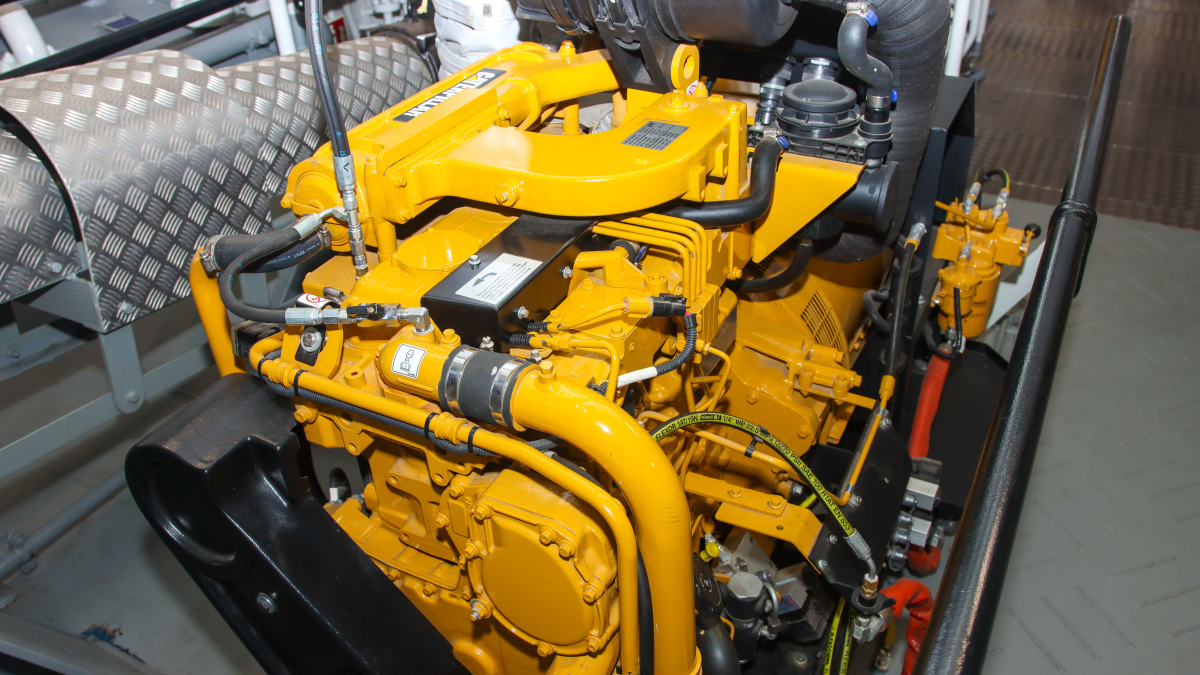
Integrated power systems on electric-hybrid tugs will have battery modules for zero-emissions harbour towage and gensets running on green fuels for extended operations and firefighting


Internal combustion engines will remain a critical part of tugboat propulsion for several decades to come, despite increasing adoption of energy storage systems (ESSs) across the sector.
Even with fully electric harbour tugs, there will be a generator set on board to provide additional power if required, range extension and back-up energy for when the batteries have discharged.
In operations outside of harbours, tugs will need engines to ensure they have sufficient power to conduct the activities they were designed and built for over their whole lifetime.
Diesel or a renewable forms of bio-diesel are the primary fuels for tugboat engines now, but in the future they could be combusting methanol or biogas, or potentially hydrogen or ammonia.
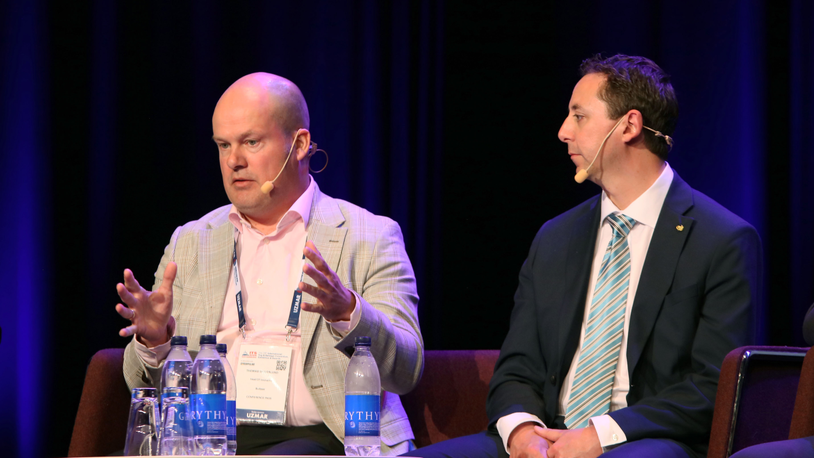
These were some of the central points raised by original engine manufacturers (OEMs) at Riviera’s 28th International Tug & Salvage Convention, Exhibition & Awards, held in Gothenburg in association with Caterpillar, 19-21 May 2026.
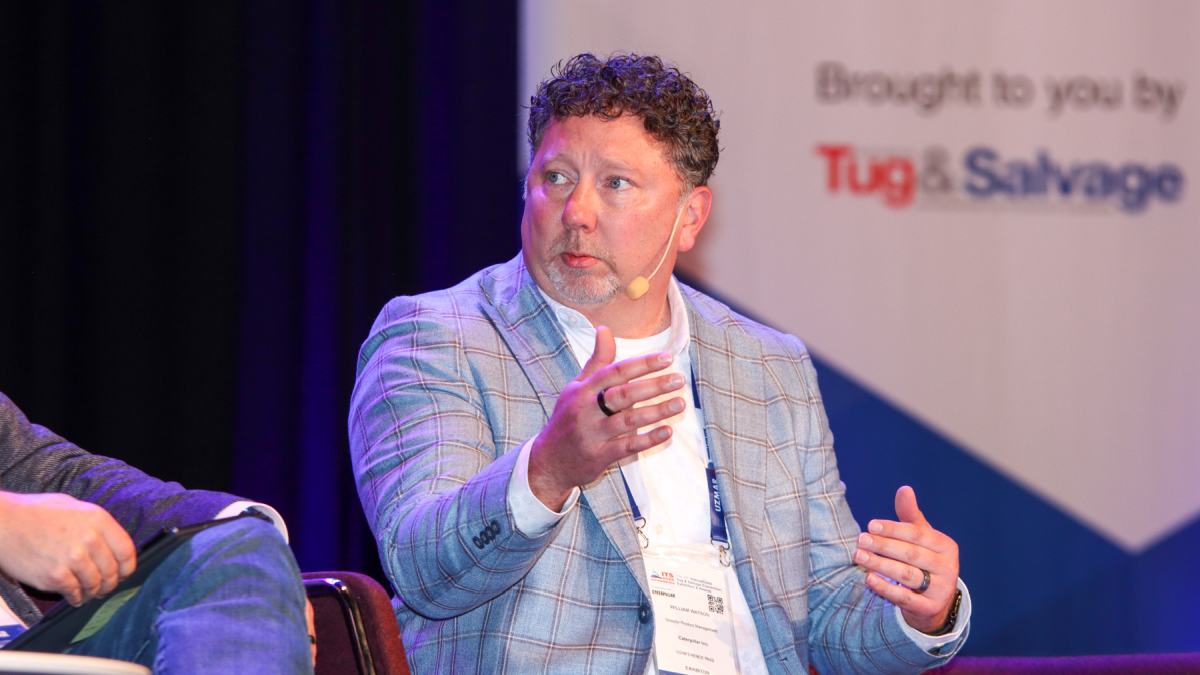
Caterpillar Marine product director, Will Watson, said increasing numbers of tugs are being built with ESS modules and auxiliary gensets in energy rooms within the hull with electric grids, electric motors, switchboards and automation in integrated hybrid propulsion systems.
They might also have variable-frequency drives, shaft generators, transformers, power take-off and power take-in gearboxes or fuel cells in the future.
“Each vessel has unique [power] requirements so the energy room will look different on each one,” Mr Watson said.
Some will have dual-fuel engines ready to combust methanol and diesel or hydrotreated vegetable oil (HVO) or fatty acid methyl ester (FAME), combined with mechanical or electric hybrid propulsion.
“Every vessel will be optimally equipped for their expected operations with comprehensive power solutions,” said Mr Watson.
“Newbuilds will have higher bollard pull and power, while they will have lower greenhouse gas emissions.”
Propulsion systems on tugs will need to have flexibility on energy and fuel sources and include a layer of redundancy in case there are shortages of fuels and electrical power in ports.
“Hybrid propulsion systems need to provide uninterrupted operations regardless of fuel availability in port,” said Mr Watson.
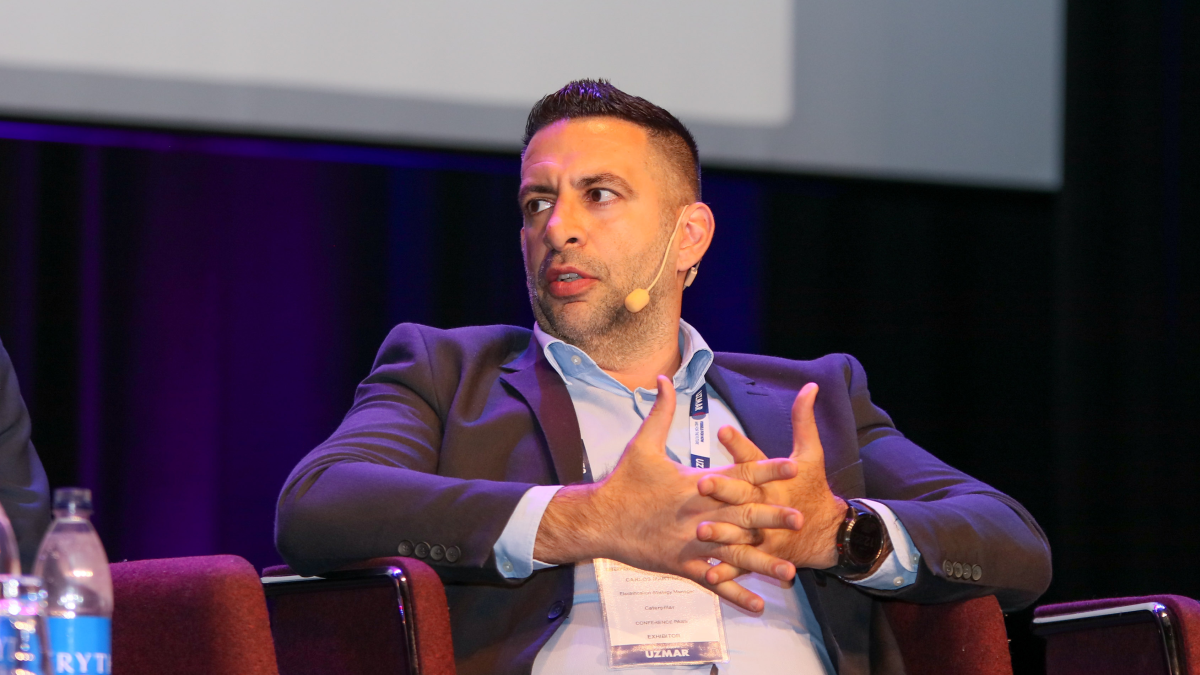
Caterpillar Marine strategy manager for electrification, Carlos Martinez, said selection of power and energy-generating equipment will depend on the operational profile of the vessel, the availability of fuels and accessibility to shore-charging infrastructure in ports.
If tugs are solely based in one port with sufficient battery charging facilities, then a purely electric propulsion system can be installed on a newbuild, with a small genset for back-up.
“Battery-electric tugs will still have hybrid propulsion. They can be purely electric if their operations are highly predictable in port, otherwise they will need range extenders, ie gensets,” said Mr Martinez.
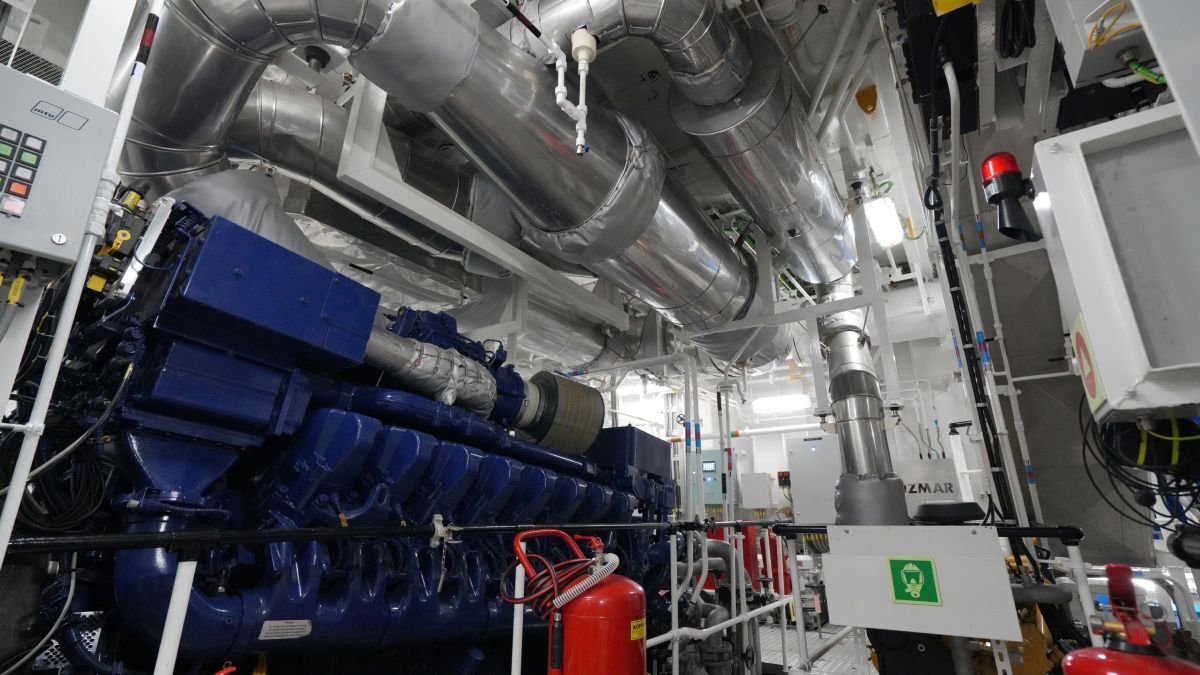
When considering which powertrain architecture to select for a newbuild, owners and designers need to consider complexity, type of shore charging and power management.
As more power equipment is installed, the process becomes more complex for system integrators and heavier, and more below-deck space is required.
If more than one fuel is considered, then there will be at least two tanks and handling systems, and different venting and safety protocols.
“With AC charging, most tugs will need larger transformers and dedicated switchboards, and [will need to] be able to accommodate larger power banks,” said Mr Martinez. “But DC charging can reduce components on vessels and lower capital expenditure.”
Capital investment costs will also depend on the size of the ESS, which can represent 40% of the capital expenditure (capex) of a newbuild tug.
For a tugboat with 70 tonnes of bollard pull, “capex for a tug with genset and an auxiliary battery is close to that of conventional tugs,” said Mr Martinez.
A tug with battery hybrid propulsion has around 10% higher capex, depending on the scope of the electrical system, ESS module and other components.
“When you add the lower maintenance costs and operation improvements, battery-electric tugs become more attractive”
Mr Martinez said tug owners should also consider the total cost of ownership (TCO), maintenance requirements, variability of fuel prices and time before battery upgrade when considering the energy system.
“Fuel prices jump depending on supply chain and geopolitics, while renewable electricity pricing can be stable and improve the TCO versus fuels,” said Mr Martinez.
“When you add the lower maintenance costs and operation improvements, battery-electric tugs become more attractive, but they need shore charging and a stable supply chain for new battery modules to replace older ones.”
With so many operational, technical and commercial variables to consider, flexibility in onboard power sources become important, unless there are certainties in fuel or electricity prices.
“Owners need to find balance within the constraints, with battery hybrid being the most effective and flexible, depending on operational needs,” said Mr Martinez.
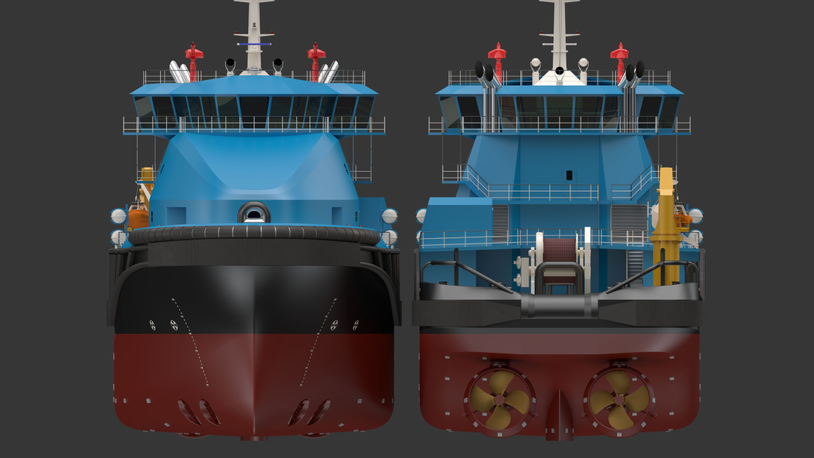
Caterpillar Marine will roll out its hybrid powertrain, including an ESS and gensets, this year with Med Marine set to complete the first Voltra tug, developed in conjunction with naval architects Robert Allan Ltd, in Q3 2026.
The US-headquartered OEM has also developed and certified high-speed, four-stroke engines for bio-diesel, HVO, FAME and methanol, ready for delivery and installation on newbuilds or as retrofits. Its existing diesel engines can be easily adapted to combust bio-diesel, HVO and FAME.
Energy system integrators
As the complexity of integrated powertrains increases, so does the need for early planning and incorporating OEMs in the design phase of a newbuild project, according to Rolls-Royce Solutions senior sales manager for commercial marine and offshore, Andreas Müller-Hirlinger.
He said there could be challenges and issues from combining gensets and ESS modules in one system, such as power surges impacting the engines, or fuel mixing and changeable fuel substitution rates.
“Even on battery-electric tugs, gensets are still needed for range extension and if they have FiFi-class firefighting systems,” said Mr Müller-Hirlinger. “But, engines can be put in positions that can cause a problem. If new engines are installed in a system, then owners need to ensure engines are certified and optimised. So, get engine OEMs earlier in projects.”
Engine OEMs have become energy system integrators and developers of technology for transferring energy in future-fuels into propulsion power.
“The pure supplier model no longer exists in the international tugboat business,” said Mr Müller-Hirlinger. “It has become crucial to act as a partner in the interaction between shipyard and operator.”
OEMs should understand, design and integrate complete energy systems, while developing more efficient engines running on a variety of fuels.
“The tug of 2046 may carry a diesel genset, a battery pack, a fuel cell and a power management system”
“The industry that emerges from the next two decades will be fundamentally different. It will be more diverse in propulsion technology, more automated in operation and more stringently regulated in emissions,” said Mr Müller-Hirlinger.
“The next generation of tugs will require the same quality of response – only faster and across a wider range of variables,” he said.
He looked ahead to forecast what a tugboat could be equipped with in 20 years’ time for ultra-low emissions and high-power operations.
“The tug of 2046 may carry a diesel genset, a battery pack, a fuel cell and a power management system that optimises between them in real time,” said Mr Müller-Hirlinger.
“The engine, if there is one, will be one node in a larger energy network. Understanding and shaping that network will define who leads the next chapter of tug propulsion evolution.”
Rolls-Royce Solutions has delivered mtu 4000 series engines for diesel, HVO, LNG and dual-fuel applications on tugs.
It is developing an mtu 2000 series engine as part of a variable-speed generator, with power output of up to 1,900 kW for range extension and powering a FiFi pump.
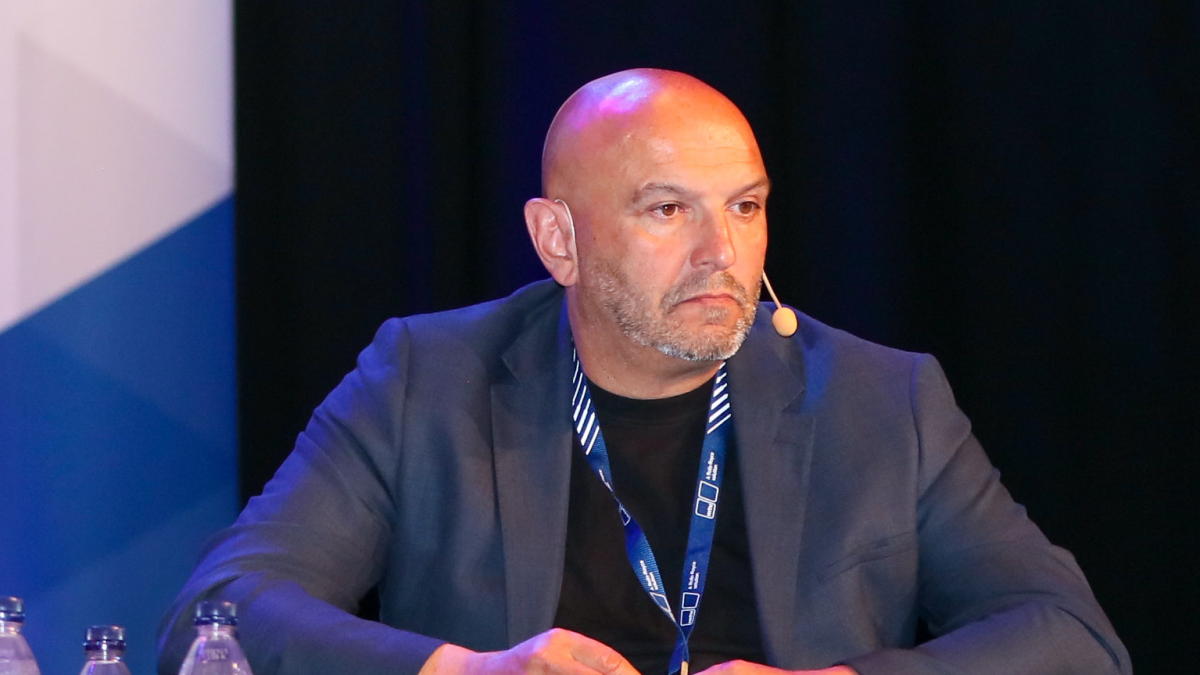
Riviera will host TUGTECHNOLOGY ‘27 in Rotterdam, the Netherlands, 19-20 May 2027. Use this link for more information and to register.

Related to this Story

Events

Maritime Regulations Webinar Week
 16 Dec 2025
 GMT - ONLINE
Floating energy: successfully unlocking stranded gas using FLNGs and FSRUs
24 Feb 2026GMT - ONLINE
© 2026 Riviera Maritime Media Ltd.


