


Business Sectors
Business Sectors
Events
Contents
Register to read more articles.
Maersk launches newbuilding expansion with US$1.24Bn deal in Korea
Danish shipping giant Maersk has accelerated its newbuilding efforts, signing the first in a series of pending orders across Asian shipyards last week


On October 10, South Korean shipbuilder Hanwha Ocean announced a US$1.24Bn contract for the construction of six 16,000-TEU container vessels, with deliveries scheduled through the end of 2028. While Hanwha identified the buyer as a European shipowner without revealing further details, shipbuilding and market sources have confirmed to Riviera that Maersk is behind this order. The deal involves a price of approximately US$207M per vessel, each equipped with LNG-powered dual-fuel engines.
Industry sources also suggest that Maersk has options for additional vessels under the Hanwha contract.
According to MB Shipbrokers, Hanwha has been offering competitive pricing in the container ship segment. This latest order marks Hanwha’s strategic return to the container market, being its first deal since early 2022.
Pending orders in China
Simultaneously, Maersk is preparing to place substantial orders in Chinese shipyards for vessels ranging from 16,000 to 17,000 TEU. Alphaliner has reported that the Danish giant is in advanced talks with New Times Shipbuilding over a series of at least six LNG-powered vessels of similar size.
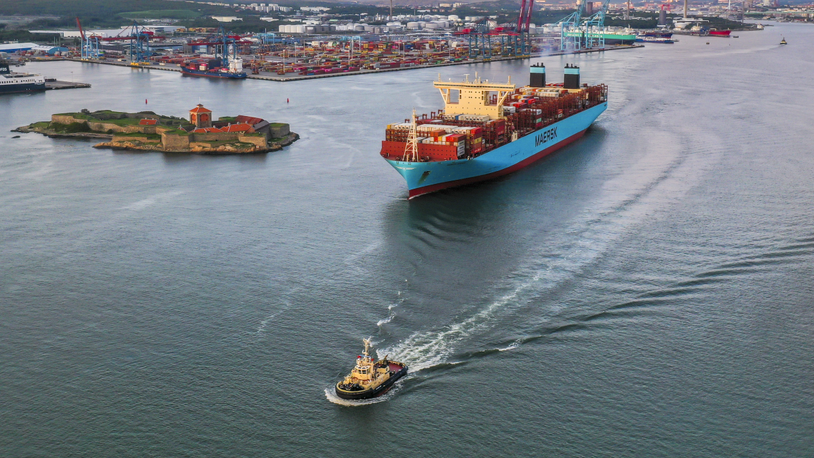
Alphaliner data shows that Maersk currently has 34 vessels on order, with a combined capacity of 485,244 TEU. Its operational fleet includes 716 ships with a total capacity of 4.39M TEU, of which 335 are owned and 381 are chartered.
LNG vs. Methanol
Maersk’s recent move towards LNG-powered vessels has raised eyebrows, given the company’s significant investments in methanol in recent years.
“The recent shift by Maersk towards LNG-fuelled container vessels, while deferring its order for methanol-powered ships, suggests that the shipping companies are circumventing their bets on alternative fuels by investing in LNG,” noted Drewry in a report published this summer.
Analysts further explained that the slowdown in green methanol production, driven by high processing costs, lack of economies of scale, and technological challenges, led Maersk to change direction.
Notably, with the addition of this year’s orders, the global container vessel orderbook is now split as follows: 41% LNG, 31% conventional, and 28% methanol propulsion, according to Alphaliner data. However, methanol-powered ships account for only 21% of new capacity ordered in 2024, a notable decrease from the 51% recorded in 2023.
Despite this pivot, Maersk has said it remains committed to methanol as part of its multi-fuel strategy. The company continues to see methanol as a leading option for emissions reduction, at least through 2030, as recently emphasised by Morten Bo Christiansen, Maersk’s head of energy transition.
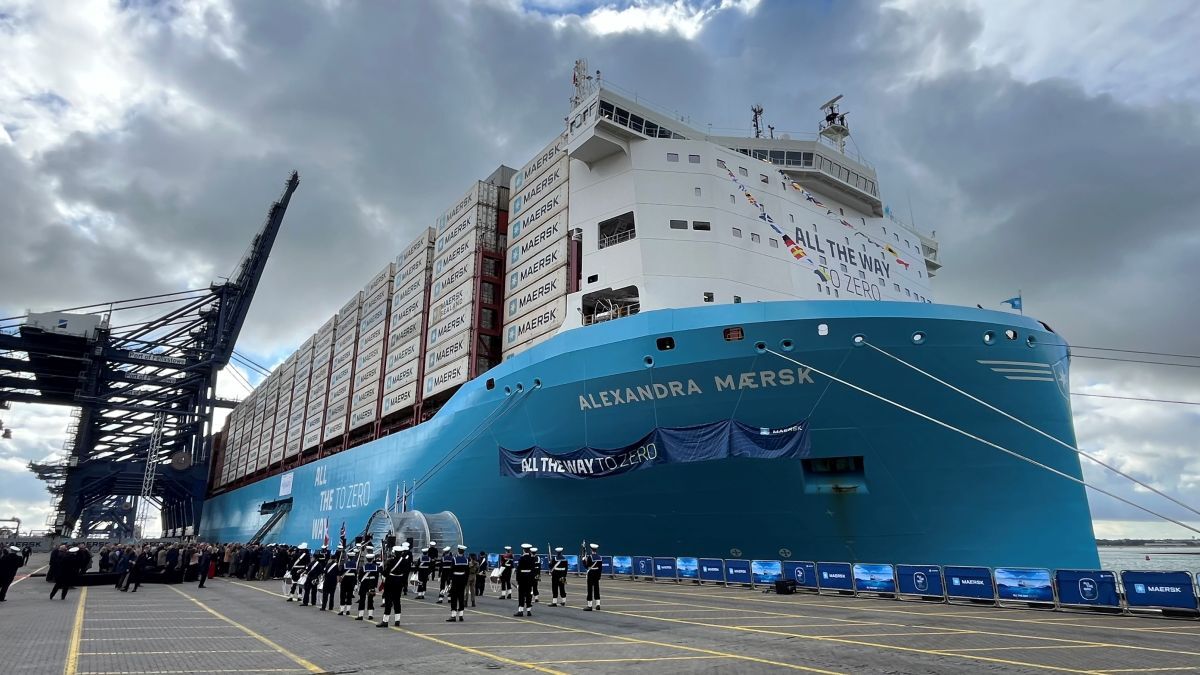
“To accelerate the transformation, we need the International Maritime Organization’s support to close the price gap between green and fossil fuels, making the green choice the best choice for all,” highlighted Maersk chief executive Vincent Clerc during the naming ceremony of the Alexandra Maersk.
Connect with industry leaders across the Asian and Middle Eastern maritime sectors through Riviera’s premium events. Located conveniently in Singapore, we provide unparalleled access to the heart of the Asian maritime market.

Related to this Story
Events

Maritime Regulations Webinar Week
 16 Dec 2025
 GMT - ONLINE
Floating energy: successfully unlocking stranded gas using FLNGs and FSRUs
24 Feb 2026GMT - ONLINE
© 2026 Riviera Maritime Media Ltd.


