


Business Sectors
Business Sectors
Events
Contents
Register to read more articles.

OEMs start delivering methanol, biofuel-ready engines for newbuild tugs
Tugs and pusher vessels are being built with propulsion that can use biodiesel or be easily converted to run on low-emissions fuels for sustainable operations


Original engine manufacturers (OEMs) have developed four-stroke engines for the tug, workboat and towboat sector, ready to operate on biofuels and alternative fuels such as methanol and ethanol, as owners seek to reduce emissions.
Additional engine and generator set (genset) options are expected to be introduced in 2026 as OEMs gain approvals and complete successful tests and pilot installations.
This comes as demand for using low-carbon fuels intensifies, and the first methanol-fuelled tugboats and biofuelled pusher vessels come into service in 2026.
In its first tugboat application, Everllence has provided dual-fuel methanol 175DF-M engines for a 35-m TRAnsverse tug Uzmar is building for Svitzer, ready for delivery in Q2 2026.
Svitzer and Everllence (then MAN Energy Solutions) signed a memorandum of understanding in 2024 for the supply of these dual-fuel engines for future newbuild projects..
While methanol could be viable in European, North American and Asian markets, ethanol could become a preferred alternative fuel in Latin America.
“By using biodiesel, these engines are expected to lower total greenhouse gas emissions”
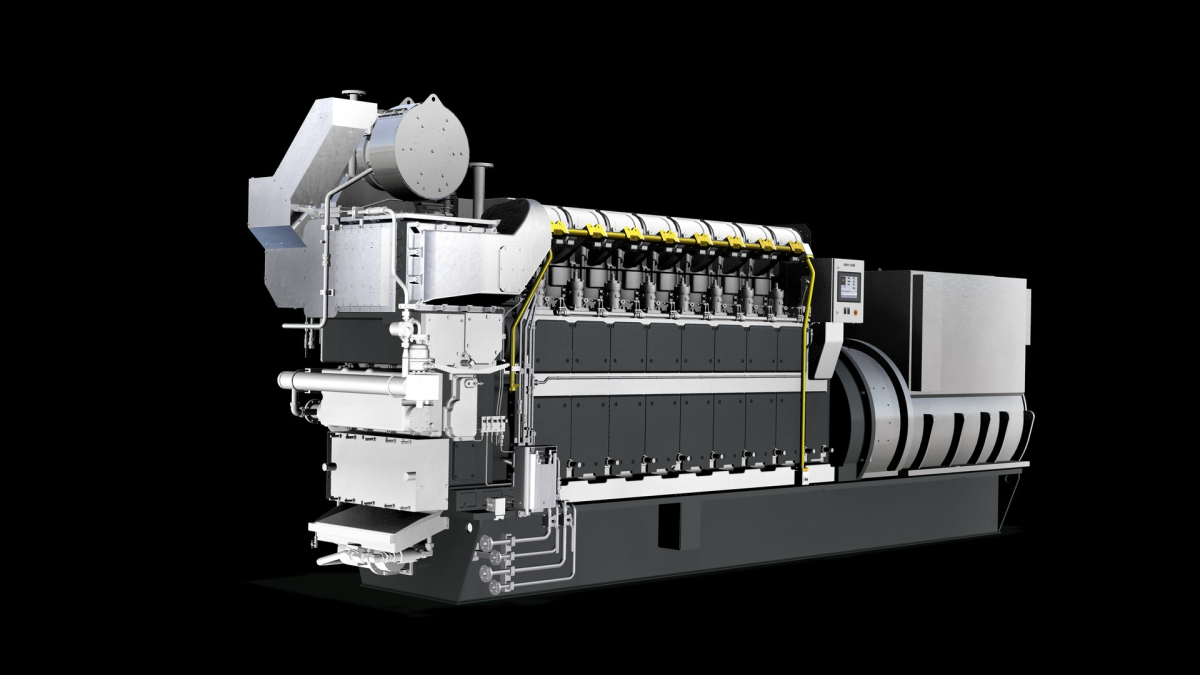
At the end of 2025, Everllence confirmed its 21/31 dual-fuel engine successfully ran on ethanol at all load points at its test facilities in Frederikshavn, Denmark.
Everllence launched a small-bore, four-stroke, methanol-burning generator set in 2024 – the 21/31DF-M unit – and in 2026, several were put into commercial operation.
“This engine platform has shown great promise when burning alternative fuels and, during testing, we even managed to expand the ethanol fuel-share compared with methanol,” said Everllence head of four-stroke, small-bore engineering Rasmus Frimann Nielsen.
“The past few years have seen steadily growing interest in ethanol from the market,” he said.“Tests in Frederikshavn have now provided us with the technical know-how to take us to the next level.
"We are still evaluating the data, which confirms our earlier assumption that we could run the 21/31 engine on ethanol without issues.”
Everllence said its port fuel-injection concept for the methanol and ethanol 21/31 engines has helped it to become established, particularly in the genset and diesel-electric propulsion configurations on board vessels.
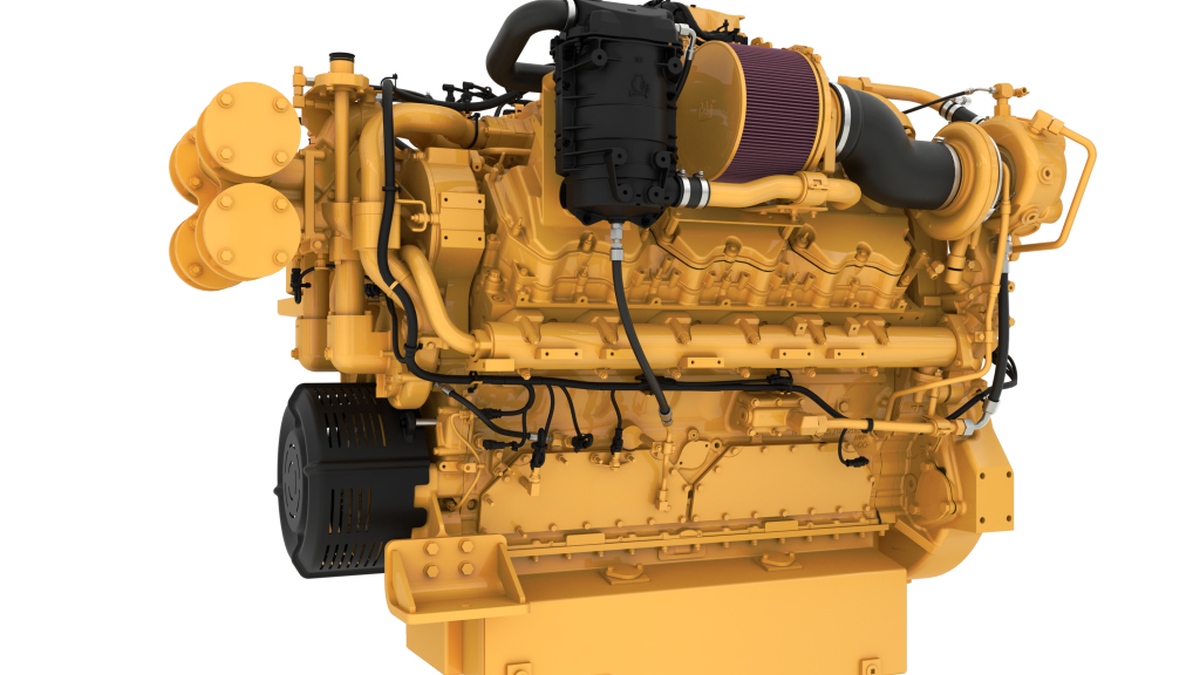
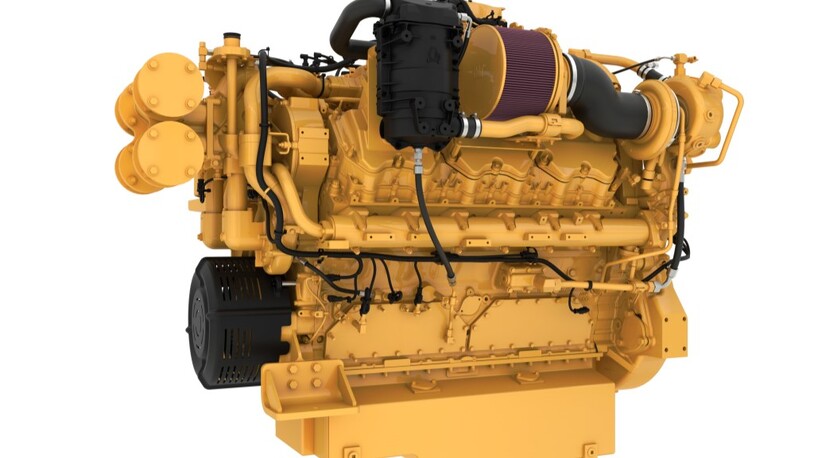
In Spain, Caterpillar is supplying methanol- and biofuel-ready engines and generators for a diesel-electric hybrid tug being built by Gondan Shipyard for Østensjø Rederi’s offshore operations in Norway.
The enginebuilder’s distributor in Norway, Zeppelin Power, reported it will supply two Cat 3516E main engines, two Cat 3512E variable speed gensets, one Cat 9.3 harbour generator and one Cat C4.4E emergency generator for the 50-m offshore tug, which will have a bollard pull of 150 tonnes.
The Cat diesel gensets and main engines will be prepared for biofuel and conversion to methanol operations, and the engines will be connected to a selective catalytic reduction (SCR) aftertreatment system for removing NOx from exhaust and for IMO Tier III compliance.
“The newbuild represents a major step in further strengthening our offshore towage fleet,” said Østensjø Rederi chief executive, Kristian Helland Vea.
When delivered, the newbuild will be the largest and most powerful offshore tug in the Norwegian owner’s fleet.
“The tug ticks all the boxes. The combination of high bollard pull, advanced hybrid propulsion and large winch capacity ensures high operational flexibility,” said Mr Vea.
The vessel will be based on Skipsteknisk ST-933 design and delivered in Q1 2028 with DP2-class dynamic positioning, a beam of 17 m and Kongsberg Maritime’s permanent-magnet RIM-drive manoeuvring propellers.
Zeppelin Power said the vessel’s two 16-cylinder Cat 3516E generator sets will run at variable speeds to optimise fuel consumption, reduce noise, and minimise emissions.
“When maximum pulling power is required, the two 3516E engines connect directly to the shafts, delivering immense power within a very compact footprint,” said the distributor.
Six sequential turbochargers will significantly boost the Cat 3516E engines’ power and efficiency across the entire speed range.
Inland waterways
In North America, Caterpillar has engineered its new Cat C32B marine engines to run on biodiesel and hydrogenated vegetable oil (HVO) for tugs and towboats operating in marine areas and internal waterways.
The US-based OEM has also increased the time before overhaul by up to 50%, specifically 15,000 hours for top-end and 30,000 hours for major overhauls, which helps increase vessels’ time on the water.
Caterpillar has reduced the maintenance frequency, extended engine life, and improved fuel efficiency. It also lowers emissions when linked to an SCR for compliance with IMO Tier III, European Union Stage V and US Environmental Protection Agency (EPA) Tier 4 exhaust standards.
“The C32B reliably delivers power up to 895 kW and 5,861 Nm for US EPA Tier 4, and 839 kW and 5,499 Nm for EU stage V,” said Caterpillar. A version for EPA Tier 3 requirements offers a peak rating of 1,007 kW and 6,166 Nm.
“The piston for the new C32B features increased compression height enabling increased power density,” said Caterpillar. “The cylinder head has been upgraded to include design features that integrate external fuel lines along with an optimised water jacket geometry to improve heat transfer.”
EPA Tier 4 first
Baudouin worked with Hornblower Marine to introduce its first EPA Tier 4 engine, the 6M33.3, with high torque at low speeds, for the US vessel market. This is part of a wider range of propulsion systems the European OEM provides for workboat applications, from inland river service boats to large offshore support vessels.
Power ratings span from 130 kW to over 2,200 kW, and its range includes compact six-cylinder in-line engines, such as the 6W105M, and high-output V12 and V16 configurations, such as the 12M33.2 and 16M33.3, while displacements vary from 6.7 to 52.3 litres.
In South America, Wärtsilä is supplying main engines, ready to run on biofuels, for two new pusher tugs being built for Brazilian operator Amaggi at the Beconal shipyard in Manaus, Brazil.
“The fuel flexibility of the Wärtsilä engines will enable these two new pusher vessels to operate using environmentally sustainable biofuels,” said Amaggi director of logistics and operations, Claudinei Zenatti.
“By using biodiesel, these engines are expected to lower total greenhouse gas emissions, supporting both our company’s environmental commitments and the broader goal of delivering more sustainable river transport.”
Both vessels will operate with two Wärtsilä 20 engines running on either diesel or biodiesel fuel with a total power output of 2,100 kW, sufficient to push up to 20 barges carrying a total of 32,000 tonnes of grain on the Amazon inland waterway system.
Wärtsilä marine newbuilding sales manager for Latin America, Genil Mazza, said the OEM will deliver these engines to the shipyard in August 2026, and the company will also provide a data collection unit.
“Amaggi is the first pusher tug operator to run entirely on biodiesel,” said Mr Mazza. “The data collection unit will enable accurate monitoring of the engines, which promotes performance reliability and the benefit of extended overhaul intervals.”
The 28th International Tug & Salvage Convention, Exhibition & Awards will be held in Gothenburg, Sweden, in association with Caterpillar, 19-21 May 2026. Use this link for more details of this industry event and the associated social and networking opportunities.

Related to this Story


Events

Maritime Regulations Webinar Week
 16 Dec 2025
 GMT - ONLINE
Floating energy: successfully unlocking stranded gas using FLNGs and FSRUs
24 Feb 2026GMT - ONLINE
© 2026 Riviera Maritime Media Ltd.


