


Business Sectors
Business Sectors
Events
Contents
Register to read more articles.
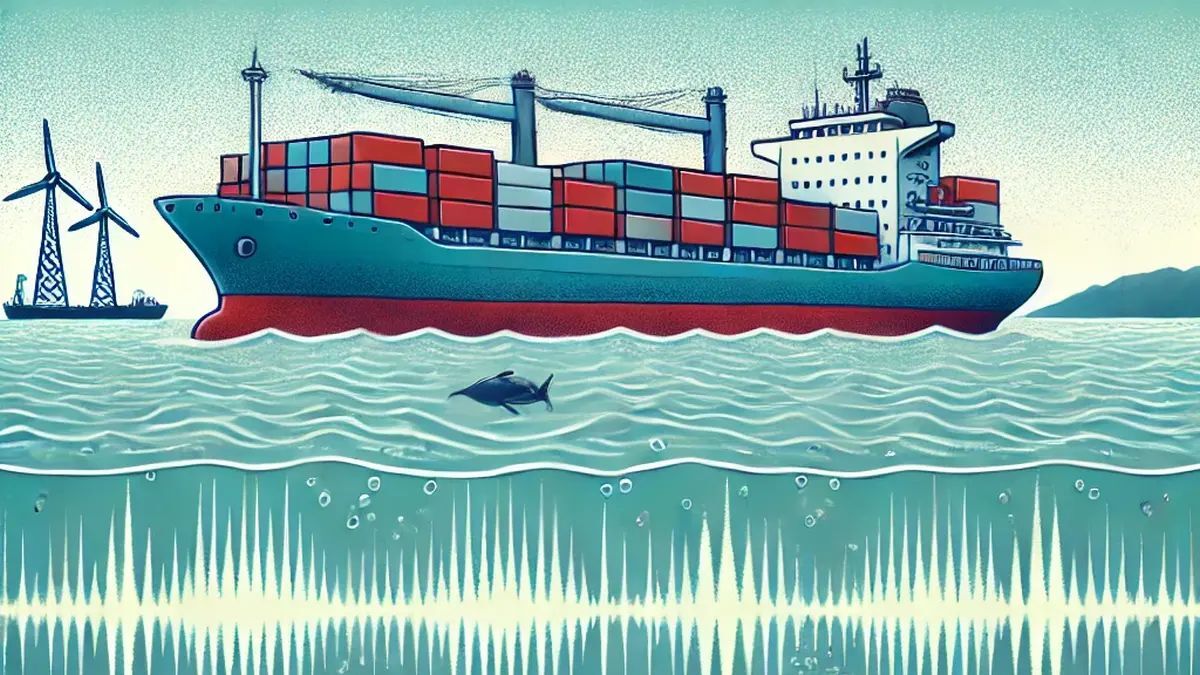
Why underwater-radiated noise is an issue for vessel operators
Exploring the challenges of underwater-radiated noise and its impact on marine life and vessel operations


The maritime industry’s impact on marine ecosystems has increasingly come under scrutiny, with underwater radiated noise (URN) emerging as a critical concern. URN, caused by ship propulsion, machinery and hull interactions with water, affects marine life, particularly species that rely on sound for survival.
International Maritime Organization (IMO) has issued updated guidelines, MEPC.1/Circ.906, to address the issue, but these remain non-mandatory, leaving vessel operators to grapple with both environmental and operational implications.
URN interferes with marine species’ ability to communicate, navigate, forage and reproduce. Marine mammals, in particular, are sensitive to low-frequency noises generated by ships.
IMO notes chronic exposure to URN can lead to behavioural changes, habitat abandonment and even physical damage in marine fauna. Coastal communities dependent on marine biodiversity for their livelihoods also suffer indirect consequences.
The scale of the problem is amplified by the growing global shipping fleet, leading to increased noise pollution in the world’s oceans.
A report from India highlights that low-frequency URN propagates over vast distances, degrading acoustic habitats and contributing to whale strandings along the Indian coastline.
In response to these challenges, IMO released its revised guidelines in 2023 during the 80th session of the Marine Environment Protection Committee (MEPC). These updates, codified in MEPC.1/Circ.906, aim to minimise URN through ship design, operational measures and better maintenance practices.
However, these guidelines remain voluntary, reflecting IMO’s strategy to encourage compliance through industry collaboration rather than binding regulations. While the guidelines promote technologies such as optimised propellers and quiet ship notations, adoption has been uneven.
"The successful completion of all actions listed in the draft URN Action Plan will require a sustained and collaborative effort," the MEPC secretariat stated.
India and Chile are pioneering regional initiatives to address URN. India, a lead participant in IMO’s GloNoise Partnership, has introduced a marine spatial planning framework that uses artificial intelligence to monitor URN in the Indian Ocean region.
Chile has conducted extensive acoustic studies and formed multi-sector boards to co-ordinate URN mitigation efforts.
Technological innovation is also playing a role. The ABS Harsh Environment Technology Center (HETC) in Canada partnered with Memorial University of Newfoundland and eSonar to study URN from icebreaker CCGS Terry Fox. The project developed predictive models and real-time monitoring systems, enabling shipmasters to adjust operations in sensitive environments.
"The research proved successful in accurately measuring and understanding the URN created by CCGS Terry Fox and developed a prototype for a means of reporting the generated URN," noted the HETC team. This approach could be extended to designing quieter ships from the blueprint stage.
For shipowners and operators, reducing URN presents both a challenge and an opportunity.
Vancouver has introduced voluntary speed reduction programmes, achieving compliance rates of 90%.
Incentives such as reduced port fees for quiet vessels underline the growing market pressure for sustainable practices. However, achieving compliance involves upfront costs.
Retrofitting ships with noise-reducing technology, adopting advanced maintenance practices, and adhering to new design standards require investment.
IMO guidelines provide a roadmap, but it is up to operators to implement these measures in a way that balances environmental stewardship with economic viability.
URN remains a complex issue for the maritime industry, demanding co-ordinated global action and localised solutions.
IMO’s guidelines, though voluntary, represent a step forward in addressing this form of marine pollution.
With technological advancements and regional initiatives leading the way, vessel operators have the tools to mitigate URN and contribute to healthier oceans.
As the industry evolves, the adoption of quieter, more sustainable practices will likely become a defining feature of modern shipping.
Sign up for Riviera’s series of technical and operational webinars and conferences:
- Register to attend by visiting our events page.
- Watch recordings from all of our webinars in the webinar library.
Related to this Story
Events

Maritime Regulations Webinar Week
 16 Dec 2025
 GMT - ONLINE
Floating energy: successfully unlocking stranded gas using FLNGs and FSRUs
24 Feb 2026GMT - ONLINE
© 2026 Riviera Maritime Media Ltd.


