


Business Sectors
Business Sectors
Events
Contents
Register to read more articles.

2025 in tug and salvage: batteries, alternative fuels, design innovation and corporate deals
It has been a pivotal year in terms of tugboat innovation, with newbuilds entering service with battery technologies, efficient designs and high towage power


International Tug & Salvage has covered the major developments in tug technology, operations and innovations in depth, reporting on the industry firsts, new orders, deliveries and decarbonisation strategies in 2025.
It recorded the introduction of fleets of battery-electric tugs and those powered by new fuels such as hydrogen, and how the industry is preparing for those running on methanol. The brand has also reported on new charters for tug fleets supporting LNG carriers due to the booming growth in export and import terminals, while industry players grew their business through corporate acquisitions.
Battery-powered tug fleets delivered
China overtook British Columbia, Canada, as the main location for battery-electric tugboats in 2025, while Panama has become a growth market for tugs with hybrid propulsion.
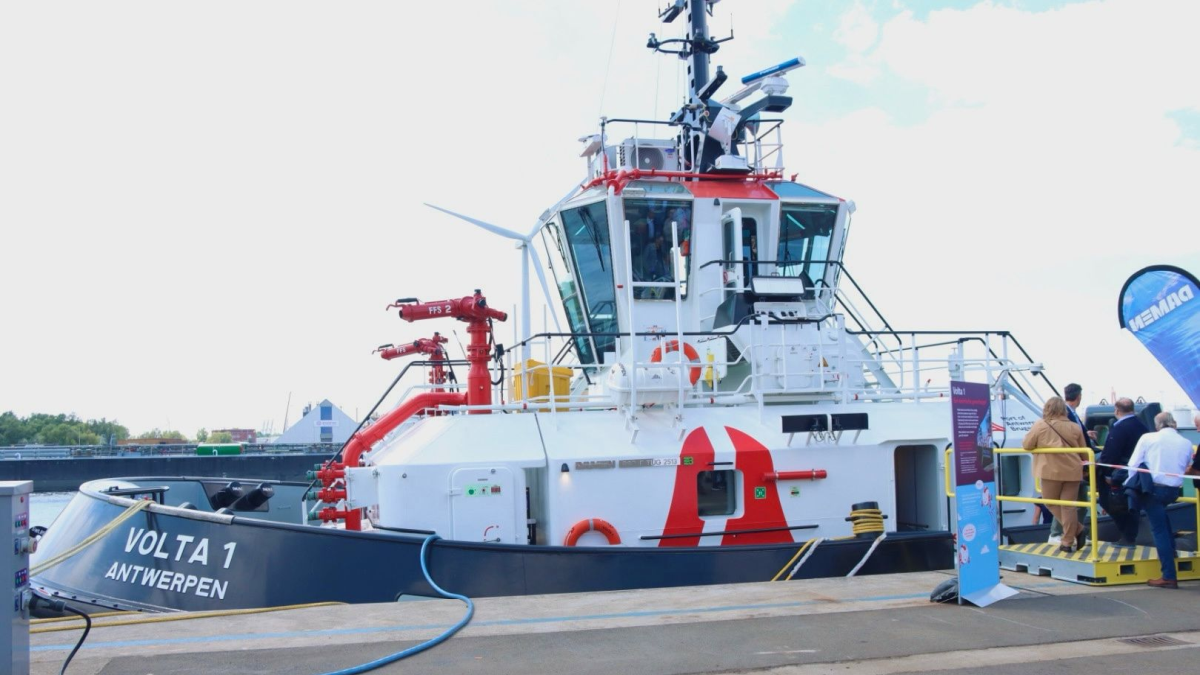
Several tugs have been built with energy storage systems (ESS) on board, with 15 delivered in 2025. This is becoming a new trend, as tug owners see the environmental advantages of having battery-powered tugs in their fleets operating in ports where charging infrastructure is available.
Owners are now operating multiple battery-electric tugs and in 2025, tendered for series of battery-electric tugs to renew fleets.
China is now operating eight electric tugboats, as the nation’s ports seek to reduce emissions in harbours and river estuaries; while five operate in British Columbia and five in Turkey.
Sanmar Shipyards has built the most electric tugs to date, producing several for Turkish oil and gas terminal operator Botas, SAAM Towage and Svitzer in 2025, including delivering Trapananda, the first battery-electric tug to operate in Latin America.
Damen Shipyards built and delivered electric-powered reverse stern drive tugboats in 2025, including Bu Tinah 2 for AD Ports’ operations in Khalifa Port, UAE; and Aqua Stentor to demonstrate their benefits in the Indian market, which has become a future hotspot for building and operating battery-electric tugs.
To date, nearly 60 tugboats, pusher vessels and towboats operate with energy storage systems on board either providing full power for propulsion or as part of a hybrid-electric configuration.
And four tugboats operating at Chevron’s Gorgon LNG terminal in Western Australia have become the first to have their ESS replaced with new battery technology, demonstrating that the first modules have more than a 10-year lifespan.
Industry tests alternative fuels
Tug owners and port authorities are considering using zero-emissions fuels for vessels handling and towing ships around coastlines and harbours.
Most tugboats built in 2025 were powered by diesel engines, many with exhaust aftertreatment systems for IMO Tier III emissions standards, while tugboats are beginning to operate on biofuels in markets such as the UK, Brazil, the Netherlands and Oman.
In 2025, the first hydrogen-fuelled tug to operate in Asia was completed and Svitzer was preparing to take delivery of its first methanol dual-fuel harbour tug, which will be presented at the next ITS Convention, in May 2026.
Kotug International is set to take delivery of two methanol dual-fuel escort tugs, as Sanmar completes them ready to operate in British Columbia in 2026.
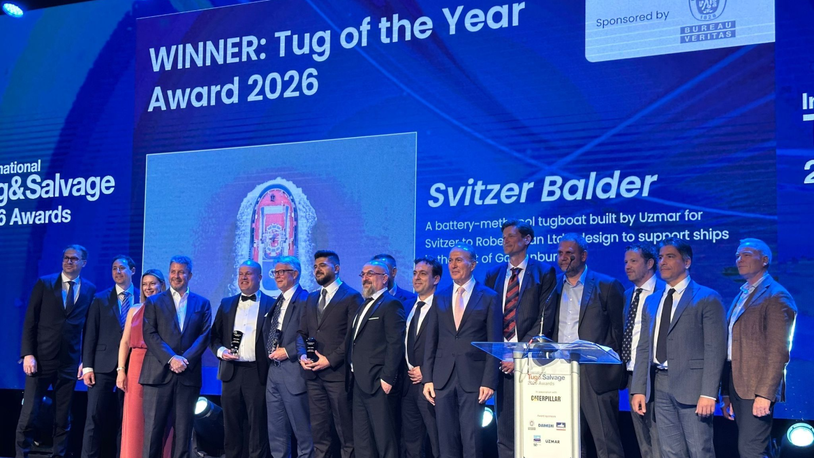
LNG is being used on several tugboats, and this was recognised by industry with the presentation of ITS Tug of the Year award for LNG Sentinel I to owner Boluda Towage affiliate Hongkong Salvage & Towage Services and builder Cheoy Lee Shipyards and designer Robert Allan Ltd.
Otherwise, orders for tugs ready to operate on alternate fuels have been slow, but as owners start to gain operational experience with methanol, more tugs with dual-fuel engines able to consume this fuel are likely to be built.
First TRAnsverse tugs enter service
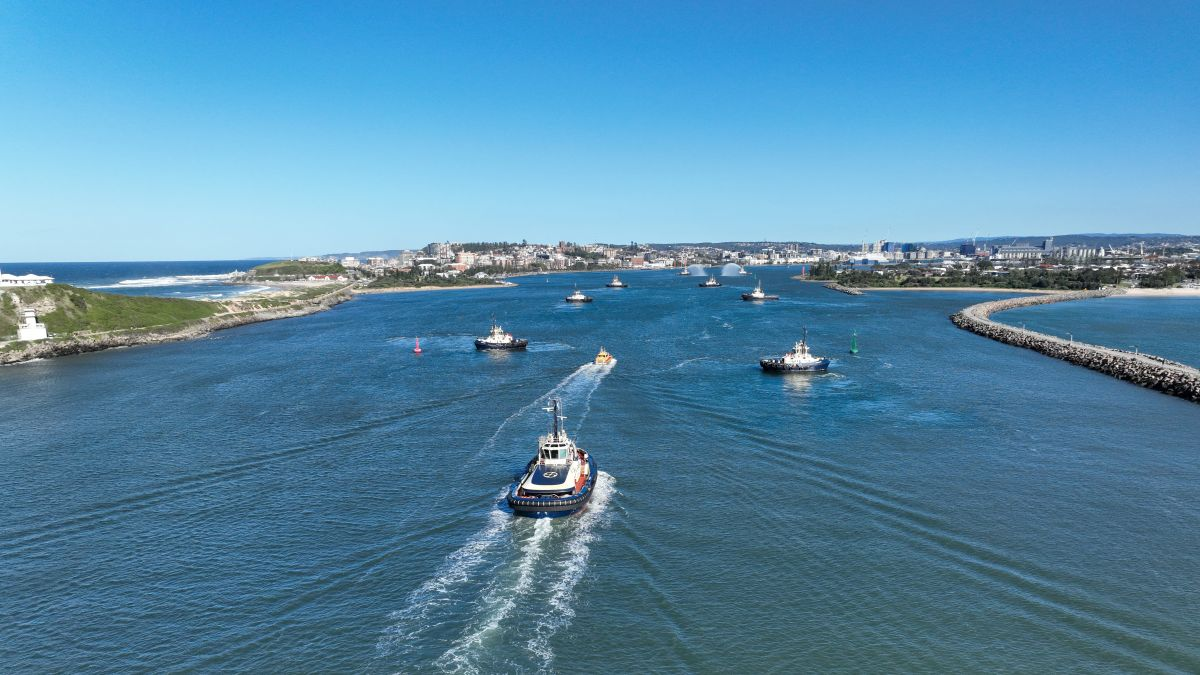
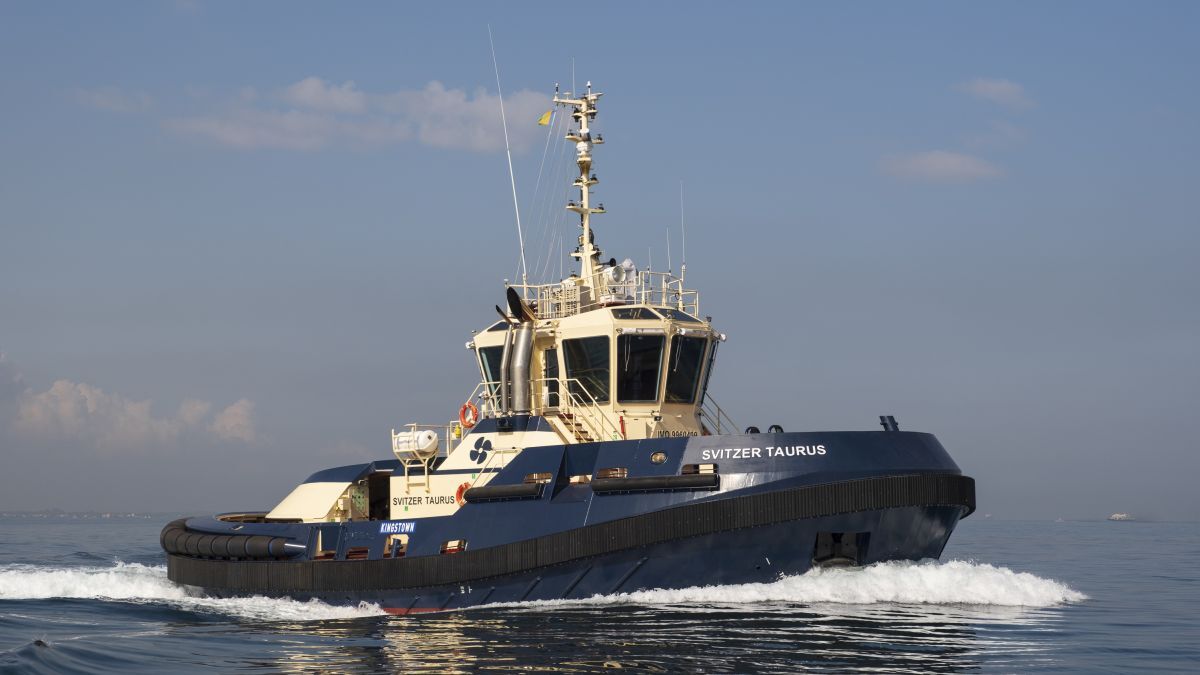
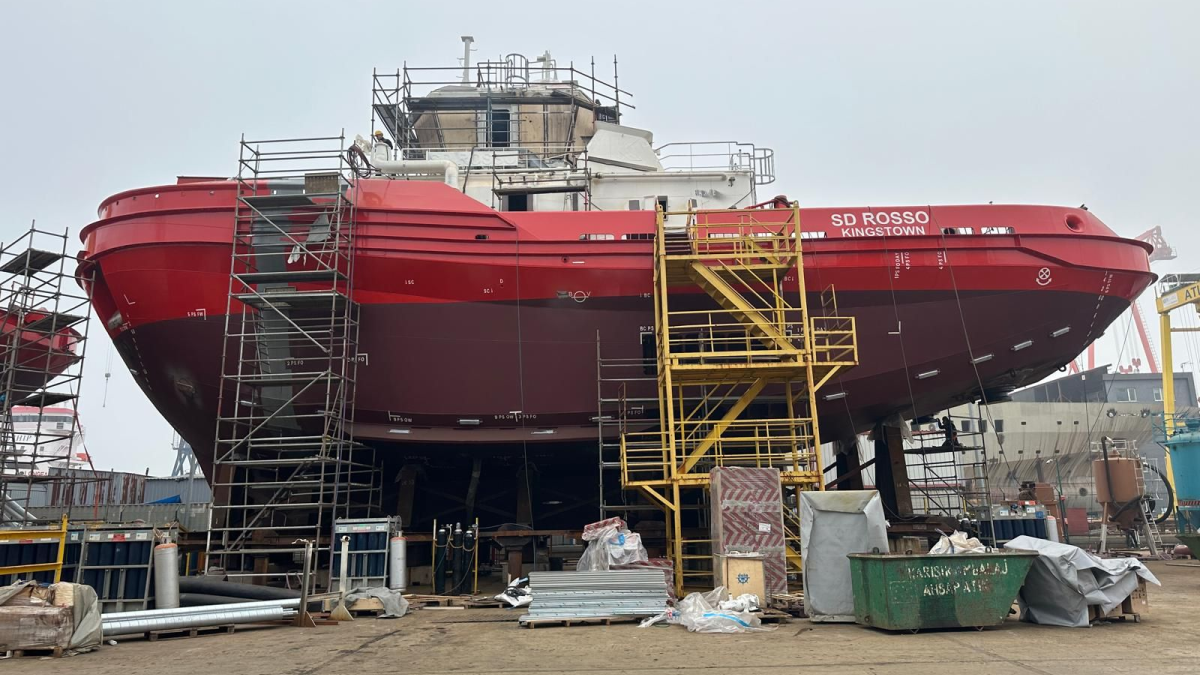
Svitzer has gained operational experience from the world’s first TRAnsverse tugs with Sanmar-built Svitzer Taurus working near Amsterdam, the Netherlands and two Uzmar-built escort tugs, Svitzer Barrington and Svitzer Nobbys, beginning work supporting ships in Newcastle, Australia in Q3 2025.
The TRAnsverse concept was designed by Svitzer and Robert Allan Ltd to improve efficiency and safety from ship escort, manoeuvring and towage compared with similar-sized azimuth stern drive (ASD) tugs.
In an interview with International Tug & Salvage, Svitzer chief operating officer Kasper Karlsen shared the Danish owner’s views on further construction of TRAnsverse tugs and the use of energy storage and alternative fuels for future tugs.
Svitzer has identified 15% efficiency savings over ASD tugs as TRAnsverse tugs can undertake dynamic operations including side-stepping speeds of up to 8 knots and lateral push, all while maintaining stability and control.
Due to these attributes, the TRAnsverse design has expanded the operating envelope by up to 50% compared with conventional tugs.
Mr Karlsen expects the next Svitzer newbuildings to be of TRAnsverse design with energy storage systems for even greater efficiency with lower emissions for harbour operations.
Floating LNG terminals bring fleet expansion opportunities
There has been a huge rise in demand for liquefied natural gas (LNG) and its production worldwide, resulting in LNG import terminals being constructed in Europe, and production and export centres worldwide.
Installing offshore facilities for import and export accelerated as it is more viable than building on land, providing demand for newbuild fleets of tugs to support gas carriers. At least four tugboats are needed per terminal to support gas carriers manoeuvring, berthing and undocking, and to provide emergency response and fire-fighting capabilities at these LNG hubs.
In Germany, Fairplay Towage and Boluda Towage are adding new tugs to support LNG import terminals.
LNG export facilities in the US, Mexico and Canada have driven demand for modern, highly manoeuvrable, powerful escort and ship-assist tugs with low carbon intensity and newbuild tugboats have been delivered in North America to assist LNG carriers at terminals along the US Gulf Coast.
In West Africa, Kotug International started operating a new fleet of tugs supporting BP’s Greater Tortue Ahmeyim offshore LNG export project on the Mauritania-Senegal maritime border, after their construction by Uzmar.
Corporate deals create industry behemoth
Boluda Towage became the world’s largest tug owner following its extensive transactions with Mediterranean Shipping Co (MSC) and Royal Boskalis.
MSC has taken a considerable stake in Boluda and provided the Spanish owner with its fleet operating outside of Italy including Rimorchiatori Mediterranei and KST Maritime.
Boluda then went further, and acquired the Australasian operations of Smit Lamnalco from Boskalis, giving the owner a major presence in Australia.
In another deal, Svitzer’s independence from the AP Moller-Maersk group was cut short as the Danish shipping giant re-acquired the Copenhagen-headquartered tug owner due to a lack of shareholder interest and finance requirements for renewing its fleet with battery-powered TRAnsverse tugs.
Several other smaller acquisitions and fleet purchases were made in 2025, including the acquisition of Donjon Marine in the US by private equity Tallvine, which made the year an important one for corporate activity.
Riviera’s 28th International Tug & Salvage Convention, Exhibition & Awards will be held in Gothenburg, Sweden, in association with Caterpillar, 19-21 May 2026. Use this link for more details of this industry event and the associated social and networking opportunities.


Related to this Story

Events

© 2026 Riviera Maritime Media Ltd.


