


Business Sectors
Business Sectors
Events
Contents
As shipping honours women, data shows women less inclined to work in maritime
With a crewing crisis brewing in the maritime sector, a survey by IMO and WISTA ahead of International Day for Women in Maritime revealed flagging numbers of women at work across a wide swathe of the maritime world


A survey of the shipping sector, timed to coincide with a day that aims to showcase the maritime trades as an attractive employment sector for women, has revealed that the proportion of women in maritime-related roles has fallen in recent years.
The Women in Maritime survey, the second jointly undertaken and published by the International Maritime Organization (IMO) and the Women’s International Shipping & Trading Association (WISTA), extrapolates data from a sample group to offer insights into levels of gender diversity in the sector.
With a larger catchment of respondents to the most recent survey in 2024 than the prior survey in 2021, results showed that the ratio of women employed in maritime has fallen.
The latest dataset shows that women account for just under 19% of the total workforce sampled, 176,820 women in 2024. That result compares to 26% of women in the catchment group sampled, 151,979, in 2021.
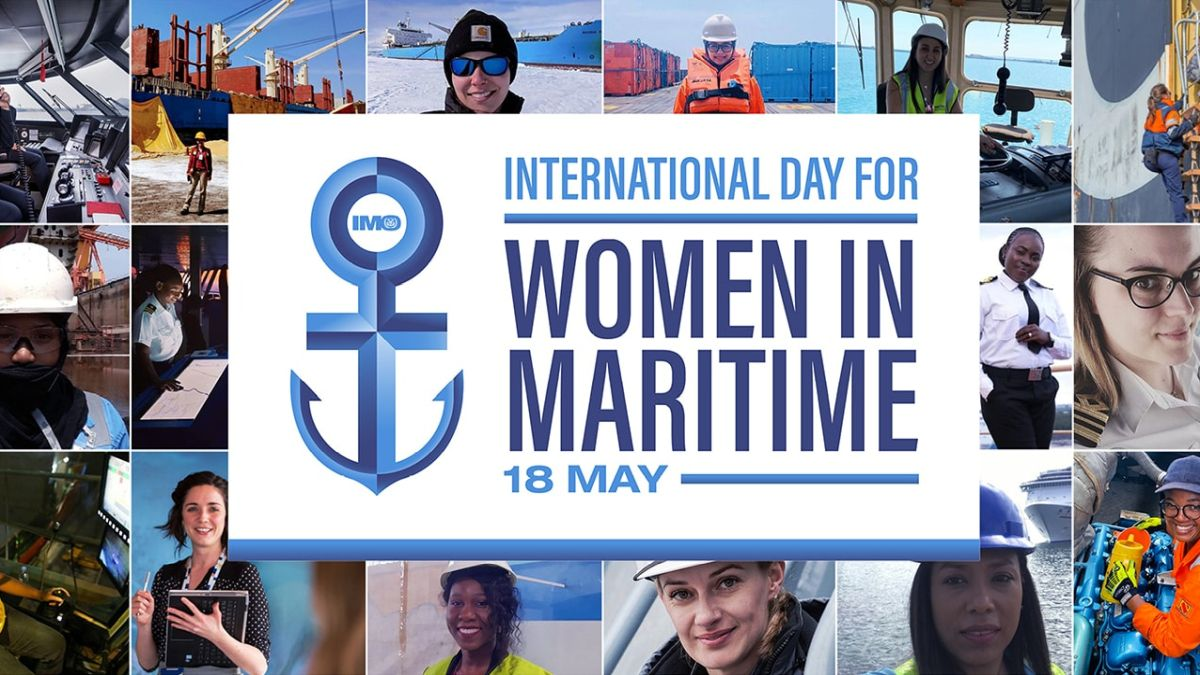
As with 2021’s survey, the data for the survey conducted in 2024 was released on the IMO-led International Day for Women in Maritime, which was officially sanctioned at December 2021’s assembly meeting. IMO member states designated 18 May each year, beginning in 2022, as a date to acknowledge and pay tribute to the accomplishments of women working in the maritime sector.
In the 2021 survey, data demonstrated that women accounted for 29% of the overall workforce in the industry and 20% of the workforce of national maritime authorities of IMO member states.
Other past surveys, while far more limited in sample group size, have chimed with the downward trajectory for the number of women working in the maritime sector.
On International Women’s Day in 2023, human resource survey data from 2022 showed a lack of diversity, particularly in senior roles in the shipping sector.
Maritime HR firm Spinnaker’s salary survey from 2022 showed technical roles in the maritime sector quickly move away from relative equality at a trainee level to extreme gender disparity at director level. The proportion of women in what Spinnaker categorised as the technical and marine job family remained "stagnant at around 13%", according to Spinnaker’s salary survey. And that figure had declined by 2% as compared with the same company’s survey data from 2020.
In 2022, WISTA International, Anglo Eastern, International Seafarers Welfare and Assistance Network (ISWAN) and International Chamber of Shipping (ICS) conducted a public online survey designed to examine how female seafarers perceived discrimination and how it manifested on board vessels.
The survey covered 1,128 women seafarers from 78 countries, with 60% of women reporting encountering gender-based discrimination on board, 66% of respondents agreeing that male employees had turned to harassing and intimidating female co-workers and 25% reporting that in the shipping sector, physical and sexual harassment is common, occurring on board and involving violations of privacy. Notably, 90% of the respondents to the survey worked in the cruise sector.
IMO’s response to the drop in numbers of women working in maritime
While IMO secretary general Arsenio Dominguez sought to add a note of positivity at an IMO symposium to highlight International Day for Women in Maritime with a reminder that the day is designed to "celebrate inclusion, innovation and equality in the maritime sector," he also did not avoid a sobering assessment of where the sector stands in regard to its ability to appeal to women workers.
On the metrics and the results of the survey, the secretary general said, "The reality is they are worrying for me, and I hope that they are for you as well because the trend says that in some areas we are stagnating and in others we are reversing".
"Let’s not make excuses," Mr Dominguez said. "The imbalance persists. In many subsectors of the maritime industry, the female pillar has stagnated or declined."
Secretary general Dominguez said the survey "must serve as a wake-up call that awareness is not enough".
"We need real structural change, we need leadership, we need examples, we need accountability," he said, and "we need investment, because these things are not for free. Because otherwise what we are really risking is not closing the gap but widening it."
Mr Dominguez said that, despite the picture presented from the survey results, "we cannot back down. We need to continue."
Saying that IMO would work more closely with WISTA, Mr Dominguez said the organisation would seek to "dedicate ourselves to ... equality for women in the maritime sector" and to use the "tools or the mechanisms we have to make more progress".
Difficulties at sea and the ’crewing crisis’
Panel discussions at the event focused on highlighting voices of women who work or have worked at sea or for seafaring organisations. The discussions brought up themes of bullying and harassment, mental health challenges and in particular the challenge posed by the Covid-19 pandemic.
"The issues that affect people or stop them from wanting to continue at sea are the same for men and women," said president of the Australasian Marine Pilots Institute Captain Josephine Clark.
Captain Clark noted the impact of a lack of shore leave – particularly during the Covid pandemic – as well as lack of access to internet connectivity as particular barriers for the shipping sector’s appeal.
"The treatment of seafarers, generally, is not encouraging people to go to sea – and those issues affect women and men equally," she said.
Indeed, shipping is widely predicted to be on the verge of a ’crewing crisis’, with a 2021 BIMCO report predicting there will be a need for an additional 89,510 officers by 2026 to operate the world’s merchant fleet of ships. And, as marine ecologist and science communicator Alannah Vellacott said in a panel discussion on youth and conservation in the maritime sector, that took in aspects of shipping’s continuing diversity problem, "Half of the conversation is not attended by half of the population". Applied to the shipping sector, the sentiment shows that shipping will need to do more to reach, attract and retain the 49% of the world’s workforce that are women. And, while positive discrimination practices were cited by a few of the presenters, the practice was presented as an exception in shipping.
Steps for reversing the trend presented in WISTA’s survey
Virgin Voyages chief operating officer for the US, Michelle Bentubo, highighted the importance of training for leaders in the sector to build awareness of pre-existing bias and behaviours that may be both unconscious and unintentionally offensive.
Ms Bentubo said the first step for shipowners and managers is to create the right environment on board their vessels.
“From an industry perspective, we have a responsibility, and first and foremost it is creating an environment on board where every voice is heard and they feel just as important as the next person," she said.
“When we go out and talk about what life is like on board to those crew who are joining us, we have an accountability to ensure that everybody feels they have a role, they are welcomed and they are valued. We have to make a promise, hold on to that promise, and deliver on it.”
One piece of advice for aspiring women mariners
Warsash Maritime School senior lecturer (deck cadet education) Nicole Fisher said she tries to help the cadets she trains to build resilience, to embrace opportunity and to rely on others.
"Back yourself, even when the environment doesn’t. The industry isn’t perfect, we’re a long way from it, but hopefully we are improving. Don’t feel like you have to take on the bad days alone. You have others to fall back on. Every confident, capable woman on board is forging a path for future females to thrive," she said.
For more profiles of inspiring women working in maritime, from cadets to veterans, and their advice on work and life in the shipping sector, take a look at our Women in Maritime Today and Women in Maritime Tomorrow series:
- Women in Maritime Today: Anemoi Marine’s Clare Urmston is on a mission to clean up shipping
- Women in Maritime Today: IRI’s Laura Sherman on managing corporate and career growth
- Women in Maritime Today: DNV’s Catrine Vestereng encourages curiosity and determination
- Women in Maritime Today: Jeanne Grasso’s ‘serendipitous’ journey to maritime attorney
- Women in Maritime Today: AIT Worldwide Logistics’ Chelsea Lamar describes her passion for sustainability
- Women in Maritime Today: Marita Krems is a woman in MAN’s world
- Women in Maritime Today: Chevron Marine Lubricants’ Ayten Yavuz smooths the path to decarbonisation
- Women in Maritime Today: ABS director Wei Huang encourages initiative taking
- Women in Maritime Today: bound4blue’s Cristina Aleixendri harnesses the wind
- Women in Maritime Today: North Star’s Gitte Gard Talmo
- Women in Maritime Today: WISTA Hellas president Vivi Kolliopoulou discusses equality in shipping
- Women in Maritime Tomorrow: Damen’s Rebecca Belmer ’working in maritime offers an ocean of possibilities’
- Women in Maritime Today: BW LNG’s Monika Johannessen counsels ’never stop learning’
- Women in Maritime Today: Elin Saltkjel says no day working in maritime is dull
- Women in Maritime Today: Hanwha Ocean Europe’s Claire Wright encourages adaptability and curiosity
- Women in Maritime Today: Anisa Koci advises ’be persistent in your passion’
- Women in Maritime Tomorrow: Eirini Diamantara on shipping’s diverse opportunities
- Women in Maritime Today: Krystyna Tsochlas’ maritime journey
- Women in Maritime Tomorrow: V Group’s Lalithaa Rai Mahendran is ready to break down barriers
- Women in Maritime Today: Svitzer’s Lise Demant
Related to this Story
Events

Maritime Regulations Webinar Week
 16 Dec 2025
 GMT - ONLINE
Floating energy: successfully unlocking stranded gas using FLNGs and FSRUs
24 Feb 2026GMT - ONLINE
© 2026 Riviera Maritime Media Ltd.


